




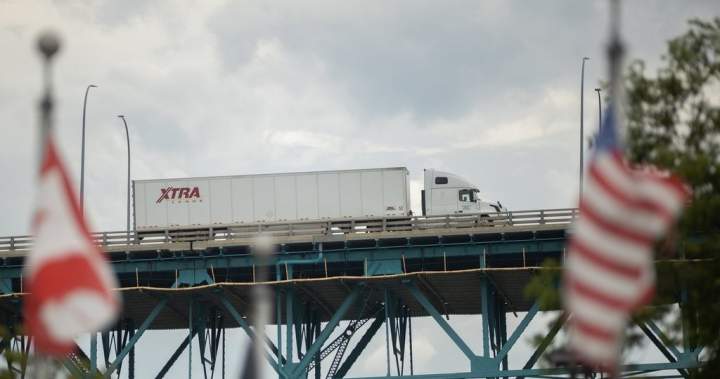
A group representing Canadian truck drivers is sounding the alarm that the skyrocketing price of diesel could soon be passed down to consumers, asking the federal and provincial governments to step in with financial help before that happens.
Diesel prices began to surge last week as ongoing conflict in parts of the Middle East continues to escalate, and the financial shockwaves are now reaching home.
“It’s a tough situation,” said Tej Dulat, who represents the Mississauga-based Canada Truck Operators Association. “At this time, small and mid-sized trucking companies are just going with no margins.”
Dulat says if prices continue to rise without some sort of relief measure from either the federal or provincial government, the increased cost to transport goods will eventually make it to consumers.
“The trucking industry is a very low margin business, (the) profit margin stays between eight and 12 per cent,” he added. “Whatever profit you are making is going to diesel at this time.”

Get daily National news
Get daily Canada news delivered to your inbox so you’ll never miss the day’s top stories.
According to the Ontario Federation of Agriculture, more than 90 per cent of Ontario’s food supply is transported by truck, potentially impacting grocery costs if the increased price of diesel is passed on to distributors.
Global News reached out to the Ontario Ministry of Finance for comment but did not receive a response in time for publication.
When Ottawa dropped the federal fuel excise tax, drivers of gasoline-powered vehicles got a ten-cent-per-litre break on average. For diesel, the price reduction was only four cents on average, leaving diesel-reliant drivers feeling more of a pinch.
Dulat explained that smaller trucking companies operate within the “spot market,” arranging to pick up loads day-of and often getting paid months after the job is done. He said this makes it nearly impossible for these firms to recoup any drastic increase in fuel costs.
“They are trying to absorb what they can, but at the end of the day they have to make money. They have families,” he said. “(Costs) are going to be passed on to the consumers after some time, if things go on like they are.”
© 2026 Global News, a division of Corus Entertainment Inc.
Read the full article here