


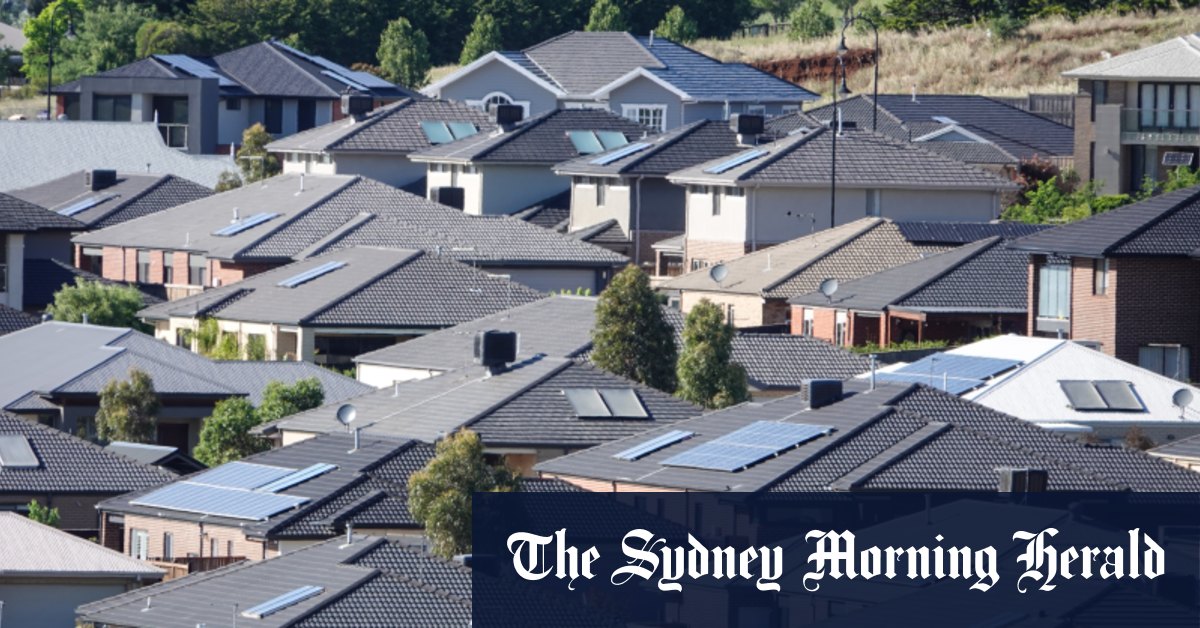
Some greenfield developers claim the delays have left them paying millions in land tax and interest on sites while they wait for government approvals.
Villawood Properties executive director Rory Costelloe said his development company was facing an $11.5 million holding cost on one project because of a PSP approval pushed from mid-2025 into 2026.
Loading
“That’s $11.5 million we could have spent on infrastructure,” Costelloe said. “It’s a very frustrating process, painfully slow. The planners have got to come back and take responsibility for timelines. They are largely responsible for our affordability crisis because they’ve constricted supply so much.”
He said the slowdown had become particularly noticeable over the past 10 to 15 years, with significant red tape holding up delivery. “Very sadly, the TV show Utopia is true. The more people you have in a meeting, the fewer decisions are made.”
The Property Council of Australia’s Victorian executive director, Cath Evans, warned that the slowdown in PSP delivery threatened the state’s housing goals. Ultimately, she said, home buyers were the ones who paid the price for protracted timelines, noting that “delay ultimately does impact affordability”.
Costelloe believes the bottleneck recently is a deliberate consequence of the government’s goal to build 70 per cent of new homes in established suburbs and 30 per cent on the urban fringe or other greenfield sites. He argues the policy is out of step with the aspirations of many Victorians, particularly new migrants.
“People don’t come to Australia to live in an apartment, particularly from the Subcontinent,” he said. “Their aspiration is for two children and a detached house. I think people are realising [the 70/30 goal] is not achievable, because there’s no market for 70 per cent infill. In Melbourne it should be more like 60/40.”
Rory Costelloe, executive director of Villawood Properties. Credit: Eddie Jim
For years, a central goal of Melbourne’s planning strategy has been to rein in urban sprawl to protect farmland and make better use of existing infrastructure. Despite this, the city’s fringe has continued to expand, creating one of the most sprawling, car-dependent metropolises in the world.
Infrastructure Victoria has warned that the high cost of providing new infrastructure to greenfield sites makes unchecked outward growth economically and environmentally inefficient and has consistently advocated a more compact city.
Late last year, the Allan government released a 10-year plan for greenfield development, identifying 27 planned new precincts to deliver 180,000 new homes.
“We understand the need to improve speed and certainty – that’s why as part of this plan we’re working to reduce delivery timeframes for PSPs by a third,” a spokesperson for Planning Minister Sonya Kilkenny said.
“The use of new planning tools and delivery pathways will be explored as appropriate to reduce timeframes further.”
In May, the government announced funding for PSPs at new suburbs Clyde South in Melbourne’s south-east and Derrimut Fields in the west.
Loading
The government has also established a dedicated “concierge service” to work with councils and industry to fix issues holding up zoned land from being developed.
While acknowledging the need for careful planning, Evans said the process could be “overly prescriptive,” creating a conflict where “what is in a plan versus what is economically achievable from a design and cost perspective may not align”.
Start the day with a summary of the day’s most important and interesting stories, analysis and insights. Sign up for our Morning Edition newsletter.
Read the full article here