


When insect pests get the munchies, some plants call in the microbes.
Gnawing fly larvae provoke cowpea plants to release chemicals into the soil that nurture a helpful community of microbes. These bacteria then prompt plants to release an airborne molecule that draws in parasitoid wasps to attack the flies, researchers report August 21 in Cell Reports. The results point toward durable protection stored in the dirt that could shield even future plantlets from the maw of an herbivore.
It’s unclear how long the microbial protection lasts, or whether other kinds of plants lean on this type of defense, says Zeng-Rong Zhu, an insect ecologist at Zhejiang University in Hangzhou, China. Uncovering how the protection works could help researchers find ways to dispatch wasps as hired assassins for pest control.
The American serpentine leafminer (Liriomyza trifolii), native to the southeastern United States and the Caribbean, is an invasive fly now found in parts of Asia, Europe and Canada. Leafminer larvae tunnel through and consume leaves from all sorts of plants. Crops including cowpeas, eggplants and beans are at risk.
Leafminers can “destroy all the leaves if we don’t use any measures to control them,” Zhu says. One tactic is to recruit Neochrysocharis formosa wasps, the fly’s natural enemy, to the scene, and let them do the dirty work. The wasp lays eggs inside leafminer larvae that, after hatching, devour the young flies.
Some plants emit chemical signals in a cry for aid, luring parasitoid wasps to leaves where an unwitting herbivore is nibbling away. Such aboveground protections are thought to be short-lived, dissipating once the pest’s feast ends. But previous studies suggest that plants can shape which microbes live around their roots, and leaf-munching insects can alter what those communities look like.
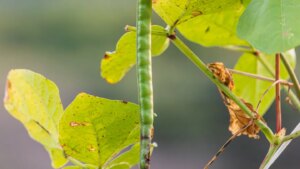
Zhu and colleagues wondered if soil microbes might help plants send SOS calls to wasps. The team grew cowpea plants and allowed leafminer larvae to dine on the leaves. The researchers then removed the original plants and used the same soil to grow other cowpeas
N. formosa wasps were more attracted to plants grown in dirt taken from leafminer-infested cowpeas. Fewer wasps visited control cowpeas grown in soil that originally hosted plants never exposed to the flies. Soil and plant analyses revealed that the leafminer larvae triggered the release of chemicals into the dirt from the plants’ roots. These chemicals cultivated bacteria that in turn directed new cowpeas to release a molecule called (Z)-3-hexenyl acetate, which pulled in wasps even when there was no herbivore to attack.
The new study suggests that plants’ microbial partners in the soil can maintain what would normally be short-lived protection for the next generation, says Michelle Afkhami, an ecologist at the University of Miami who was not involved with the work. “Even though we can’t see them with a naked eye, [microbes are] affecting quite a bit of what’s going on around us.”
Some fungi defend plants from herbivores by covering leaves with toxic alkaloid compounds, Afkhami says. But it’s fascinating that in the case of cowpeas, long-term protection seems to come from “a community that isn’t even in the area where the herbivory is happening.”
Read the full article here