



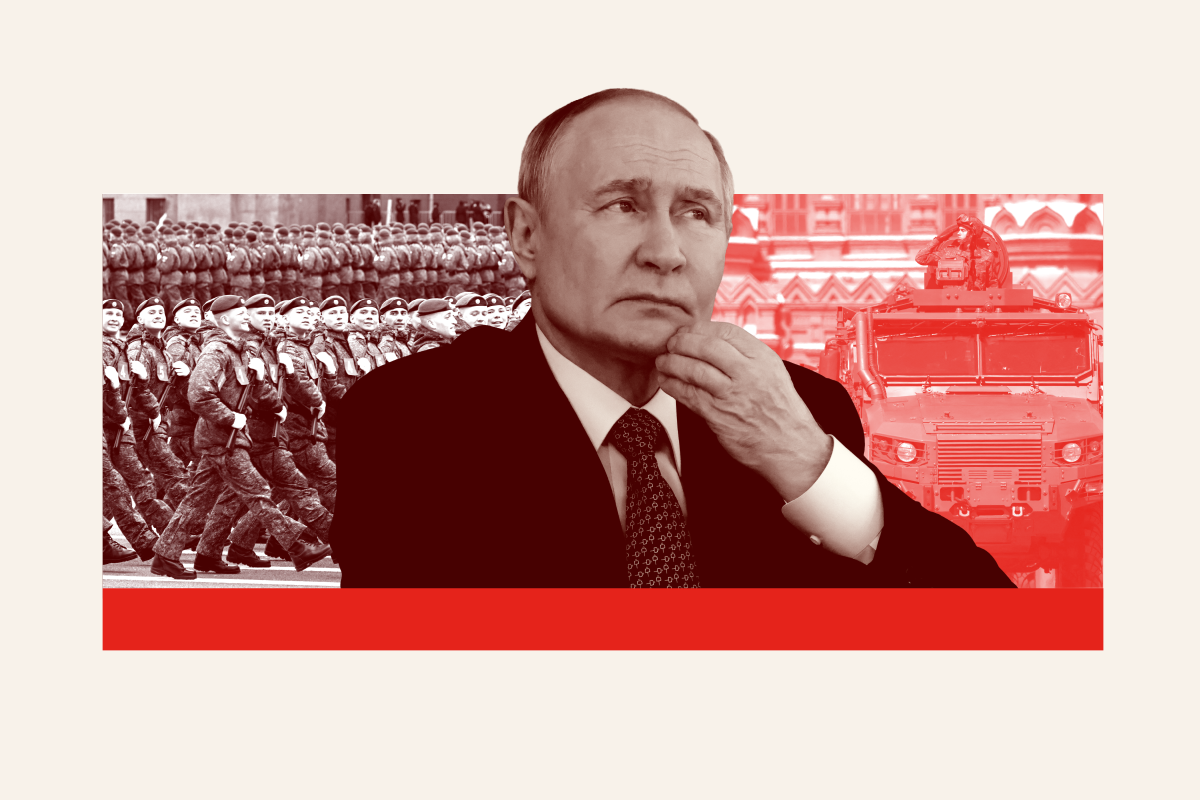
The military flex of the annual Victory Day celebrations in Moscow will be largely absent on Saturday as talk swirls around assassination and coup fears preoccupying Russian President Vladimir Putin.
Putin has used the anniversary marking the Soviet role in the defeat of Nazi Germany in World War II to brandish his tools of war and, since his latest aggression in Ukraine started in February 2022, frame himself and his troops as the moral heirs to the Red Army fight against fascism.
But amid the full-scale invasion will be a scaled-back Victory Day event where, for the first time in two decades, the soldiers marching past Vladimir Lenin’s mausoleum in Red Square will not be accompanied by the rumble of armored vehicles and missiles.
The Kremlin cited Ukrainian “terrorist activity” as the reason for the parade-lite and additional security measures. Kyiv is stepping up its drone and missile strikes inside Russia and sweeping internet outages in the normally highly connected Russian capital are aimed at mitigating the prospect of disruption on Saturday.
Russian authorities declared a unilateral ceasefire in Ukraine for Friday and Saturday, the Associated Press reported.
“There are internet outages for security reasons—perhaps Putin even fears would-be assassins might use internet-connected devices to strike at him—reminders that life is not normal,” James Rodgers, author of The Return of Russia, From Yeltsin to Putin, the Story of a Vengeful Russia, which details Moscow’s growing post-Soviet confrontation with the West, said.
“The ruthlessly efficient way in which the United States and Israel decapitated the Iranian leadership will have worried Putin—who has always been horrified by regime change ever since Saddam Hussein was driven from power in Iraq in 2003—that one day he too could be overthrown,” Rodgers, who is also an associate professor in international journalism at City St George’s, University of London, said.
The fate of other like-minded leaders has also rattled him. “He was staunchly opposed to the color revolutions in Georgia and Ukraine and reportedly unsettled by the brutal, undignified death of the former Libyan dictator Muammar Qaddafi,” added Rodgers.
A climate of paranoia is said to have grown in the Kremlin since March according to reports that say the president is becoming more isolated and fixated on the war in Ukraine.
Russia’s Federal Protective Service (FSO) has tightened security around Putin, according to sources linked to European intelligence services, cited by the investigative outlet Important Stories.
There are reports of growing divisions with the elite, including former Defense Minister Sergei Shoigu, now secretary of Putin’s Security Council, being “associated with the risk of a coup,” according to the reports also cited by CNN.
Security service officials reportedly traded blame for failures to protect Russia’s top military personnel, including the killing of Fanil Sarvarov, a lieutenant general in a Ukraine-linked attack.
The shock of Ukraine’s Operation Spiderweb in which drones attacked Russian airfields beyond the Arctic Circle last June has rattled Putin’s inner circle, a person familiar with the Russian leader told the Financial Times. The U.S. capture of Venezuela’s leader Nicolás Maduro in January has also spooked the Kremlin, according to the publication.
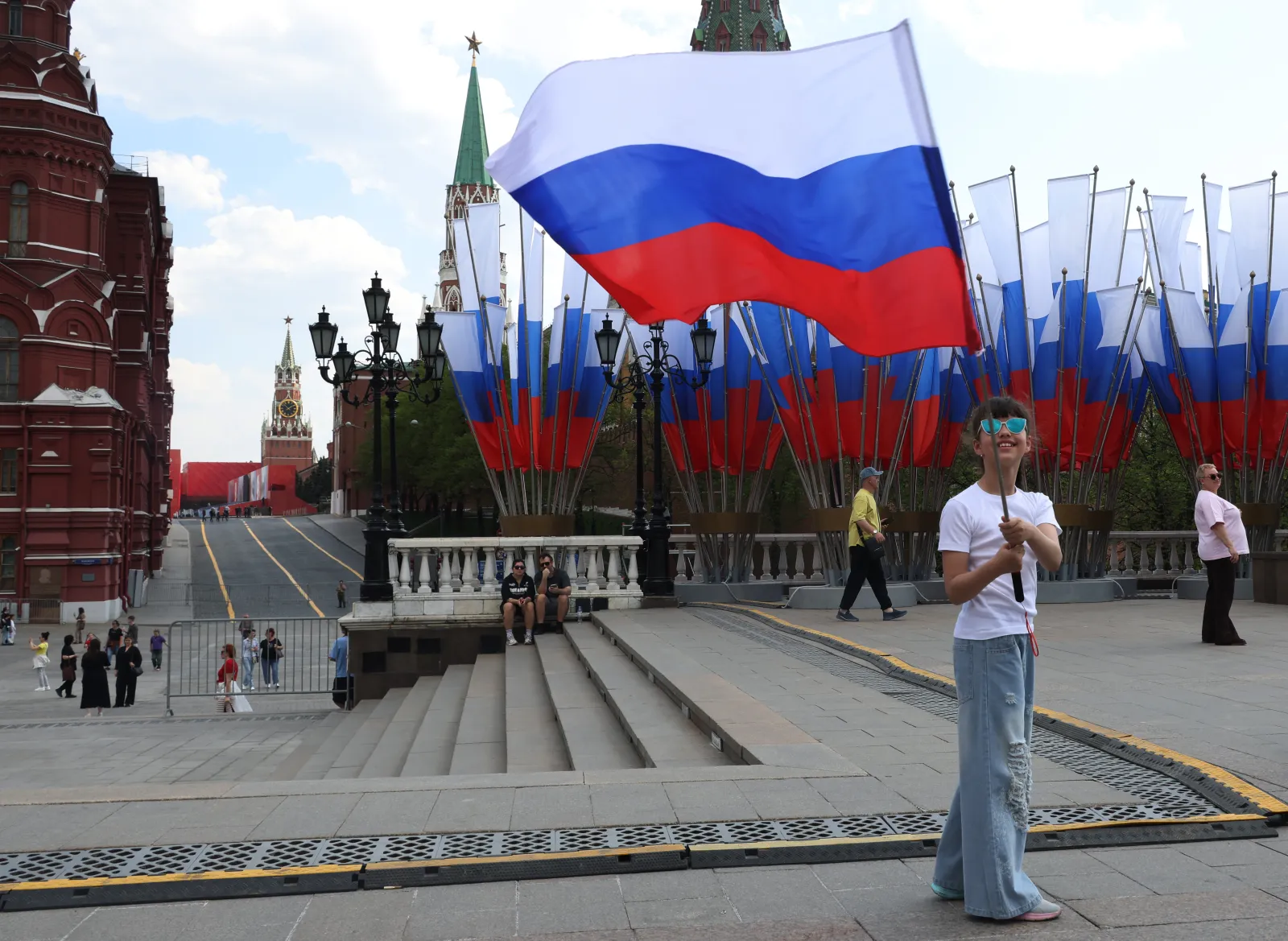
Deposed Leaders’ Fates Rattle Putin
Putin has reduced public appearances and there has been an increase in security checks for people meeting him in person, according to the Financial Times, which noted how he has stopped going to their residences in the Moscow region and in northwestern Valdai.
Konstantin Sonin, a Russian-born economist at the University of Chicago, whose criticism of Putin’s aggression in Ukraine has put him on Russia’s federal wanted list, said the Russian leader was in no more danger than other world leaders but only in Russia is the life of citizens being organized around the security of the president.
“It’s the way the decision-making evolved in Putin’s administration that personal concerns of a leader, they dwarf any other consideration,” Sonin told Newsweek. “It’s a sign of a failure of the whole state system in Russia.”
He added: “These security measures related to the internet do enormous harm to the Russian economy, to the morale of the people, to basically everyone involved, but it’s all superseded by the security concerns of the leader. Compared to most of the leaders of the world today, Putin is more cowardly and more concerned about his personal security than President [Donald] Trump, [British] Prime Minister [Keir] Starmer, [and German] Chancellor [Friedrich] Merz.”
Ukrainian drones this week hit one of the country’s largest oil refineries in Yaroslavl, over 400 miles from the border, only days after another Ukrainian strike hit a high-rise residential complex only miles from the Kremlin.
“Recent images of Russian oil infrastructure in flames from Ukrainian attacks hardly lend themselves to a celebration of martial might,” Rodgers told Newsweek, adding the smaller parade on Saturday was “a huge visual reminder that Russia’s military might has not managed to subdue a smaller neighbor.”
Putin’s approval rating is now 71 percent, according to state polling, which while high by global standards, in the tightly controlled media environment of Russia, represents a significant drop from 80 percent last December and the lowest level since the start of the Ukraine war.
Russia’s pro-war Telegram channels are also becoming increasingly unhappy with battlefield results which show only tiny gains at the cost of huge losses. Russian forces captured around eight square miles—the lowest figure since 2023, over half the 19 square miles that Ukraine recaptured mainly in the Zaporizhzhia region.
“Putin doesn’t want to confront the reality that the danger for his regime and for Russia is because he started this war which is going badly,” Sonin said. “Hundreds of thousands of Russian troops have died, hundreds of thousands immigrated and people are generally extremely unhappy.”
The sanctions-hit war time economy has prompted social media users to vent grievances that the regime cannot control, including lifestyle blogger Viktoria Bonya whose address in which she said “people are afraid” of Putin gained more than 1.5 million likes and was acknowledged by the Kremlin.
“She states that many people—from cabinet ministers to ordinary people—feel there is no hope of turning around from the current path that something should be changed,” Sonin added. “This is something that unites those who are against the war and those who are pro-war.”
Read the full article here