




NSW Education Minister Prue Car is right to request a ban on unsupervised HSC take-home assessments. The HSC only has value if it reflects a student’s own knowledge and thinking, and with more than 1000 cheating cases last year, it’s clear that AI is being widely used to do students’ work, rather than assist with learning (“HSC take-home ban to fight surge in AI”, August 10). Anyone who has used AI knows it is an excellent learning tool, but there is a big difference between using AI to better understand a topic and using it to write an assignment. If schools fail to protect the credibility of the HSC, universities and some employers will increasingly rely on their own entrance tests and interviews. That would make the HSC a less valuable credential for everyone. John Kempler, Rose Bay
A radical overhaul of the HSC assessment procedures is long overdue. Because the HSC is a high-stakes examination, cheating has always been problematic. However, increasing misuse of AI by unsupervised HSC students is the catalyst for a moratorium on take-home assessment tasks. While take-home assessment tasks have played an important part in HSC coursework, there is no way of knowing with certainty who is completing any task that is taken home by students. While all HSC candidates must pledge to submit only their own work, those pledges cannot prevent students from collaborating with their parents, older siblings, tutors, coaches and others. This has been the case for years. A return to supervised HSC assessment tasks would be an effective measure in equipping our school-leavers with a robust credential that accurately reflects their attainments. Irene Buckler, Glenwood
It’s not just the use of AI at home that is the danger here. Any student with an ounce of drive and desire for success will ask anyone (or anything) for help in securing a better mark than would otherwise be had with a supervised assessment. When doing an assignment at home, it’s always been easy to get information and answers simply by asking a knowledgeable person, like a parent, or even by opening an Encyclopaedia Britannica. Forgoing supervision is an invitation to the student to find as much help as possible – which is why take-home tasks should be permanently banned if we are trying to find out what the student can actually do for themself and by themself. So, don’t blame the availability of AI for students using it, blame the policy of allowing take-home tasks. Mia David, Wollongong
The plagiarism scandals at Harvard and Cambridge universities involving senior academics highlight the need for accountability and the importance of safeguards to support integrity. The NSW Higher School Certificate is an internationally recognised credential, and the move to safeguard its integrity, and to deal with concerns relating to the growth of AI, are to be applauded. What is also needed is a mandatory short course in ethics and ethical understanding for all learners embarking on their HSC journey that addresses the values that underpin the roles of learning, responsibility and the importance of personal achievement. Rod Leonarder, Roseville
Silencing the media
Pauline Hanson’s spiteful standoff with the ABC, The Age and The Guardian shows how much the relationship between our politicians and the media has changed. Back when the news was still in black-and-white, journalists would stand as Robert Menzies entered the room for one of his rare press conferences. While the questioning of the prime minister could then be quite sharp, the tone of those exchanges was always mutually respectful. Accredited reporters doing their job were not excluded or attacked. Today, Hanson bans representatives of outlets she dislikes and impugns their motives, yet suffers no consequences. This is only possible because journalism is no longer a specifically unionised trade. The once independent Australian Journalists Association is extinct. Along with its demise went a tradition of solidarity. Had the old AJA been confronted by Hanson’s tactic, they would have responded with a “one out, all out” boycott. One Nation would not be reported until its ban on individual outlets was lifted. It is a matter of regret that the media is now so fragmented, and its workers so gotcha-driven and insecure, that they have ignored this obligation to support their colleagues. David Salter, Hunters Hill
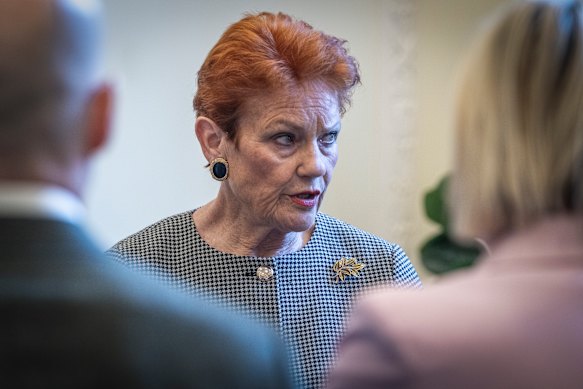
Rather than being reactive to One Nation’s toxic rhetoric, the PM should argue for the real benefits of 80 years of post-war migration (“To rein in Hanson, her political foes must stop making One Nation’s case”, August 10). This includes offsetting a low fertility rate and an ageing population. He could reflect on the leadership and courage shown by Bob Hawke and Paul Keating on sometimes unpopular policies. Tony Simons, Balmain
PM’s risky gamble
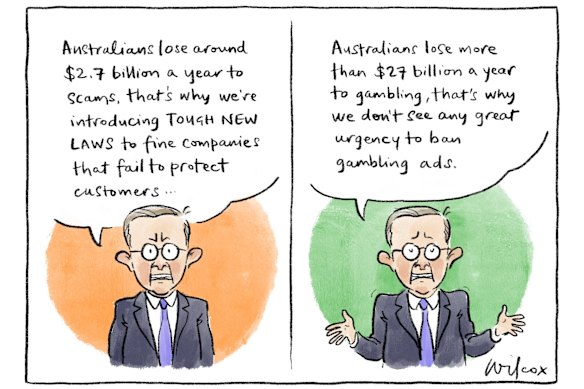
It is difficult to find words to accurately describe the pathetic and timid response to gambling advertising reform. Anthony Albanese is clearly more concerned with protecting the gambling industry and their broadcasting mates than the welfare of ordinary people (“Albanese, Taylor hedge their bets on gambling reform deal, spooked by One Nation”, August 9). To put this in perspective, when cigarette advertising was banned it was, according to broadcasters, an end-of-life experience. They survived. When alcohol advertising was banned it was also an end-of-life experience. Again, the companies survived. Banning advertisements will make life more difficult for gambling companies and broadcasters, but they will also survive. For the sake of all Australians, Albanese needs to grow a spine and stand up to the gambling and broadcasting industries. Ross Hudson, Mount Martha (Vic)
Reading the latest article on reforms to gambling advertising reminds me that as a country, we have been in this situation twice before – once involving tobacco and once involving alcohol. It’s clear that with these two interventions, the doom and gloom scenarios did not eventuate. Why would it be different with gambling? Remember, it was never about banning the product, only its advertising.
Graham Hansen, Denistone
Voters have had enough of the misery that online gambling is causing Australians. Albanese seems unwilling to enact legislation to remove this scourge from our society. His assertion that his government has done more than any other to curb online gambling fools no one because everyone knows that previous governments have done nothing. Ian Adair, Hunters Hill
Sink the subs
With the decision that Australia had “dispatched up to 130 tradespeople to help with production bottlenecks” (“Very real risk of no subs at all: Turnbull”, August 10), not only have we provided billions in upfront payments for subs that may not arrive, but we are sending highly trained tradespeople. This back-of-the-envelope agreement by Scott Morrison should never have been endorsed by Anthony Albanese the day after his election as PM, but it must be ended. It will no doubt be at an awful cost to us, but it’s better than continuing. Our investment in Australian, unmanned, remote-controlled submarines needs to be increased instead. Bill Johnstone, Blackheath
Stamp out duty
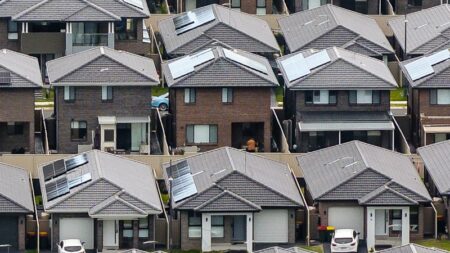
With the correction now taking place in the housing market, which may be good news for potential buyers and particularly those entering the market for the first time, one of the remaining obstacles to mobility in the market has to be stamp duty (“The Sydney suburbs with the deepest property downturns”, August 8). I understand it accounts for up to 22 per cent of state taxes, but with sales declining, this must surely have a negative effect on state revenues. Stamp duty is certainly a huge disincentive for those considering downsizing, which might otherwise free up living space for those who need it more. In addition to this, there is a distinct lack of suitable (smaller) property for downsizers to move into. A partial solution might be to reform and significantly lower the rate of stamp duty. This would not reduce the amount of stamp duty collected to fund public services, as, in the context of downsizing it is not now being collected at all. Better that a state government collects some tax than none at all. I have the feeling that this issue is ideological rather than pragmatic. Time for the discussion to be taken up and taken seriously. Shaun Davies, St Peters
Calling it
Chris Rivers’ letter highlights the serious issue of jobs being sent offshore (Letters, August 10). The other matter arising from this is the old chestnut from consumers: “I cannot understand the person who answers the phone”. My problem arises because I am hard of hearing and, despite having hearing aids, I simply cannot understand many accents. One of the worst offenders is Telstra. On many occasions, I have tried to speak to someone in Australia for the above reason but was not even able to be transferred back to Australia from the overseas call centre. Years ago this was happening and Telstra fixed it for a while, but unfortunately, it’s now worse than ever. So really it’s a double whammy, both for Australian employees and Australian consumers. It’s just not good enough. Christine Helby, Forbes
Profits and loss
In addition to the penalty issued to the gardener who cleared trees in Woodford Bay Reserve (“Sydney gardener fined over destruction of 287 foreshore trees”, August 9), and anyone else who illegally clears trees, they should be made, under council supervision, to replace the felled trees with mature or semi-mature trees and bear all the costs from purchase, to transporting and planting. This penalty should also be strictly enforced when developers clear land, and if it prevents their development plans, well so be it. The environment and native animals are more important than any profit a developer might make. Victor Marshall, Meander (Tas)
Warm-hearted
Four letters in Monday’s Herald were critical of Australia’s fossil fuel exporters for contributing towards global warming (Letters, August 10). But there was no mention of the buyers of these exports, the countries that burn the fuels and create the emissions. I think we should bear in mind that the main importers of Australia’s coal and gas – Japan, China, South Korea and India – are all committed to and actively working towards carbon neutrality. Even in Australia, with our access to abundant sun and wind, we have seen how slow that transition can be, so we have to accept that there will continue to be a reasonable short- to medium-term global demand for coal and gas, which has to be produced somewhere. Of course, Australia should not be promoting the consumption of fossil fuels, and we should be demanding a proper financial benefit from their sale, but it is surely not unreasonable for Australian miners to continue to help meet the global demand? Col Nicholson, Hawks Nest
Dams and statistics
Your recent articles and letters in today’s paper are correct that we must prepare and adapt rapidly to the changing climate (Letters, August 10). The severe fires in Europe and North America are sure signs of a warming planet. In this context, it’s patently obvious that water is an increasingly valuable resource. However, no dam has been built in NSW in about 40 years. Our population has doubled, we face climate change, destructive fires, and yet no additional water reserves have been secured. How is this good and responsible government? More wind farms and solar farms are not going to provide the water we’ll need in the future. We must build more dams. Dennis Bluth, Cammeray
Airport safety
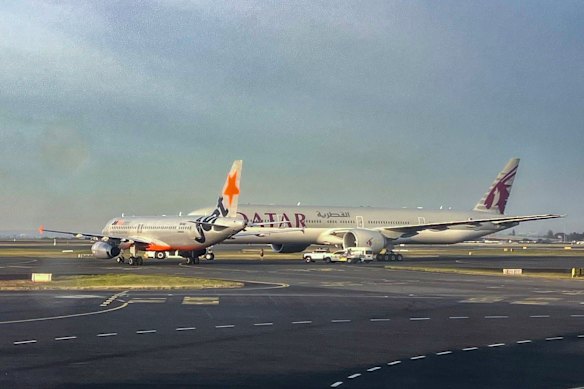
I think the quote from the chief executive of airline peak body A4ANZ Stephen Beckett on the recent run of Sydney airport near-misses highlights a disregard for the air safety workforce (“Two planes involved in second recent near-miss at Sydney Airport”, August 9). He is quoted as saying that “workers calling in sick or for carer duties were causing the network to grind to a halt”. How dare those workers request time off for these issues? May I suggest that the real problem is a lack of adequate workforce planning and development to cover these contingencies. What a poor message to send to your workforce. Geoff Delaney, Chipping Norton
Memory lanes
Thank you, Julia Baird, for your article (“My daughter’s European backpacker odyssey is nothing like mine. That’s her loss”, August 8). I tore it out of the Herald (yes, I still read the paper edition) and gave it to my eldest son with a dusty box of about 160 handwritten aerograms, postcards and letters. Most of the correspondence passed between my girlfriend (now my wife of 46 years) and myself when I took off backpacking alone around the planet for 12 months in 1979. Will today’s travellers have their emails, posts and Instagrams in 50 years to pass on to their loved ones? Peter Baker, Blacktown
Letters play
Thank you, Michael Deeth, for the exclusive invitation to join the duo epistolary group (Letters, August 10). I must confess, though, that I have long been a serial correspondent, but to preserve your ego, I have written under a persona. Let the duel of duos begin. Kim Deeth, Como
It’s not only couples forming an exclusive letters club (Letters, August 10). Gosford High, leaving certificate class of ’64, punches above its weight with three contributors: Lorraine Hickey of Green Point, Genny Kang of Glebe and myself. Full marks for public school education. Christine McNeil, Ballina
Well done to the Ferguses for getting two lead letters in one week (Letters, August 10). In our household, the lead letter is referred to as “pole position”. If this letter matches the cartoon, it’s a “daily double”, and if an extract from the letter is also used for the headline, then it’s a “triple treat”. Graeme Milton, Dulwich Hill
- To submit a letter to the Sydney Morning Herald, email letters@smh.com.au. Click here for tips on how to submit letters.
- The Opinion newsletter is a weekly wrap of views that will challenge, champion and inform. Sign up here.
Read the full article here