



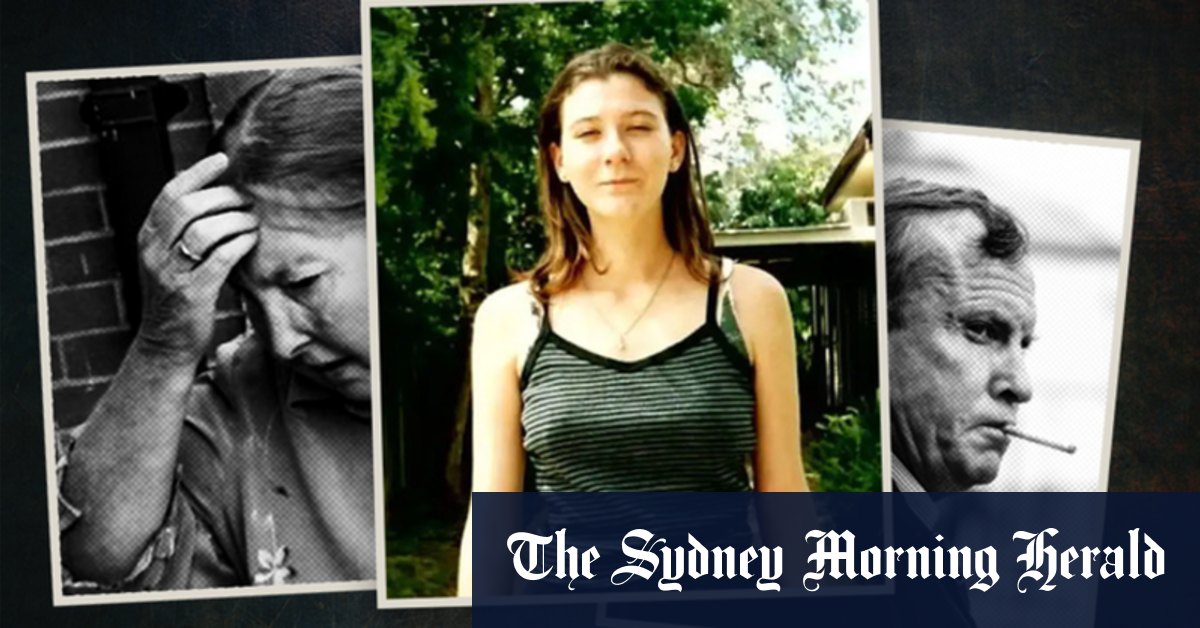
A NSW couple has been found not guilty of murdering a 19-year-old whose disappearance has haunted a rural town for more than two decades.
Amber Haigh disappeared from Kingsvale, about 15 kilometres south of Young in NSW, in June 2002.
She had been living with Robert and Anne Geeves, then aged in their 40s. The last independently verified sighting of Haigh was on June 2, when she was with Robert Geeves.
Robert and Anne Geeves outside Amber Haigh’s inquest in 2011.Credit: Anthony Johnson
Not guilty verdict
On Monday, Supreme Court Justice Julia Lonergan found the couple, both aged 64, not guilty of murdering Haigh in 2002 after a 28-day trial this year. Haigh’s body has never been found, and the case was entirely circumstantial. “Mr and Mrs Geeves can be released from the dock,” Lonergan said.
Lonergan described Haigh as a “disadvantaged young woman with poor family support” who “needed kindness and support”.
At the time of her disappearance, Haigh was living between the Geeveses’ rural property, Huntleigh, in Kingsvale and a one-bedroom flat in Young. She had first moved to the couple’s home in 2000 before setting up her own place in October 2001.
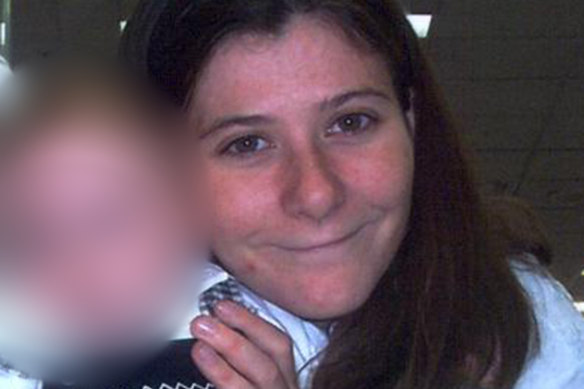
Amber Haigh, 19, disappeared in 2002.
Crown prosecutor Paul Kerr said in his opening address to the court in June this year that “the Crown case theory is that it was always the intention of the Geeveses to assume the custody and care of” a five-month-old child, whom Lonergan gave the pseudonym Ben.
“So, the Crown asserts, they killed her,” Kerr said.
But the couple maintained their innocence and Anne Geeves’ barrister said the pair’s actions had been viewed, unfairly, “through a haze of mistrust and suspicion” by locals.
The child
Shortly before her disappearance, Haigh organised for professional photographs to be taken of her with Robert Geeves and Ben, who was dressed in a Winnie the Pooh onesie.
In one of the photographs, Haigh is kissing the baby on the cheek. The child’s identity cannot be revealed for legal reasons.
Police footage of Amber’s flat, taken during the execution of a search warrant, shows a girlish room including a single bed with a floral bedspread, framed photos, artificial flowers and a Tweety Bird image on the wall.
The disappearance
The couple maintained they dropped Haigh at Campbelltown train station on June 5 so that she could visit her ailing father. They did not report her missing until June 19. Lonergan concluded the version of events given by the couple “may be true”.
Robert Geeves told police during a recorded interview on June 25 that they didn’t report Amber missing sooner because she “wasn’t the most reliable person” and “didn’t like police”.
The court heard Haigh had an intellectual disability and had been assessed at the age of 18 as having the mental age of a 12 to 13-year-old. She also suffered from epilepsy. There was no evidence of Haigh filling or obtaining a prescription for her medication after her disappearance.
Banking records show a $500 withdrawal was made from Haigh’s bank account from an ATM in Queen Street, Campbelltown, on the same day the Geeveses said they dropped Haigh at the station.
Footage taken during a search warrant executed at the Geeveses’ home on August 10, 2022, showed Robert being asked about documents as well as a dark green jumper hanging on the washing line.
The couple had said Haigh was wearing a “bottle green” jumper when she was dropped in Sydney. Robert said it was “a lot lighter” than the one at the property. Anne was also shown at the home with the infant.
‘Grievances or suspicions’
Public defender Paul Coady, acting for Robert Geeves, told the court during opening submissions that his client has “denied being in any way involved in her disappearance or murder”.
“Many witnesses harboured grievances or suspicions particularly against Mr Geeves,” he said.
Of the alleged motive articulated by the Crown, Coady said that there was “insufficient reliable evidence” to support it.
Public defender Michael King, acting for Anne Geeves, said locals had been “all too quick to point the finger” at the couple and “everything they did was viewed through a haze of mistrust and suspicion”.
Anne Geeves did not kill Haigh and nor did she stand by as her husband killed her, King said, and to her knowledge “Robert Geeves did not kill her”.
But King said Robert had “brought a fair bit of trouble upon himself by things that he has done in the past”.
Robert Geeves was acquitted in 2006 of the shooting murder of Janelle Goodwin in 1993. He had been in a sexual relationship with Goodwin, who had fallen pregnant. Geeves maintained the firearm had gone off accidentally.
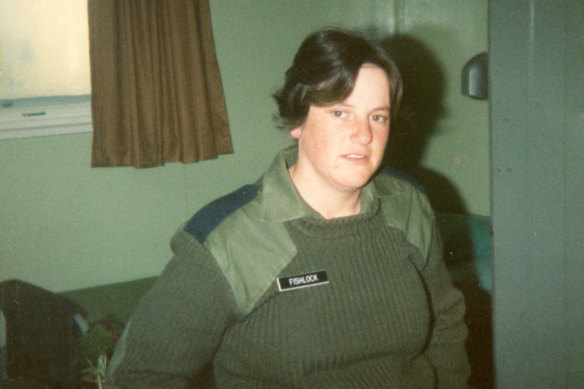
Janelle Goodwin died from a gunshot wound in 1993.
He was also acquitted of sexually assaulting a 13-year-old girl in 1986, after two missing schoolgirls were found on his property. Geeves was found not guilty of two charges of sexual assault on May 14, 1987, in the Cootamundra District Court.
‘Looking for love and solace’
Lonergan found beyond reasonable doubt that Amber had died in June 2002, but did not find she died between June 1 and 6 as alleged by the Crown. The teen was “looking for love and solace” her whole life and never found it, the judge said.
Rosalind Wright, Haigh’s mother, gave evidence during the trial that she only learned that her daughter had been living with the Geeveses after she went missing.
Asked about her personality, Wright said she was “happy, bubbly … she was kind-hearted”.
“If you were asked, would you describe Amber as a leader or a follower?” Kerr asked.
“Follower,” she said.
Start the day with a summary of the day’s most important and interesting stories, analysis and insights. Sign up for our Morning Edition newsletter.
Read the full article here