



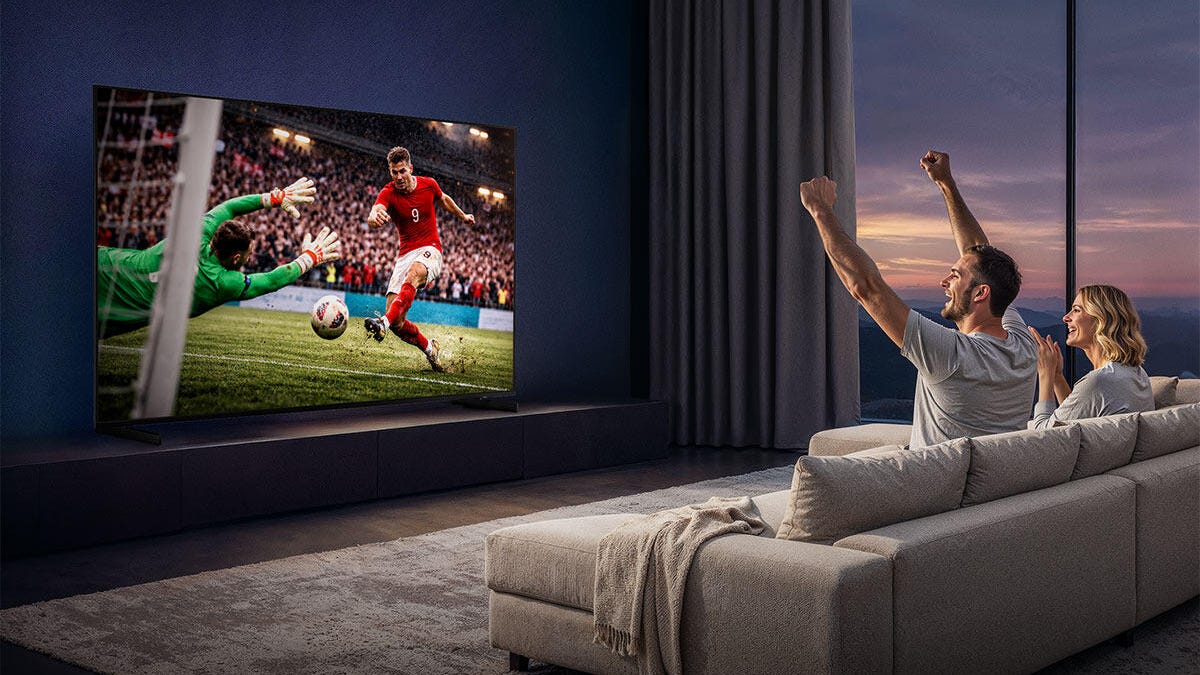
Last year, Samsung introduced its first Micro RGB TV, but that model was only available in a massive 115-inch size and had an equally enormous price tag of $27,000. For 2026, it unveiled two ranges — the R85H and R95H — with sizes between 55 and 100 inches, and prices starting at a much more reasonable $1,600.
Why are these called Micro RGB TVs? Firstly, they’re LCD TVs, like most of Samsung’s lineup, but the key difference here is that they use a different backlighting system. Where most LCD TVs use a specialized filter to generate colors, the premium R95 and more affordable R85 models use clusters of red, green and blue micro LEDs to either replace or augment the filters.
Best TVs for 2026: Expert Tested and Reviewed
Samsung says the R95H hits 100% of the BT.2020 color area, which is more colors than most TVs could ever hope for. Yet, having seen this TV, and others that make the same claim, I don’t think it’s all that important. At least, not right now.
The competing TVs I’ve witnessed hitting this number have had a lot of colors, yes, but accuracy has been reduced in the process, even according to each company’s own test data. It’s more vital that a TV reproduce the color that’s present in the content you’re watching, rather than invent a whole new one. It’s worth adding that the TVs typically hit these numbers in Vivid mode, which is notorious for being cartoonishly bright and colorful.
The Samsung R95H is the company’s high-end Micro RBG TV.
A much more compelling feature of these TVs, however, is their use of Samsung Glare Free technology, which is designed to virtually eliminate reflections from windows or overhead lights on the screen. I’ve seen it in person, and it’s one of the best antireflective systems out there.
The TVs will also be capable of displaying Samsung’s own answer to Dolby Vision 2: HDR10 Plus Advanced, though it’s yet to be seen if this format will be supported through content.
The TVs are designed for gaming, too, and have dedicated gaming modes. For smooth movement, they include Samsung’s own Motion Xcelerator 165Hz and Motion Xcelerator 144Hz tech, on the R95H and R85H, respectively.
The R95H is compatible with the Wireless One Connect box if you want to keep your sources and TV separate. Both TVs come with the new Slim Fit Wall Mount, which allows access to existing ports with a hinge at the top of the TV.
As with most of the TVs announced at CES, these models have a plethora of AI modes, from the image and audio processors to the onboard chatbots from either Microsoft Copilot or Perplexity. Two of the most notable modes are AI Soccer Mode Pro (which can make the World Cup look like a video game) and AI Sound Controller Pro, which can amplify or cut different parts of the soundtrack, such as sound effects or dialogue.
While a 130-inch R95H was announced at CES, the company has yet to detail any pricing or availability for that model.
At a briefing earlier this year, I got a look at a preproduction version of the R95H, and Samsung representatives told me that the OLED TVs were still the best choice for picture quality, while the Micro RGBs were better for brightness and color. With their antireflective coatings and gaming features, I can see that these TVs will be popular with console gamers, especially.
However, Samsung is not the only manufacturer to announce Micro RGB TVs for 2026, and it’s harder to find one that isn’t. While I’m skeptical about the benefits of hitting 100% of BT.2020, this is a factor I’ll test when I get my hands on compatible models.
The R95H and R85 are available now:
- 85-inch R95H: $6,500
- 75-inch R95H: $4,500
- 65-inch R95H: $3,200
- 85-inch R85H: $4,000
- 75-inch R85H: $2,800
- 65-inch R85H: $2,100
- 55-inch R85H: $1,600
Read the full article here