


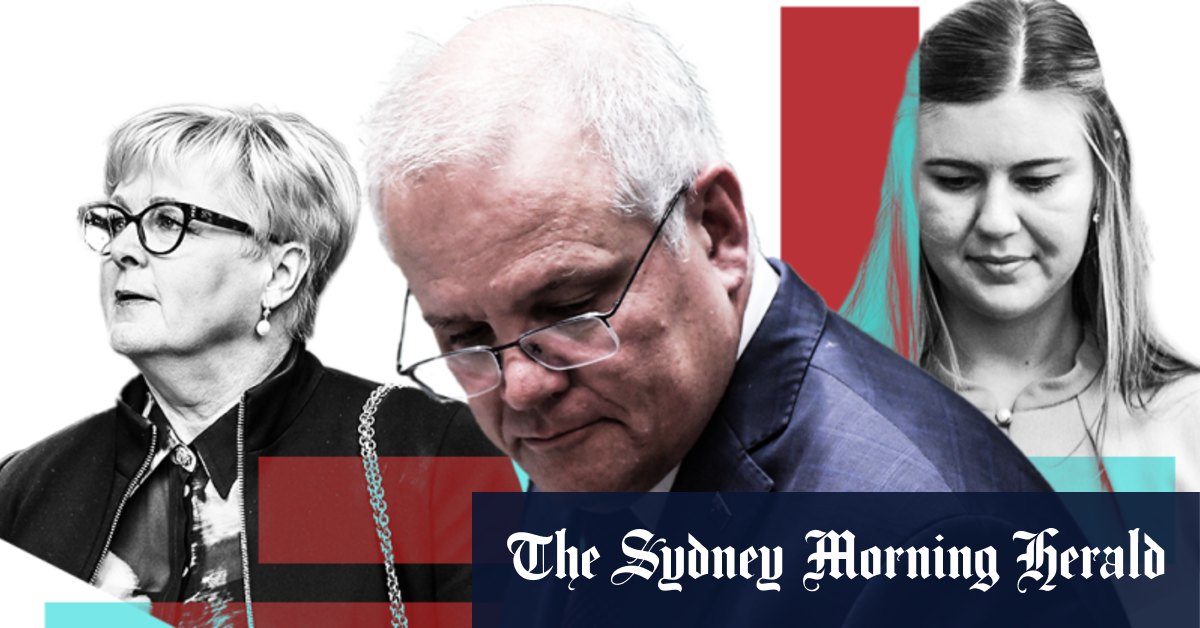
Former prime minister Scott Morrison has vigorously defended West Australian Senator Linda Reynolds’ handling of Brittany Higgins’ rape allegation, rubbishing claims of a political cover-up and saying it was parliamentary process that failed the former staffer.
Giving evidence in Reynolds’ defamation case against Higgins on Tuesday via videolink from Sydney, Morrison pored over what unfolded in the days after Higgins’ tell-all interview with The Project on February 15, 2021, including what he described as “aggressive” and “coordinated” questioning in parliament and by the media.
Scott Morrison is giving evidence this week in the Linda Reynolds v Brittany Higgins defamation trial. Credit: Nathan Perri
Morrison revealed the broadcast was the first he knew of the alleged rape in Reynolds’ ministerial suite and conceded he was disappointed then-defence minister Reynolds kept him in the dark.
But he said he understood Reynolds’ predicament in attempting to balance her obligations to the government while maintaining the promise of confidence she had given Higgins.
Morrison told Higgins’ lawyer Rachael Young, SC, that the need to ensure workplace safety at parliament was what motivated him to order an inquiry, not the growing media attention.
And the former prime minister insisted that that scrutiny did not underpin his decision to replace Reynolds as defence minister after she called Higgins a “lying cow” while watching The Project interview in her office, a comment she said in court this week she did not mean as disbelief in the rape allegation itself.
“It’s not appropriate language to be using about a member of staff, it was extremely out of character for Senator Reynolds, and she apologised,” Morrison told the court.
“That played no part in her ongoing performance as defence minister. If every member of parliament had their private comments made public, we wouldn’t have anyone serving in the parliament.
“She suffered severe injury from the attacks she endured over a long period of time, and that’s the sole reason I chose to make a change in ministerial arrangements.”
Read the full article here