



One-third of American teens says have been victimized by deepfake nude images – and more than half admit to creating AI-generated pornography themselves, a staggering new survey revealed.
Parents of students who have been targeted by AI nude images say they have little recourse when classmates use apps to put their kids’ face on naked bodies.
Today, “anyone with a single image of themselves online” are at risk of having their identity used to create sexualized AI content, warned Hany Farid, a digital forensics professor at the University of California, Berkeley.
“It is disturbingly easy” to create such imagery, thanks to “many free and easy-to-use apps and services” now available online, said Farid.
“This issue is impacting young and old, famous and not, boys and girls, men and women…the harms are measurable and real and awful,” he added.
Of the 557 teenagers surveyed by researchers at George Mason University recently, an alarming 33% – or 185 respondents – said that a sexualized AI image of them had been shared without their consent.
Even more troubling, the use of “nudification” software appeared to be more rampant among 13- to 17-year-olds, with 55% of participants – or 308 teens – admitting to creating a deepfake nude and 54% – 303 respondents – fessing up to receiving at least one sexual AI photo.
Chad M.S. Steel, a digital forensics researcher at George Mason who led the study, said the troubling numbers reflect teens’ growing shift toward living and socializing online.
“This crop of kids are GenAI natives,” Steel told The Post. “Since they got their first phones, there’s been AI included and this is the way they’re operating across the board – whether it’s doing their homework or playing around.
“Plus, you have everything from camera filters to ‘try it on’ apps that make it normal to take a picture of themself and have it be modified. Those are things that they grew up with and are native to, which I think greatly influenced the numbers.”
Steel said he originally expected around 30% of teens to report using nudification software, but was “really shocked” by the final results – particularly how frequently sexual AI images were being spread without consent.
Joseph Daniels knows first-hand just how common and devastating these images are — his daughter had an “extremely explicit,” deepfake image of her shared around the school last August when she was just 13.
One day, after seeing the fake image being passed around on a school bus, the devastated teen snapped and slapped the boy who she claimed created it. She was soon expelled and forced to transfer schools, her father recalled.
“She’s faced anxiety, issues with depression, having to switch schools – it’s taken a big toll on her,” Daniels told The Post.
“It’s a scary feeling, especially seeing how these deepfakes look so real, and I can just see the effect it’s taken on my daughter, so I can imagine what it would do to other children and their families,” he lamented.
The dad declined to comment on “pending litigation” against the school, but he was planning to file a federal lawsuit against officials for failing to intervene before the situation escalated, he and his lawyers have previously claimed.
Daniels blasted the “lack of accountability” that often occurs for deepfake perpetrators at the school level – and insisted that parents must tune in.
“Parents need to be more aware of what’s on their kids’ phones and computers and maybe get up to date on the apps and the sites that they have these days, because it’s a lot more than we had,” he said.
“Of course kids are curious, and [teens] are at the age where they’re even more curious…but they can definitely get into trouble by doing things that they don’t understand the repercussions of, or how this can affect them in the future,” he added.
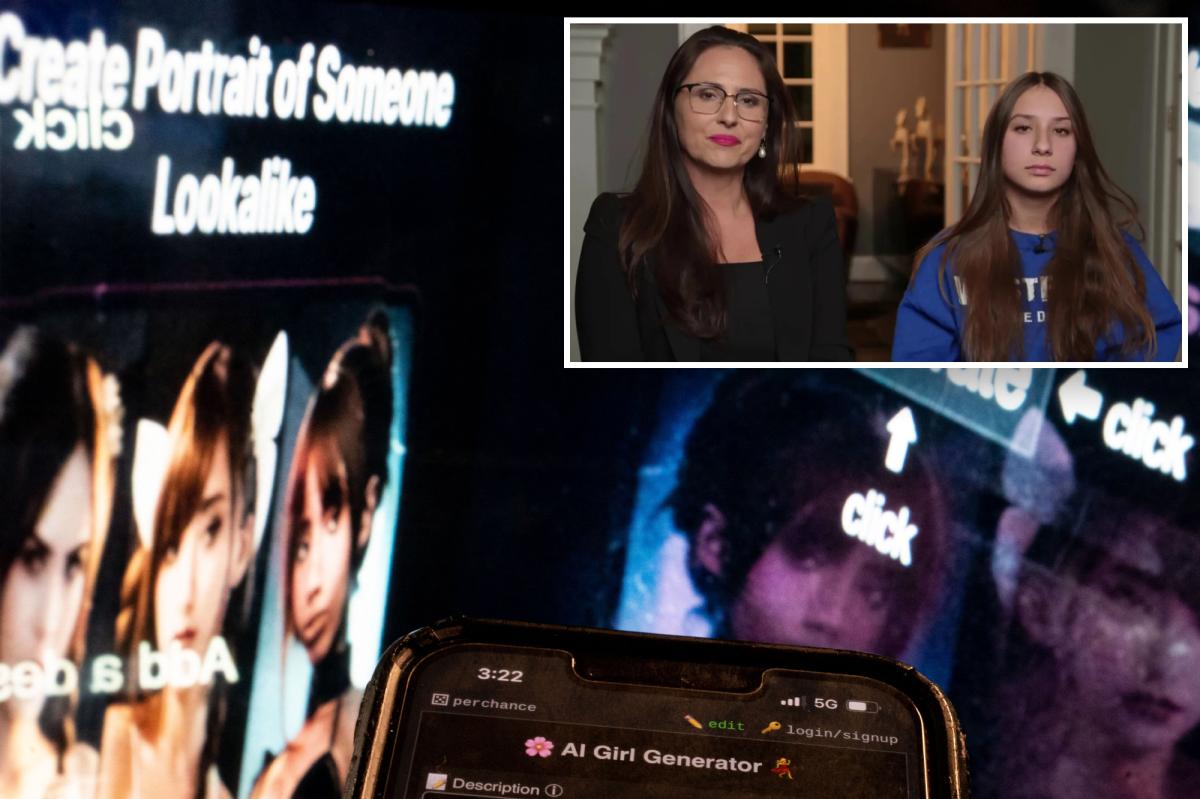
New Jersey mother Dorota Mani, whose then-14-year-old daughter Francesca became a victim of a deepfake nude circulated at her high school in October 2023, has since become an outspoken advocate for the law.
But far more needs to be done, she said Tuesday.
“The technology used to create fake nude images has become widely accessible, while awareness, safeguards and legal protections have struggled to keep up,” Mani said.
“Regardless of who creates or shares these images, the harm is real, and it should be illegal.”
At the same time, schools and parents must do more to teach young people about digital citizenship, online ethics, consent and the consequences of misusing technology, Mani said.
The survey’s grim findings “should be a wake-up call: education must be at the center of prevention,” she said.
Read the full article here