


The plan says barking dog reports are at an all-time high, increasing from 142 in 2020 to 196 in 2024.
“We continue to see higher numbers of reports that relate to animals creating a nuisance, in particular barking dogs and leashing of dog issues,” the draft plan says. “We believe this can be attributed to more people being home more often, providing opportunity for them to hear dogs bark, and an increase in dog ownership in high density areas.”
Roaming cats are also an issue. Earlier this year, the council voted in favour of a curfew that requires all pet cats to be indoors between 6pm and 8am from October.
When the council surveyed 973 people about the draft plan, 30 per cent said they often saw dogs off-leash where they shouldn’t be, and 31 per cent said they often or always observed dog waste not being picked up.
However, the majority of respondents said their experiences with pets in public places were largely positive, and the number of dog attacks in the City of Melbourne was down.
The City of Melbourne has 15 dog parks and is looking to update some of them, including Clayton Reserve dog park in North Melbourne, which is being split into two areas – one allowing the quiet dogs to have a safe space and one for the more confident alpha dogs. The park is set to open next year, with areas for “shy dogs” and one for “high-energy pups”.
“The size and shape of the proposed park is to remain the same. However, we’re trialling a ‘quiet’ and ‘confident’ dog zone,” the City of Melbourne said in consultation documents.
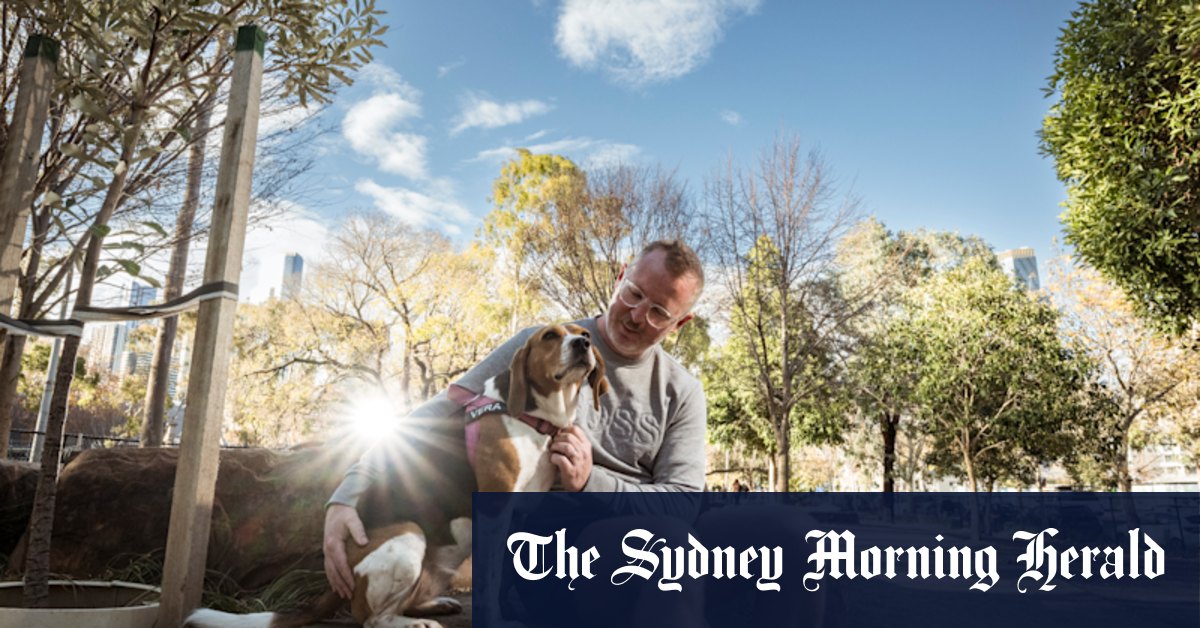
Brett Potts, with his dog Vera, supports the division of dog parks into areas for more confident and quieter dogs. Credit: Chris Hopkins
Potts said he supported divided areas within dog parks as long as the area was not too small, so grass had a chance to regenerate.
“At Eades Park, where it’s open to everyone, we have everything from chihuahuas through to massive big greyhounds that are running around at crazy speeds,” he said.
Lord Mayor Nick Reece said there had been an “explosion” in pet ownership across Melbourne as people sought companionship.
“One of the big trends that is driving this is, I think, loneliness, [which] is a real issue in modern society, and people are seeking companionship,” he said. “It’s also great to see that living in an apartment or multi-dwelling living is not inconsistent with pet ownership.”
The most popular breed of dog in the City of Melbourne is the cavoodle – followed by the greyhound, toy poodle, labrador, Jack Russell terrier, mini dachshund, French bulldog, spoodle, mini schnauzer and border collie.
The top 10 Melbourne dog names are Luna, Charlie, Coco, Ruby, Bella, Milo, Daisy, Frankie, Lola and Poppy.
Loading
Reece said he owned two cavoodles, Banjo and Ziggy, and was not surprised to see the breed take the most popular dog spot.
“The thing that is wonderful about cavoodles is that they are extremely cute, very friendly and loving, and they’re good house dogs as well,” he said.
Reece said the problem of barking dogs was “a relatively small issue in the scheme of things”, but it was important that the right rules were in place, including offering spaces for less confident dogs in dog parks.
“We’re a municipality that embraces diversity and inclusion, and that includes dogs as well,” he said. “In our newer dog parks, we are providing for bigger dogs and smaller dogs, and ensuring that the dogs can enjoy some off-lead time, while also not causing a disruption or disharmony among other dogs and their owners.”
Loading
The city council’s draft domestic animal management plan is open to community feedback before being finalised in September.
Get alerts on breaking news as it happens. Sign up for our Breaking News Alert.
Read the full article here