



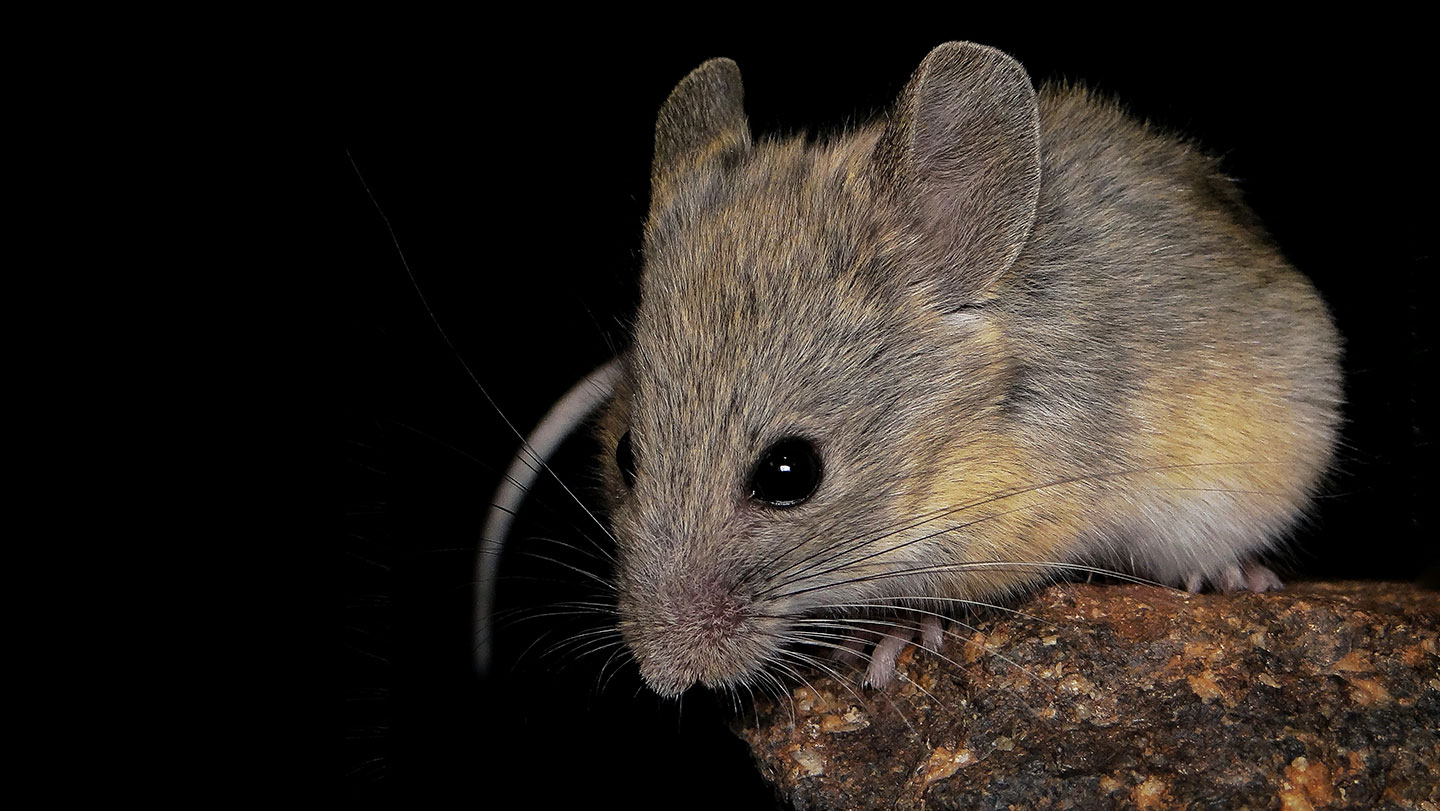
It’s not easy living the high life. Take it from the Andean leaf-eared mouse, Earth’s highest-dwelling mammal.
To tolerate the freezing temperatures atop dormant volcanoes, these mice generate more body heat than members of the species that live lower down, researchers report in the July 9 Science. Their mitochondria, the cell’s energy producers, have also adapted in ways that give oxygen-dependent processes a boost in low-oxygen conditions.
Andean leaf-eared mice (Phyllotis vaccarum) range from sea to summit, living anywhere from Chile’s desert coast to peaks in the Andes Mountains. Those living at elevations exceeding 6,700 meters face freezing temperatures that can drop as low as –60º Celsius and oxygen levels roughly 44 percent that of sea level. How the rodents handle the harsh conditions was unclear.
Evolutionary biologist Jay Storz of the University of Nebraska–Lincoln and colleagues have summited many Andean peaks in search of small mammals, including during a 2020 excursion that uncovered the Andean leaf-eared mouse as a world record holder. Excursions are several weeks long so that the team can acclimate to the altitude and conduct wildlife surveys as they climb, Storz says. But unlike mountaineering humans, “mice can’t wear Gore-Tex jackets.”
Storz and colleagues compared how Andean leaf-eared mice captured at different elevations fared in small chambers that simulated the frigid, low-oxygen mountaintop environment. High-altitude mice consumed oxygen at a higher rate than low-altitude animals, a hint that mice living at high elevation would be more active in the cold.
Metabolic and genetic analyses suggest that shivering muscles help high-altitude mice produce extra heat. What’s more, the animals’ blood cells might store extra carbon dioxide, which would lower the risk of hyperventilation from breathing fast at high altitude where the air is thin.
“They’re basically engaging all of their metabolic machinery toward the goal of maintaining a constant body temperature,” Storz says.
The genetic analysis also offered a clue that both lowland and highland mice can detoxify compounds from a poisonous diet. Desert animals, limited by what’s available, often feed on toxic plants. It’s unclear how adaptations to both a harsh environment and a toxic diet might be related, but it could be more complicated to deal with both at the same time.
For these mice, Storz says, “things are really tough all over.”
Read the full article here