




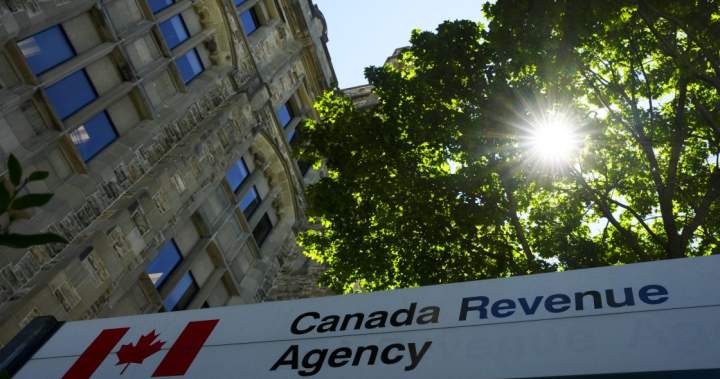
Complaints about the Canada Revenue Agency surged over the past fiscal year compared with the previous three years, according to the Office of the Taxpayers’ Ombudsperson, which released a report Tuesday outlining seven ways the agency needs to improve its services for Canadians.
Among those is the recommendation that automatic tax filing be expanded for all taxpayers with “simple” tax situations, not just low-income Canadians.
Taxpayers’ ombudsperson François Boileau wrote the report, titled “In Pursuit of Better Service: Taxpayers Deserve More,” which covers the period from April 1, 2025, to March 31, 2026, including the most recent tax filing season.
It was based on complaints filed with the taxpayers’ ombudsperson’s office and investigated during the given period. It highlights service issues such as from phone support, processing delays and online account access.
This comes as the CRA aims to be more efficient after Finance and National Revenue Minister François-Philippe Champagne gave the agency 100 days to improve what he called “unacceptable” services in September 2025.
Boileau spoke to reporters Tuesday in Ottawa as the report was released.
“While new technologies may be convenient for the CRA and a large number of taxpayers, the CRA must remember that many will struggle if it forces the changes without allowing for exceptions,” Boileau said.
Boileau gave a few examples of Canadian taxpayers that may struggle to adapt to changing technologies used by the CRA, including seniors, newcomers who may not speak English or French as their first language, and Indigenous people who may live in rural areas with limited internet access.
“The CRA must not make it harder for these groups to meet their tax obligations and receive the benefits and credits they are entitled to.”
Boileau also said to reporters that he believes current income tax laws are too complex for both taxpayers and the CRA.
“When I was studying law, the Income Tax Act was about that thick [Boileau gestures with his hands]. Now it’s twice the size, double — it’s completely nuts,” he said.
“If you look at your T1, the complexity of it all is amazing, and not necessarily positively. So maybe it’s time to streamline a little bit.”
The report includes five of the most common complaints about the CRA over the given period.
Contact centres were the top area of concern in the report, and, more specifically, the information provided by contact centre agents to taxpayers being seen as incomplete, inaccurate or unclear. Many complained they couldn’t get through to an agent in the first place because of excessive wait times or other issues waiting on hold.

Get breaking National news
Get breaking Canada news delivered to your inbox as it happens so you won’t miss a trending story.
Another complaint the report said it received often was the amount of time it was taking the CRA to process some taxpayers’ income tax returns and adjustments to those returns. This comes after the office released a separate report last week saying that some taxpayers were waiting up to 47 weeks for adjustments to their T1 income tax form — more than double the CRA’s service standard.
The ombudsperson’s report says a large number of complaints included taxpayers who felt the CRA was not doing a good enough job in considering the unique circumstances of some taxpayers when they take collection action. Some of these situations resulted in “financial hardships,” and even led the ombudsperson to make urgent requests to the CRA, the report said.
The CRA has its own Service Feedback Program, but the report says one of the common complaints received was that the CRA was taking longer than its published service standards to respond to those complaints.
The CRA said it was overwhelmed by a surge in complaints, according to the report, and many of those complaints related to call centre wait times, the disability tax credit process and T1 adjustment requests.
Finally, the report says there were many complaints from taxpayers who were unable to access their CRA accounts, and, more specifically, those who found it difficult to regain access to their accounts after being locked out.
To address these issues, the ombudsperson provides seven recommendations for the CRA.
The report first says the CRA must modernize its Check CRA processing times tool to be more intuitive and user-friendly, in addition to its Progress Tracker, so that taxpayers can have a better sense of when their requests, like tax return adjustments, will be processed.
Second, the CRA also needs to maintain transparency and accountability on its processing times by providing public reports on those times compared with its own service standards, either monthly or quarterly, starting fall 2026.
Third, the report recommends the CRA be more proactive in engaging with taxpayers and key stakeholders to ensure any new digital tools or enhancements are actually meeting the needs of the public.
Fourth, the CRA should overhaul its callback system by fall 2027. By then, the report says taxpayers should be able to request a callback from an agent without having to navigate the call centre first, and those callback requests should be available for all topics instead of specific subject restrictions, the report says.
Fifth, the report says the CRA should expand its use of online chat services, featuring live CRA agents, by October 2028. This suggestion is specifically for those using the My Business Account and the Represent a Client options in the CRA portal online.
Sixth, as the CRA adopts the use of AI, the report stresses the agency must make sure to meet the needs of vulnerable populations so they are treated fairly.
Boileau was asked by reporters Tuesday about the use of AI by the CRA, which he supports, but along with the use of live agents ensuring equity and fairness.
“What we can do is to make sure that it’s done with equity, with fairness, with transparency and making sure that we do not repeat the mistakes that were done elsewhere in the world by having AI deciding on cases, individual cases,” Boileau said.
“It has to be reviewed by an individual. So as long as it remains a tool, then of course, let’s use it.”
Finally, the report recommends that the eligibility for automatic tax filing be expanded.
In October 2025, the Liberal government announced automatic tax filing for low-income households to make the process easier and smoother. The report says this should also include all taxpayers whose tax situation may be considered “simple,” and “not just low-income individuals.”
Read the full article here