




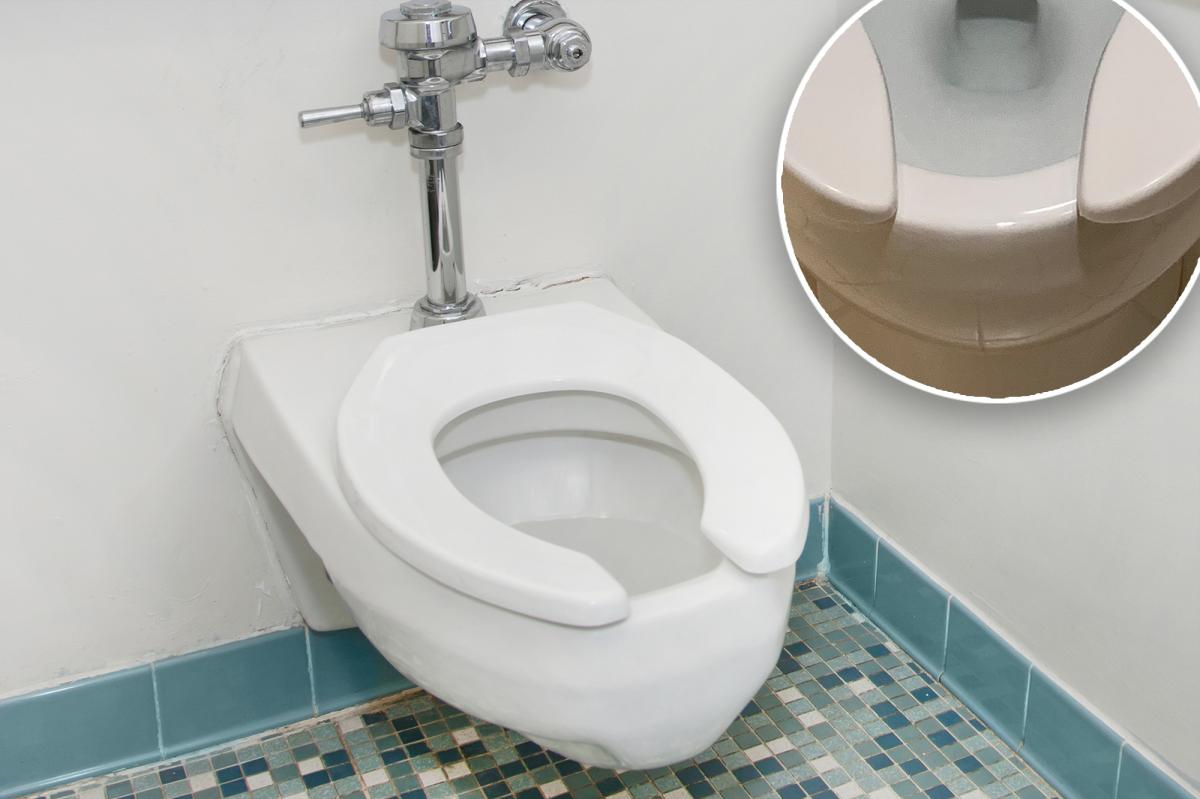
This is news for those who skeeve public toilet seats.
There are many unspoken, strange things in a public restroom — the gaps in toilet seats are one of them.
And while you might think it’s a manufacturing error, there’s actually a very real, legal reason why public toilet seats look the way they do compared to your porcelain throne at home.
Since 1955, that center gap in a public toilet seat has been required in every public restroom across the country, thanks to the American Standard National Plumbing Code, which states, “Water closets shall be equipped with seats of smooth non-absorbent material. All seats of water closets provided for public use shall be of the open-front type.”
If you’re someone who meticulously lays down toilet paper or squats over the bowl, not to come in contact with it for hygienic reasons, rest assured that the reason for the U-shape seat is actually contact elimination.
“A closed oval seat creates a continuous surface where skin presses against plastic that thousands of strangers have already sat on. Removing the front section eliminates that contact zone entirely. Fewer shared square inches, fewer bacterial transfer points between users,” X user, @aakashgupta wrote in a now viral X post, with over 5.2 million views.
The second reason? To make it easier for women to wipe their privates without accidentally skimming the gross toilet seat. “The gap is sized for a hand to pass through cleanly,” Gupta explained.
And for men who don’t know how to aim properly, “The open front also eliminates the surface where urine pools at the front of the seat, so the next user sits on dry plastic instead of someone else’s miss.”
The more you know.
Of course, X users had a field day with this news, many scratching their heads at this news.
“You don’t sit on the opening anyway but the rest of the seat so I don’t get this point,” one wondered.
“I always thought it was for men who failed to lift the seat up,” quipped someone else.
While someone else chimed in, writing, “In Italy right now, I really miss American toilets.”
Read the full article here