



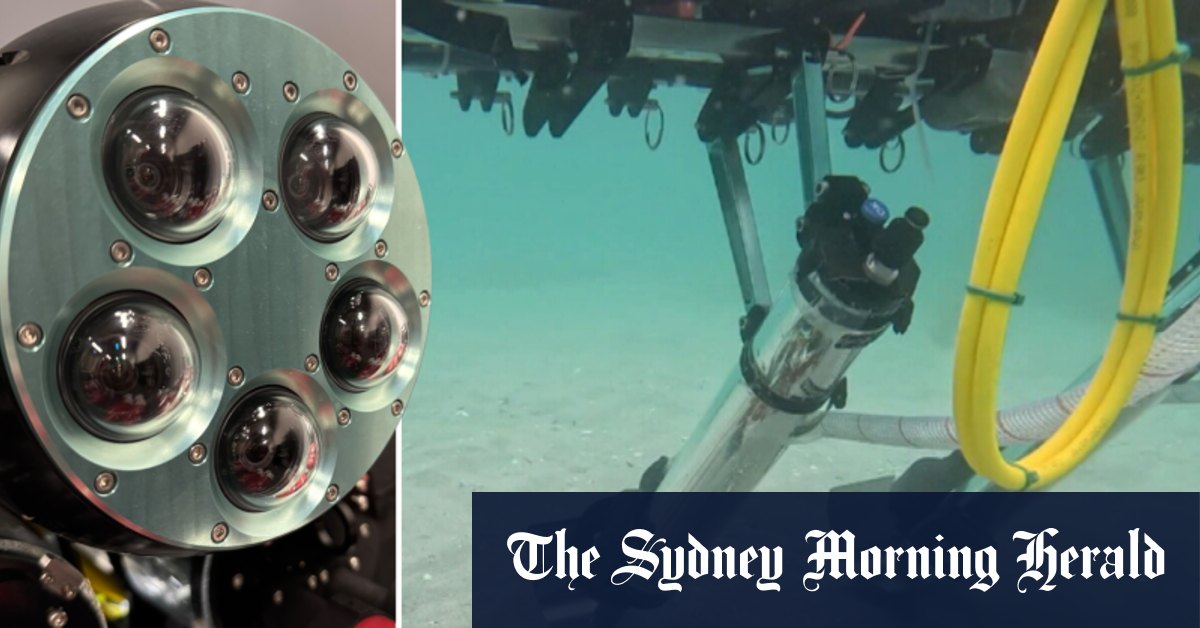
A drone shipped in from the United States is sowing thousands of tiny seeds on the ocean floor between Fremantle and Rockingham in a bid to stop the underwater wipeout of a “mysterious” marine plant being damaged by industrialisation and climate change.
Seagrass – the only flowering plant that can live underwater – is used as an indicator of a healthy estuary, and can remove 35 times more carbon from the atmosphere than a rainforest.
The underwater restoration robot in action.
“We’re really lucky in Western Australia that we have the biggest and most diverse seagrass meadows in the world, and we should be really proud of that,” Seeds for Snapper program manager Steve Purcell said.
However, Professor Gary Kendrick from the School of Biological Sciences and UWA’s Oceans Institute said it was being destroyed at a rapid rate.
“The biggest challenge we face globally is that we’re losing seagrass at about one soccer field, or half a hectare, every 30 minutes,” Kendrick said.
“We need to be able to restore hundreds to thousands of hectares a year.”
Current restoration efforts have been carried out at the hands of volunteers, who throw seeds overboard like chicken feed, or by divers who manually plant them.
The labour-intensive methods make for slow progress, and can currently only sow one to two hectares – and there is a degree of luck.
A newly arrived underwater robot, or seed injection machine drone, would help improve that rate by allowing seeds to survive early life in, rather than on top of, the sediment.
Read the full article here