



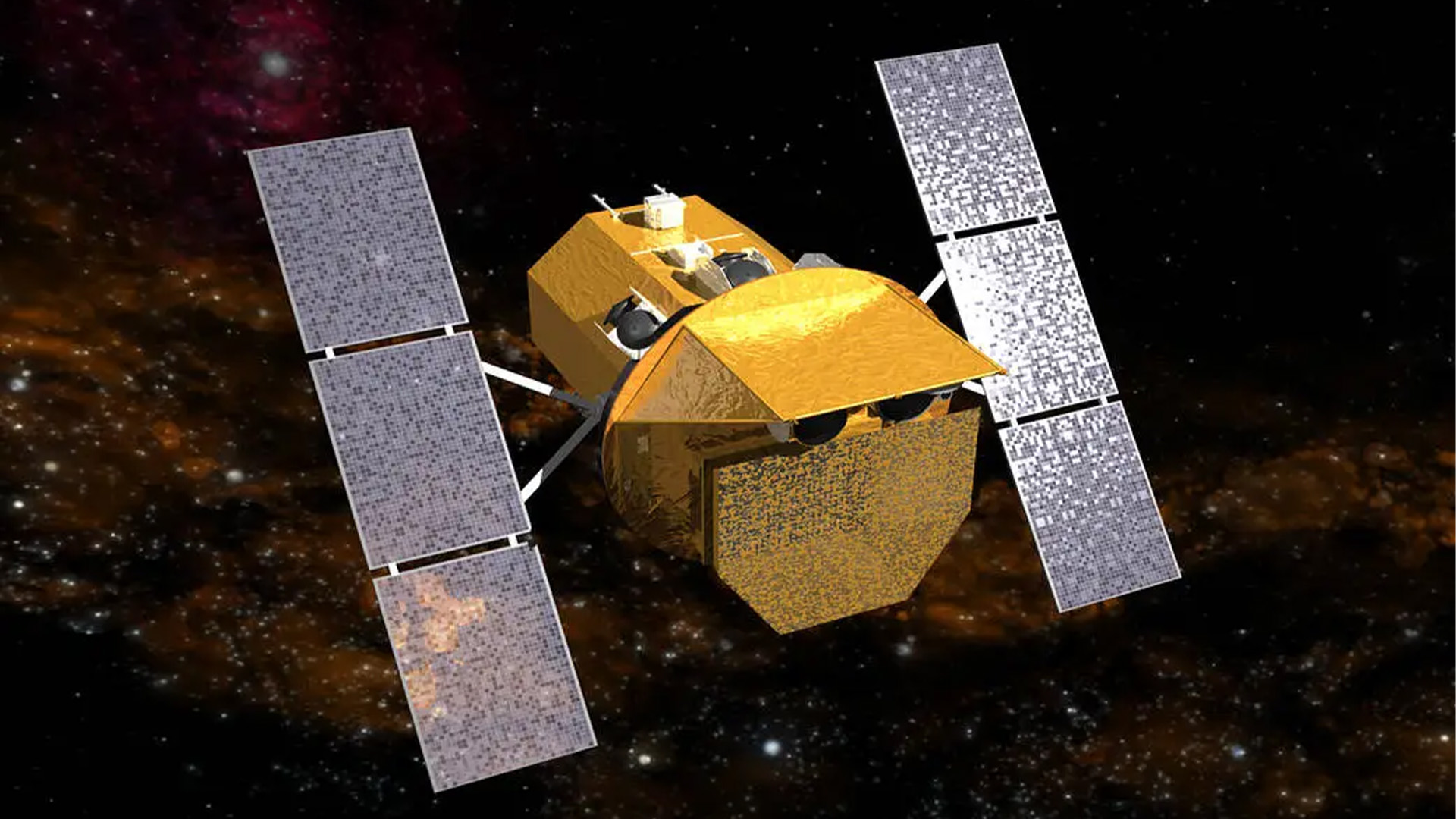
The Neil Gehrels Swift Observatory, formerly known as the Swift Gamma-Ray Burst Explorer, has reached the end of its journey. Launched into orbit in 2004, the space telescope completed an extraordinary 22-year mission when it plunged back into Earth’s atmosphere on Wednesday.
“Swift delivered an incredible, lasting return on investment for the nation, designed for a two-year primary mission but productive for more than 10 times as long,” Shawn Domagal-Goldman, director of the Astrophysics Division at NASA, said in a statement last month.
NASA says the telescope hit the atmosphere Wednesday at 7:39 am ET, just four hours after the space agency predicted.
The space telescope entered orbit over the North Sumatra region of Indonesia, just west of Malaysia. NASA says that most of the space telescope likely burned up upon reentry but that some components may have survived.
In preparation for Swift’s reentry, NASA shut down operations in late October after conducting its final observation on Oct. 20. It was orbiting at just 171 miles above Earth’s surface at that point, and the increased atmospheric drag prevented Swift from doing any further work.
It was a bittersweet moment for those who worked on the project.
Swift had a lifetime to remember
Swift’s initial mission helped advance science’s understanding of gamma-ray bursts and their role in phenomena such as the birth of black holes and the history of the early universe.
That initial mission ended in 2004, but the observatory was doing so well that NASA extended its operations to continue collecting data. Its name changed to the Neil Gehrels Swift Observatory in 2018, in honor of pioneering NASA astrophysicist Neil Gehrels, who served as the agency’s chief of the Astroparticle Physics Laboratory from 1995 until his death in 2017.
The space telescope was designed to help solve the mystery of gamma-ray bursts by rapidly detecting them, determining their sources and then further analyzing them for study back on Earth. It also enabled unique sampling to observe newly discovered objects only minutes after their light reached Earth, Nousek said.
The volume of science research conducted using Swift’s data is difficult to match. According to NASA, Swift scanned over 2,000 gamma-ray bursts, took 1.5 million images from its ultraviolet/optical telescope and sent home 12 TB of data. That data is showcased in an estimated 7,000 research papers, which averages out to just under one study per day over its 22-year run.
“We hope Swift has set the standard for time domain astrophysics,” Nousek said.
The space telescope also helped pioneer many policies that ultimately shaped those discoveries, such as making data immediately accessible and providing over 1,000 guest investigators with the opportunity to use Swift throughout its long life.
It’s only a stroke of bad luck that kept the observatory from floating for even longer. NASA attempted a rescue of Swift over the summer of 2026. However, after a series of engineering difficulties and control issues, the attempt was abandoned, sealing Swift’s fate. NASA turned the instruments back on and kept recording data as long as possible.
Read the full article here