



The death of a four-year-old boy has forced a community on the Central Coast to reckon with more than the horrors inside a home on Wyong’s Byron Street.
Plagues of domestic violence, housing failure and drug addiction are left in the hands of police, charities and hospitals in the lakeside suburbs of the region’s north. Meanwhile, Sydney’s overflowing wealth insulates the marinas, beach homes and cafés clustered along the sea, and to the south.
Last weekend, a woman staggered into Wyong police station and told officers she had lost her four-year-old son.
Through the delirium, police allegedly discerned a horrifying fragment – the woman said she had been eating him. The scene officers encountered in the home on Byron Street is too harrowing to detail.
Nine years ago almost to the day, a Toyota Kluger roared down the same street, doing 140km/h past the general store, the timber homes and the church, down toward the river and skidded into the intersection.
The passengers braced, preparing to be swallowed by the brown water of the Wyong River, but the vehicle pulled up short.
Then a ute pulled up alongside it and a young meth head, Keith Evans, wound down the passenger window and leaned out with a shotgun.
He had a smile on his face as he fired through the rear window of the Kluger.
Locals still remember the acrid smell of burning plastic and gunpowder that wafted into their homes and wouldn’t leave.
Jesse Thompson was shot in the throat and bled out near Wyong Pool, which briefly attracted flowers for the 19-year-old father of two.
Keith Evans was sentenced to 27 years in prison. The ute’s driver, his father John, is serving a similar sentence.
‘I hope you feel the love’
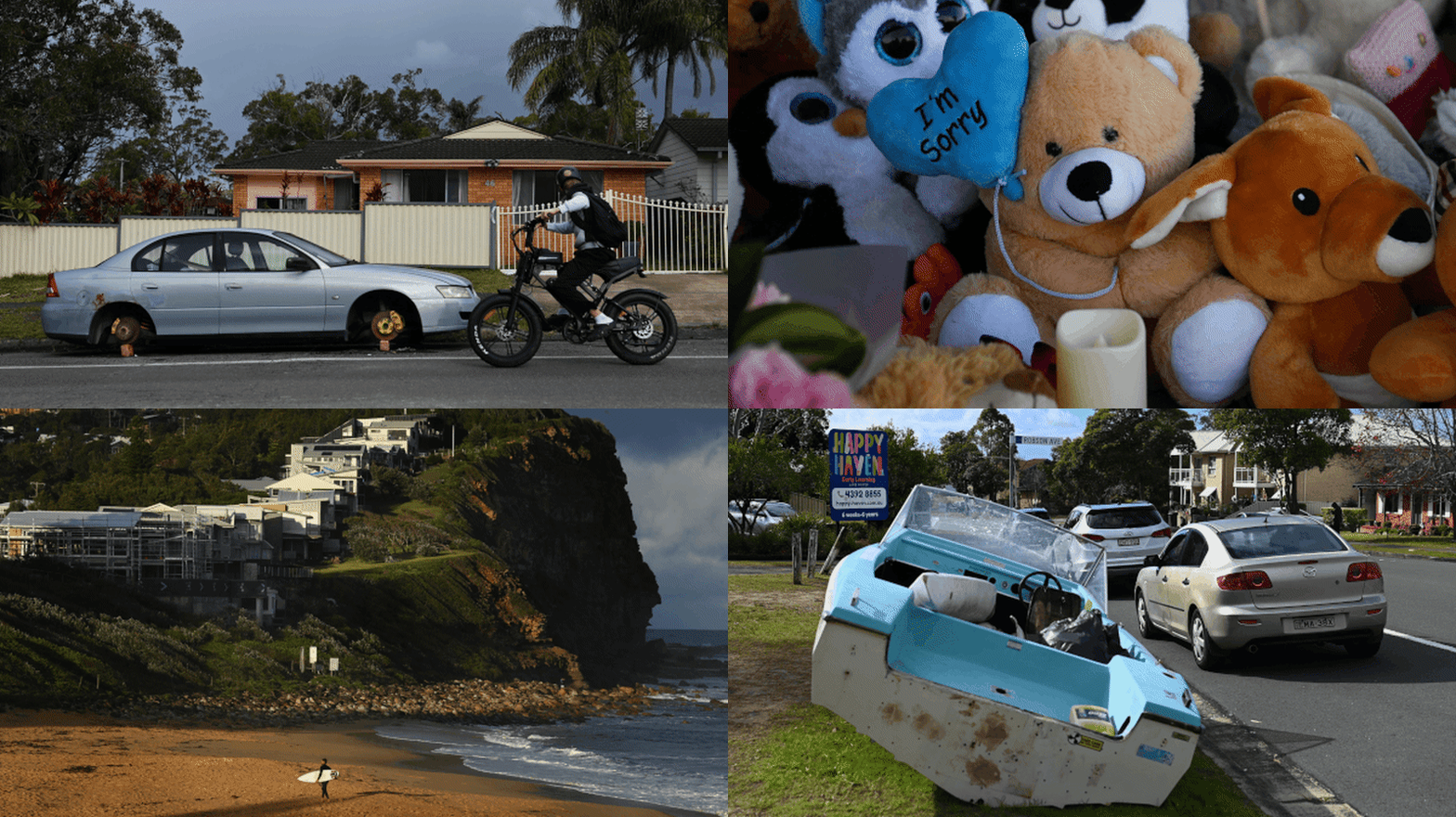
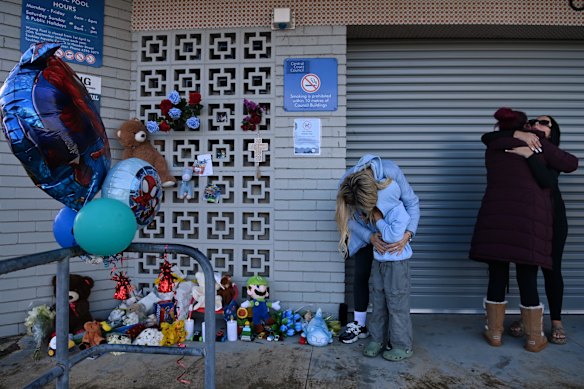
Wyong Pool’s breeze blocks, tiles and steps are being used as a memorial again, entombed by toys, balloons, flowers, the loopy drawings of children, and handwritten cards of parents.
But something worse is haunting the town now.
“It’s shocked us, to the core,” one local at the memorial said of last week’s alleged murder, dropping off a bear.
“I hope you feel the love now from EVERYONE who cannot understand this,” one card reads.
“Fly high, Spider-Man. You are SO loved.”
The boy and his mother had moved to Wyong earlier this year into public housing after living in Gunnedah and Armidale.
There are reports she had fled and been charged with domestic violence, while sources say she had a history of drug addiction, psychosis and dealings with the Department of Communities and Justice.
The Herald reported child protection workers, familiar with Byron Street, feared a year-long transition to a new system was allowing families to slip through the cracks in an area with the second-highest rate of domestic violence in NSW.
A tale of two coasts
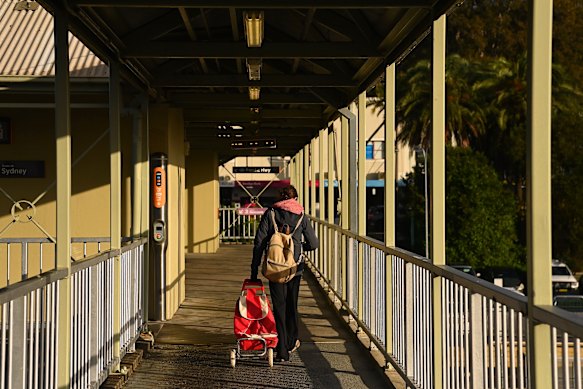
The Central Coast’s north end has always been far more affordable than the south. It’s too far to commute to Sydney by train, buses are rare and unreliable, and there are very few government services.
There are no large employers or professional opportunities without a commute to Newcastle or Sydney. The best money, locally, comes from Boomer retirees hiring Millennial tradies.
But even lucky young families with dual incomes, once adequate for a quarter-acre and tinny, are now relegated to the granny flats, caravans and downstairs areas of their parents’ sprawling homes.
Many are struggling to feed themselves.
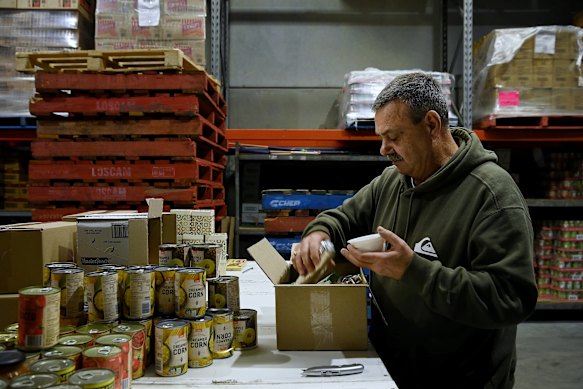
“We were spending about $12,000 a month from October to January just on food, and that didn’t include what we got in donations,” charity worker Mitch Cowan told the Herald.
“Since February, it’s jumped to $28,000 each month. The need is exploding.”
Cowan helps run The Bikers Hand, a charity that collects and stores bulk food staples and distributes them to the hundreds of charities that keep people alive on the coast.
“You only need to drive around Toukley to see people setting up tents, living out of their cars and vans,” Cowan said.
“We are seeing double-income families; once they pay the mortgage, the fuel, the electricity, [with] nothing left to put on the table.
“Our children are being priced out. How do you earn $750 a week up here?”
For the first time, this end of the coast has a homeless population.
Paul, his partner Angie, and dogs Bear and Bash, have lived in a caravan for six years and are parked up next to the footings of Toukley bridge. They have never had so many neighbours.
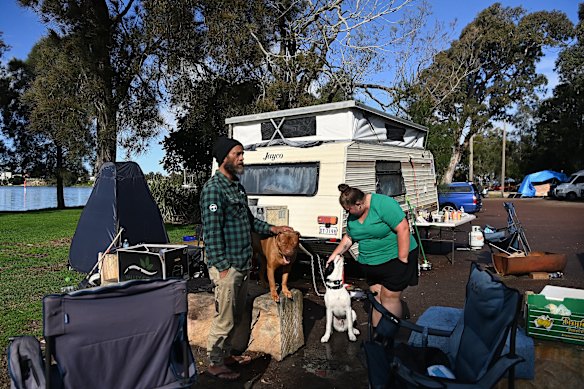
“It’s unsettling, seeing women with kids pull up here,” Paul said, gesturing to the row of tents that have popped up in the last two years.
“It’s usually domestic. Not everyone here is an addict. There are some, but plenty of people can’t afford housing here now.”
The Central Coast’s north is not a carpet of disadvantage, but a patchwork.
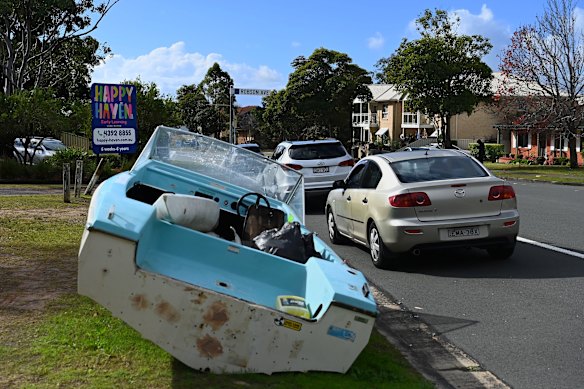
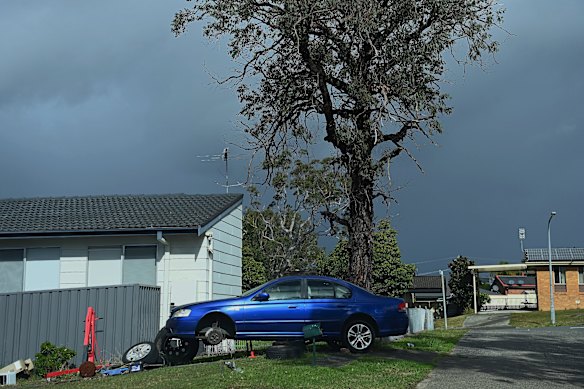
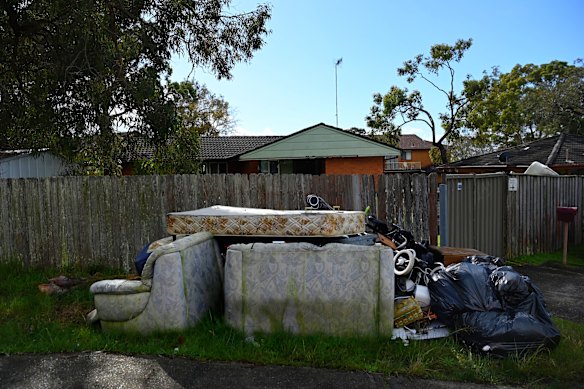
One end of Gorokan Drive, five minutes from the charity storage facility, has Commodores and Falcons up on bricks, boats rusting on median strips, piles of rubbish and boarded windows.
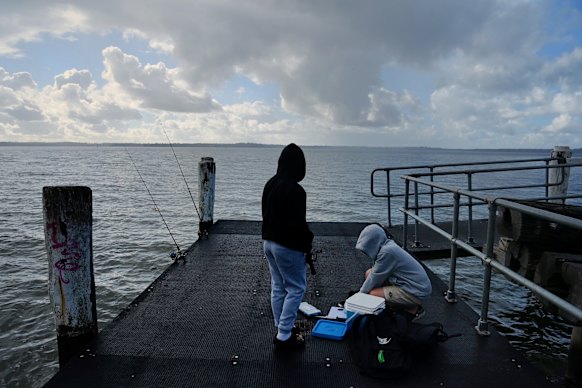
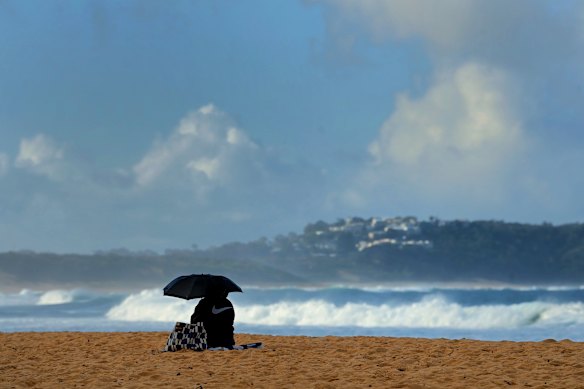
The other is perfectly manicured lawns, white fences, utes with lift-kits and snorkels. Children on expensive e-bikes with fishing rods on their backs, bound for the beaches overlooked by Hamptons-style mansions at Norah Head.
It’s a pensioner’s paradise meets Mt Druitt-by-the-sea.
Cowan, a pillar of the community and one-time independent council nominee, said the north feels forgotten by all levels of government.
“Charities are doing the heavy lifting of what government should be doing,” he said.
“Just have a look at the state of the roads.”
Coasties are fans of the joke, “NSW stands for Newcastle, Sydney, Wollongong, and nothing else.”
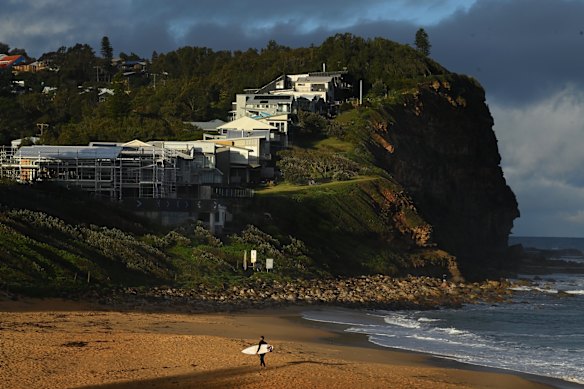
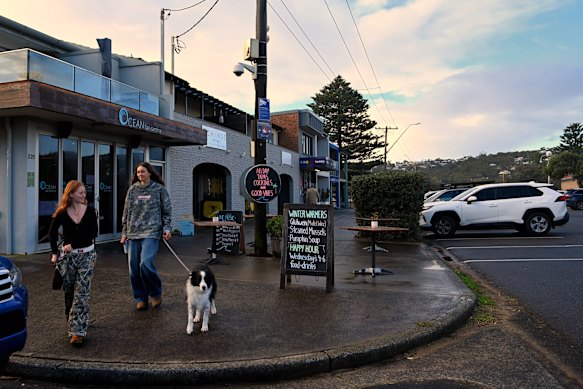
But down at the coast’s south end it can feel like an extension of the most affluent Sydney suburbs; Prime Minister Anthony Albanese sensationally shelled out $4.3m on a clifftop home in Copacabana.
There’s a ferry to Sydney’s Palm Beach, a millionaire’s enclave of wine bars, pricey restaurants and private wharves.
‘We are becoming desensitised’
Kelly Falconer, Wyong Hospital’s nurses union president, has been in the job for 30 years.
She’s seeing teenagers coming in homeless, school children and the elderly going without food or relying on handouts, and ice-fuelled violence every day in the north.
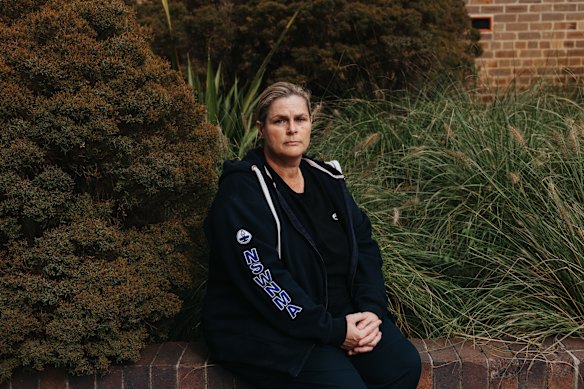
“It’s way worse than it was 20 years ago,” she said.
“It’s a vicious cycle here: low socio-economic area, high domestic violence, drug use, low education and a large indigenous population.”
“As an emergency department, we are bearing the brunt. Trying to treat paranoid, psychotic patients having episodes in front of people having strokes and heart attacks.”
This year, Falconer said, she has been slapped in the face, spat on, had her glasses thrown across the room, stood over by men and seen police TASER a person lashing out in a resuscitation bay.
“A lot of our juniors are coming through and lasting three to five years and moving on because of the trauma you go through, vicarious as well, every day and every shift,” she said.
Inquiries are already being launched into the government’s interactions with the Wyong mother and child, trying to discern what opportunities to intervene were missed or what warning signs were ignored.
The allegations, if found true by a court, would make it one of the worst things to happen in the region’s history.
But, for people on the coast’s frontline, there’s a macabre familiarity.
In October 2020, a feared local drug dealer, known to collect debts using sexual violence, met his own violent end running through the streets of The Entrance waving a .22 rifle.
When he pointed the rifle at police, an officer armed with a high-powered carbine shot him in the throat.
A few years before that, an iced-out parolee tried to saw a man’s head off in a Toukley caravan park with a steak knife. The police found him dancing around the body and laughing.
“Honestly, I think we are becoming desensitised to it because this is not a one-off,” Falconer said of the latest tragedy in Wyong.
“I’m sickened it happened in our community. I hate to think I live among people we can’t get help to. But the kids coming up through these families are getting used to this; they know no better,” she said.
“Third-generation domestic violence families, raised never eating a vegetable, parents smoking bongs or ice pipes in front of them.
“The new normal is not what we considered normal all that long ago.”
For now, the coast must grapple with the news and rumours filtering out from Byron Street, and try to comprehend how a place so close to their own could be so different.
“If I had ever been given the chance to know you, I would have welcomed you into my family without hesitation,” one woman wrote in a community forum.
“I would have given you a home filled with love, laughter, security, and the everyday joys every child deserves.
“I wish with all my heart that someone could have saved you.”
She signed the message simply:
“Mum xx.”
Support is available from the National Sexual Assault, Domestic Family Violence Counselling Service at 1800RESPECT (1800 737 732). Anyone affected by sexual, domestic or family violence can also access 24/7, free and confidential trauma-specialist counselling through Full Stop Australia (1800 385 578).
Start the day with a summary of the day’s most important and interesting stories, analysis and insights. Sign up for our Morning Edition newsletter.
Read the full article here