



Chances are, if you own a pizza oven, have stood near a pizza oven or have uttered the words “pizza oven” in the vicinity of your phone, it’s likely that the almighty algorithm has delivered up a steady stream of pizza oven accessories, from pizza oven stands to sizzler platters to pizza peels in every style and shape.
If you have cursed in the vicinity of your phone while trying to launch a pizza into your pizza oven without inadvertently creating a calzone, chances are even better that Big Internet Brother has targeted you for a sliding pizza peel. If, after dozens of practice launches, you haven’t mastered the art of the traditional wood or perforated metal pizza peel, even with all-powerful semolina flour gliders, you may be very tempted by the ease promised by such a tool as a sliding pizza peel.
The Best Pizza Ovens, Tested by CNET
But is it worth it? Or is it just the Temu-niverse capitalizing on your desire for a homemade pizza that doesn’t come with a side of anxiety and despair? Reader, the temptation was too strong. I checked one out, and here’s the lowdown on what you can expect from a sliding pizza peel.
How does a sliding pizza peel work?
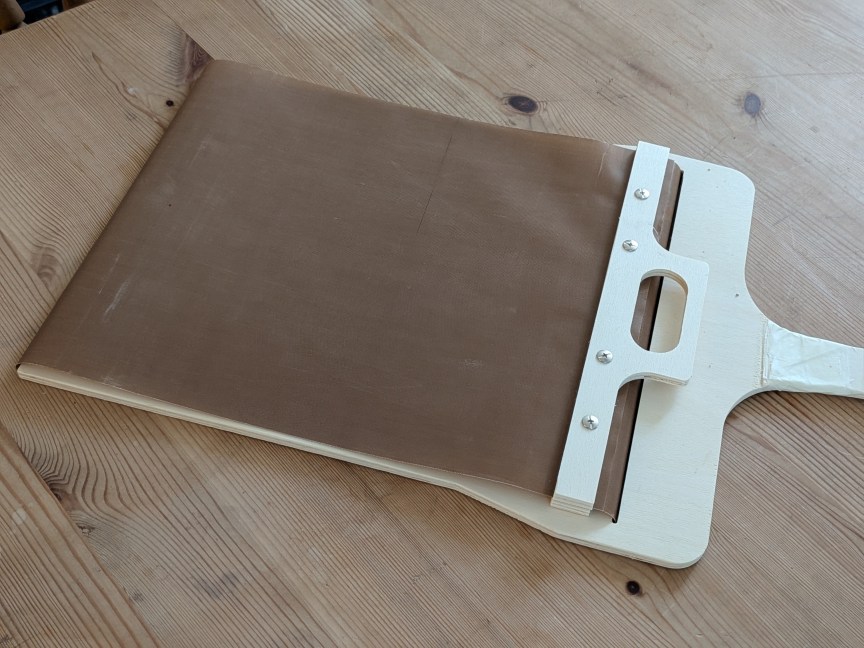
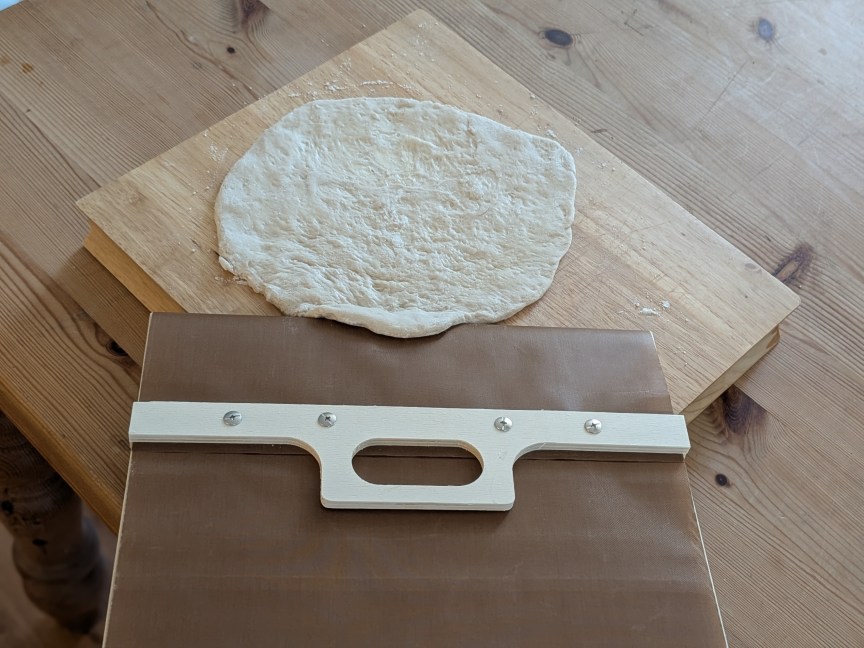
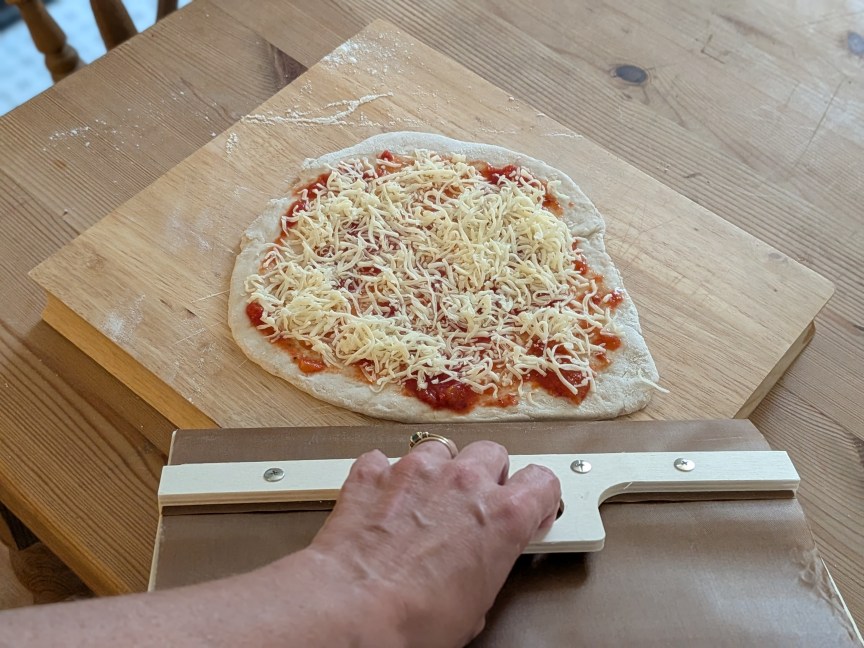
A sliding pizza peel is essentially a lightweight wooden pizza peel with a manual conveyor belt attached. Rather than thrusting a stationary peel under your entire pie, you only need a small edge of maneuverability to start. Once the sliding peel gets a little purchase on the raw pizza dough, you pull the cloth slide toward you by its handle while pushing the wooden board underneath.
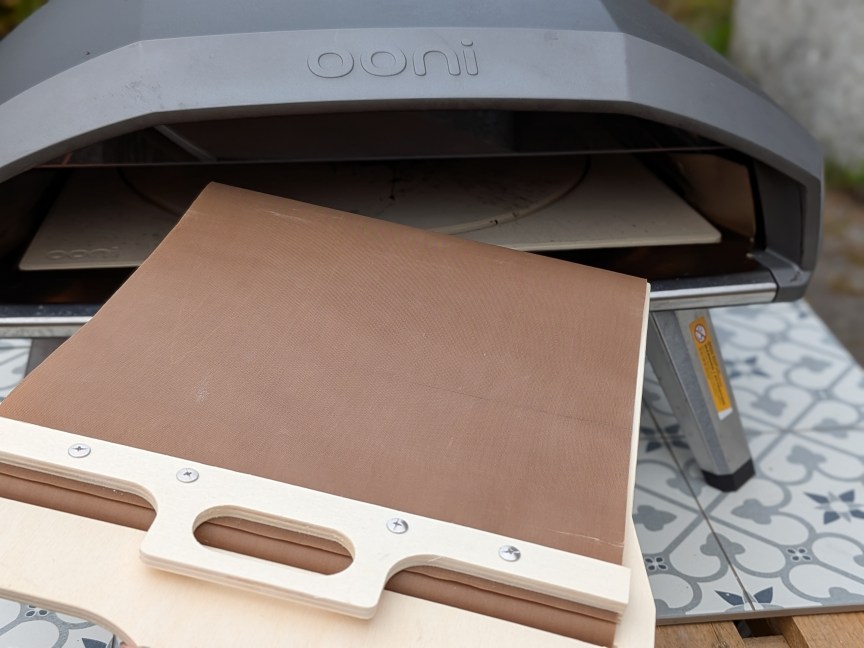
To launch the pizza with a sliding pizza peel, reverse the process: Use the handle on the cloth glider to push, sliding the pizza into the oven while pulling the sturdy board out from underneath it.
Cloth, you say? Well, not exactly. The conveyor mechanism moves like fabric, but think of it more like a nonstick baking mat. Many are made of woven fiberglass with a polytetrafluoroethylene coating, which is nonstick but still grips enough to hold raw or cooked pizza dough. It’s frankly like a flimsier Silpat or not unlike an oilcloth table covering.
PTFE, in case you’re wondering, is related to per- and polyfluoroalkyl substances. Yes, we’ve worked hard to avoid PFAS; however, the material’s pliability doesn’t encourage chipping, and it is also replaceable. The wooden board itself admittedly also spares every expense without the heavy lifting required of other wooden pizza peels — this is made from raw, lightweight bamboo.
Sliding pizza peel best practices
While a sliding pizza peel may seem like a cure-all, if, like me, you adore what your pizza oven offers but still struggle with pizza peel mechanics, it does require some practice of its own — and some caution. As with more traditional pizza peels, it cannot undo other mistakes, such as poorly constructed, too warm pizza dough or an overloaded pie. You can still calzone-ify your pizza, even with a sliding pizza peel.
Unlike a traditional pizza peel, which lets you push and pull simultaneously, the sliding pizza peel’s primary handle is also very short, meaning you kind of have to get (uncomfortably) close to the mouth of the oven to use it.
The fact that none of these seemingly magic wands are produced or branded by any major pizza oven manufacturer should serve as a bit of a caution. (The pizza oven manufacturers probably just want you to become a bona fide pizzaiolo, confidently employing the legitimate tools of the trade; they are clearly not trying to encourage the use of these cheap devices.)
Various sliding pizza peels are purportedly heat-resistant up to a certain temperature (which varies). Many pizza ovens, however, can reach temperatures much hotter than those sliding peels are designed for.
More than one user on various online pizza oven forums reported that the nonstick belt of a sliding pizza peel melted onto the hot pizza stone. Others, however, called the device an absolute game changer. Either way, using a sliding pizza peel requires you to launch quickly, which again requires practice, probably best done outside your actual pizza oven. (Your oven-oven with a removable pizza stone? A much lower-stakes practice arena.)
My experience with a sliding pizza peel
I have been an enthusiastic pizza oven user since one came into my life, but I still haven’t mastered the mechanics of either a traditional wood or perforated metal pizza peel. I slightly prefer metal, but either way, pizza attempt number one always results in a folded disaster. My crime, apparently, is wanting the kind of thin pizza crust a 20-year-old New Yorker demands. The thinner the pizza, the harder to launch.
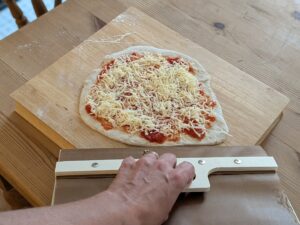
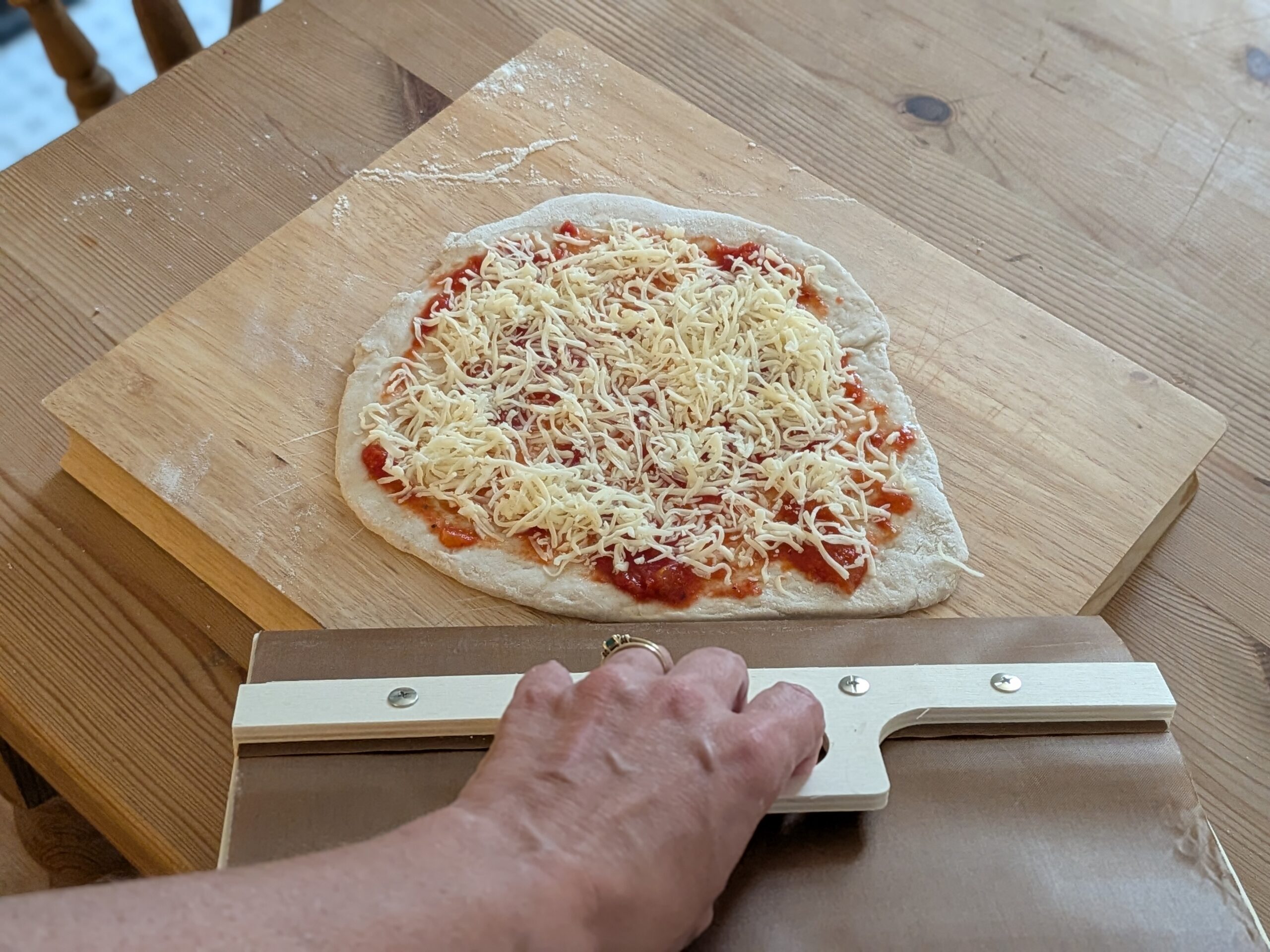
I can attest that the sliding pizza peel did make it easy to pull the pizza off the cutting board where I shaped the dough and applied toppings. Despite feeling cheaply made, the mechanics are inarguable. I achieved a crust thinness I truly couldn’t with the other models.
While you have to get close to the heat to deposit it, I haven’t earned any burns or scars from trying. Repeated launches in a very hot pizza oven also didn’t seem to affect the fabric slide, but then again, I was prepared to move extremely fast to avoid a crisis — and to get away from the heat.
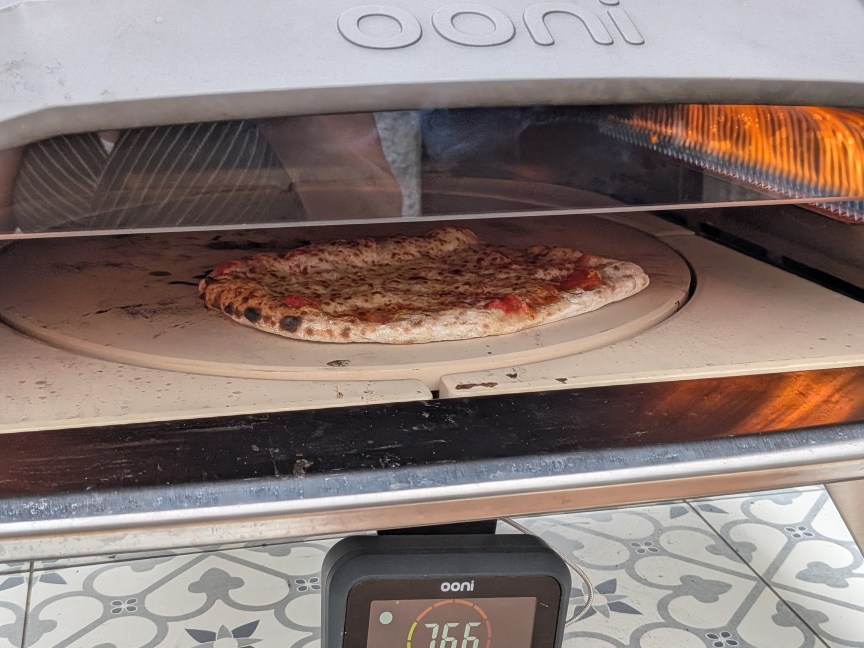
In case it merits saying, a sliding pizza peel is entirely unnecessary for pulling pizza out of a pizza oven. In fact, I would caution against it since it really relies on setting the peel down on the pizza stone, never mind the fact that you really have to get your hand inside the oven in the starting position for pulling a pizza onto it. Once a pizza is fully cooked and the dough is sturdy, even a thin pizza can be collected with a more traditional pizza peel anyhow.
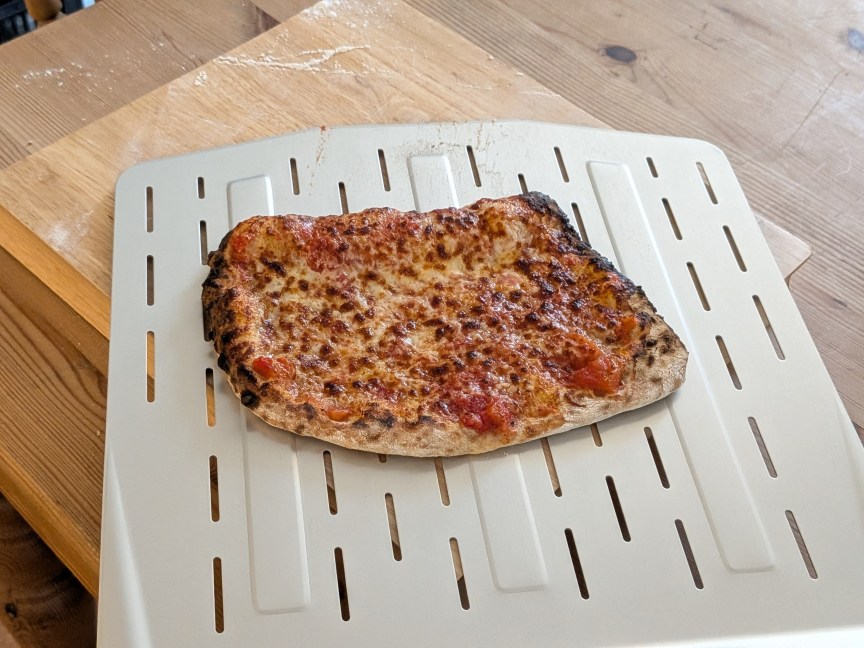
The verdict on a sliding pizza peel? Proceed with caution. And practice.
Ultimately, the average price of sliding pizza peels available online is about $30. Even with mixed reviews, it’s a fairly low-stakes gamble to see whether one improves how often you use your big-ticket pizza oven.

See full bio
Read the full article here