



“We only get about 30 minutes notice to warn the community … So really [make] sure that you stay informed, and are monitoring the weather warnings from the bureau and through the Vic Emergency app,” Turner said.
Clayton was drenched with 43 millimetres of rain between 4pm and 4.30pm, while 38.8 millimetres of rain was recorded at Oakleigh South over the same period.
There was also a high risk of thunderstorm asthma forecast for North Central Victoria, as well as West and South Gippsland areas on Wednesday.
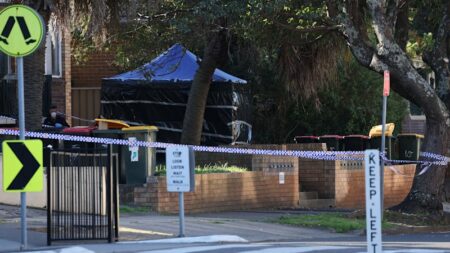
On Tuesday night, police were called to a camping area in Yarrawonga, in the state’s north, after a large branch fell onto the moving vehicle during dangerous weather.
The 45-year-old driver, who is yet to be formally identified, died at the scene, while his wife and son were able to free themselves from the car.
A teenage boy was taken to Northeast Health Wangaratta hospital in a stable condition with non-life-threatening upper body injuries, while a woman in her 50s also suffered upper body injuries and was taken to hospital in a serious but stable condition.
Police said the family were locals who were trying to safely evacuate the area.
Sergeant Shaun Hillier described the incident as a tragic accident and said police were supporting the family “every way we can”.
The wild weather has also damaged some crops, particularly stone fruit and wheat, and could contribute to food shortages in supermarkets, coinciding with weeks-long industrial action by Woolworths workers.
Michael Crisera of Fruit Growers Victoria said the Goulburn Valley had had between 40 and 50 millimetres of rain plus hail recently and the rain would affect fruit that’s close to maturity, particularly cherries.
The Bureau of Meteorology has warned stone fruit growers that rainfall and high humidity are conducive to a heavy outbreak of brown rot, which causes serious losses to the fruit.
Farmer Ryan Milgate from Minyip in the state’s northwest said the rain would limit high-quality grains.
He said the badly timed weather during harvest was “like losing a grand final by a point after the siren, after leading all year”. “We don’t work all year to watch it disappear at the final hurdle,” he said.
Victoria’s near-record breaking humidity continued throughout Wednesday – and was expected to hang around until Sunday – as rain has pelted large parts of the state.
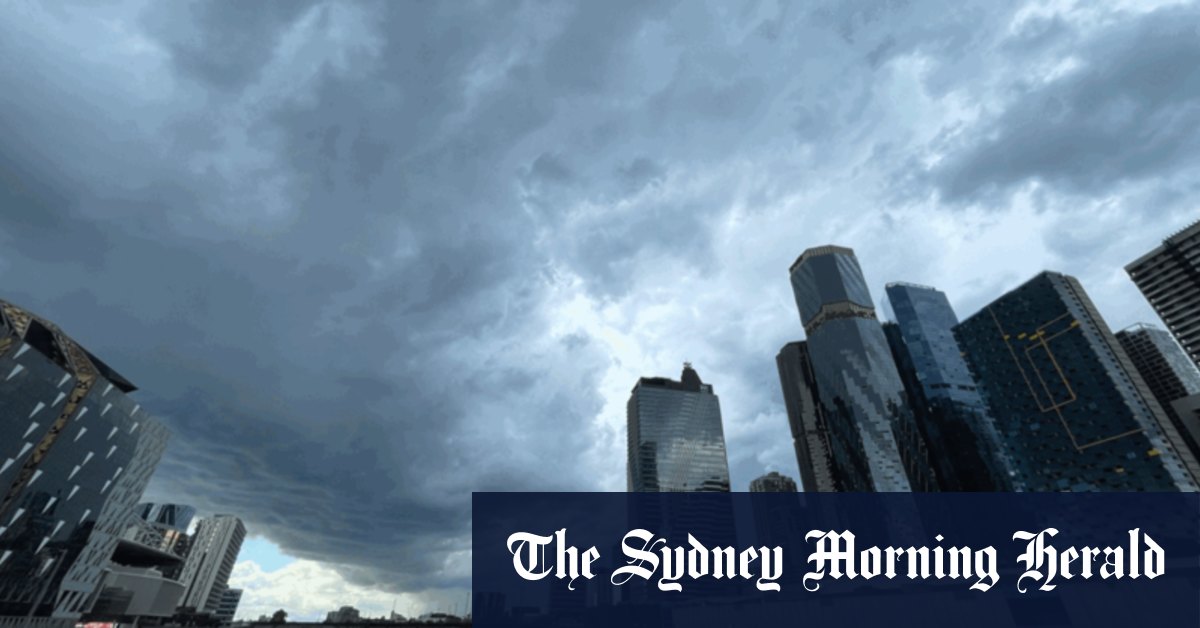
The Melboure skyline on Wednesday afternoon. Credit: Joe Armao
Melbourne reached its highest “dew point temperature” on record for the month of November on Wednesday morning, with a measure of 21.3 degrees at 9am.
Dew point is a direct measure of how much water vapor saturates the surrounding air, and is different to humidity. It’s known as “absolute humidity” or the “feels like” temperature of humidity.
The Bureau of Meteorology’s Morgan Pumpa said Victoria should broadly expect wet conditions and thunderstorms on Wednesday.
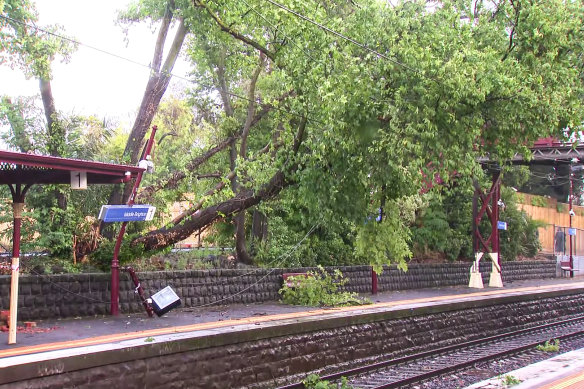
A tree fallen at Middle Brighton Station during storms on Wednesday.Credit: Nine
Melbourne, Geelong and Shepparton all reached a top of 31 degrees.
The next focal weather event for Victoria would be on Saturday when another system was expected to come through, and more tropical moisture from the north was slated to be drawn down into the state.
“It’s probably not even until Sunday that we start to see that air being a bit drier, with some south-westerlies coming through. So it’s going to be quite a humid time,” Pumpa said.
Read the full article here