



NEWYou can now listen to Fox News articles!
President Donald Trump has hailed the newly signed Iran memorandum of understanding (MOU) as a breakthrough that normalizes relations between the two countries after months of fighting.
But by the White House’s own account, the agreement settles few of the issues that dominated months of negotiations, leaving sanctions relief, frozen assets and Iran’s nuclear program for a new round of talks.
“This is really just the first MOU and then we’re going to launch into the real technical discussions later this week,” a senior administration official told reporters Monday.
The memorandum, signed digitally by Trump and Vice President JD Vance Sunday, kicks off a 60-day period for technical talks aimed at a final agreement. A formal signing ceremony with U.S. and Iranian officials, along with Pakistani and Qatari mediators, is planned for Friday. Yet even administration officials acknowledge that the memorandum leaves many of the most contentious issues unresolved.
“We’ll know over the next two to three weeks whether those understandings will turn into an actual agreement,” a senior administration official said.
TRUMP MAY HAVE WON A STRATEGIC PAUSE IN IRAN. NOW COMES THE HARD PART
Nate Swanson, a former senior advisor on Iran policy to successive administrations and now a senior fellow at the Atlantic Council, said the memorandum appears to postpone rather than resolve disputes over sanctions relief, Iran’s nuclear program and the future of the Strait of Hormuz.
“It does not appear to resolve the core issues surrounding the mechanics of the Strait of Hormuz, Iranian nuclear concessions, or Iranian financial incentives and sanctions relief,” Swanson wrote in an analysis published by the Atlantic Council.
The remark was striking given that U.S. and Iranian officials have been negotiating since the April ceasefire and already had announced a signed memorandum and upcoming signing ceremony.
The president expressed optimism for a final deal.
“I think it’s going to happen, fairly on time, but we’ve been both involved. I think they’re going to want to get it done. Iran wants to get it done. They have to get back to business. And the relationship is now normalized,” Trump said during the G7 Summit in Évian-les-Bains, France.
JD VANCE REVEALS DETAILS OF US-IRAN DEAL, ADDRESSES WHETHER TAXPAYER MONEY WILL GO TO TEHRAN
The administration has yet to publicly release the text of the memorandum, but officials indicated that many of the issues that have dominated months of negotiations remain subject to future talks, including sanctions relief, frozen Iranian assets and the disposition of Iran’s remaining enriched uranium stockpiles.
“Here’s what it says: Iran will never have a nuclear weapon. That’s what it says. It won’t have one to buy, to develop. They will not have a nuclear weapon,” Trump told reporters Tuesday.
Administration officials said Monday the text of the deal would be released Tuesday or Wednesday.
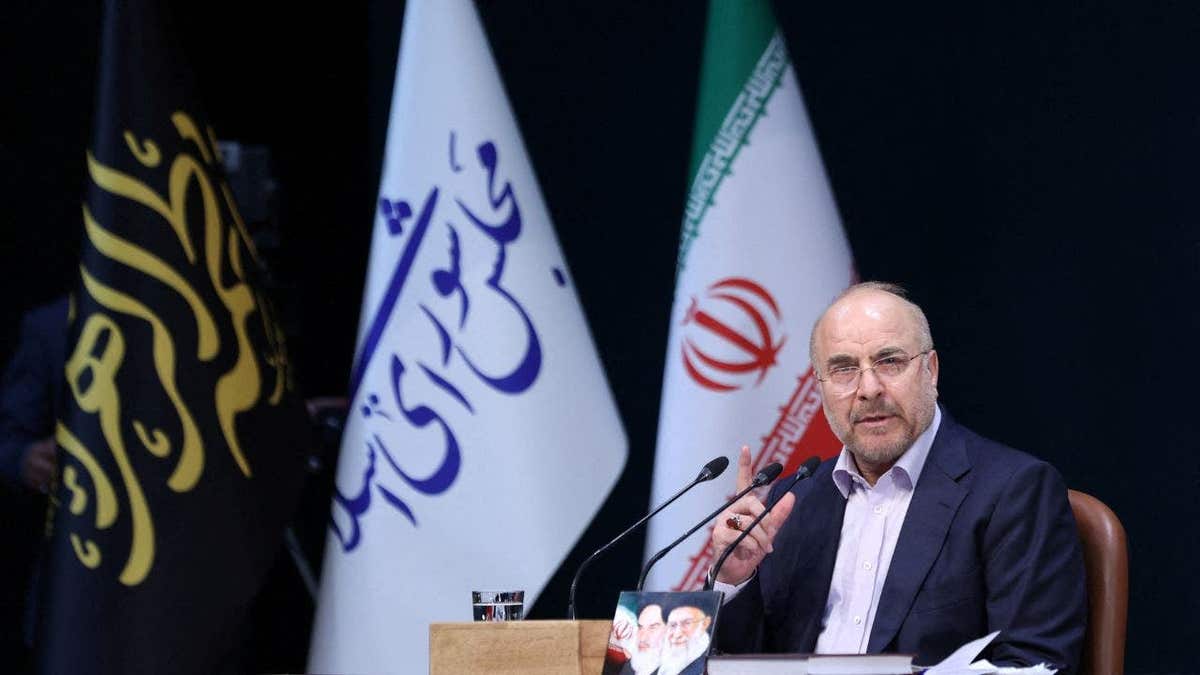
On perhaps the most disputed issue, White House officials insisted Monday that no frozen Iranian assets have been released, despite reports in Iranian state-linked media that Iran could gain access to roughly $24 billion in blocked funds during the negotiation period.
“The very simple fact is, $0 of unfrozen assets have been released by the United States or any other country.”
The administration also said it will maintain its current military posture in the region during the negotiations, despite Iranian accounts suggesting the framework contemplates a future reduction in U.S. forces around Iran.
“The plan is to keep the current force posture during the 60-day negotiations.”
Officials repeatedly stressed that any concessions would be tied to verification rather than promises.
“We’re still at the early phases where we’re building trust.”
“This memorandum does not mean trusting the enemy; it has been written with active distrust,” Iranian deputy foreign minister Kazem Gharibabadi said, according to Iranian state-linked Mehr News. “We will monitor the implementation of US commitments.”
The clearest immediate effect appears to be the reopening of the Strait of Hormuz, the strategic waterway through which roughly one-fifth of the world’s oil and liquefied natural gas shipments normally pass, and a commitment by both sides to preserve the ceasefire while negotiations continue. Oil prices fell to their lowest levels in three months on the agreement to lift the blockade and open the strait.
Administration officials repeatedly described the memorandum as a framework that could eventually lead to sanctions relief, economic normalization and a broader settlement of Iran’s nuclear program — if negotiators can reach a final agreement in the coming weeks.
“Nothing is on the table if it doesn’t come along with real performance.”
Iranian state-linked media have described the framework as already containing commitments on sanctions relief, access to roughly $24 billion in frozen assets, future reductions in U.S. military forces in the region and a $300 billion reconstruction program. The White House has disputed key elements of that characterization.
CLICK HERE TO DOWNLOAD THE FOX NEWS APP
“We don’t pay them — there was some statement. We’re going to spend $300 billion. No, we’re allowed to go and invest if we wanted to. Someday, in the future. We have no obligation whatsoever,” Trump said during the G7 Summit.
The competing descriptions underscore how much remains unsettled.
“There will likely be a significant delta between the aspirations outlined in the MOU and what emerges in a final deal,” Swanson said.
Some congressional Republicans already are questioning whether Washington and Iran are describing the same agreement.
“I think we’d all like to see the terms of the memorandum and hopefully end up with a real deal,” Sen. Rick Scott, R-Fla., told reporters at the Capitol Tuesday.
“I don’t think there’s anybody in Congress that’s ever gonna support giving money to them,” he went on.
“They ought pay for what it cost us to do this to bring them to their senses to stop killing us … I want to get reimbursed for the money we’ve had to spend to bring them to their senses. They’ve got plenty of oil, they can rebuild their own country.”
“I am pleased to hear the memorandum of understanding with Iran to allow the Strait of Hormuz to open has been agreed to. I will be watching closely the ensuing negotiations regarding Iran’s nuclear program and other matters. I am somewhat concerned that Iran’s view of the agreement seems different than what the American negotiating team is claiming.”
Read the full article here