


La Trobe’s masters of primary and masters of secondary teaching are the first courses to be re-accredited under the reforms.
Dean of La Trobe’s education school, Joanna Barbousas, rewrote the university’s teaching courses in 2020, stripping out “philosophical and sociology subjects that weren’t aligned with evidence-based teaching methods”.
“We listened to what principals said they needed, which was that often teaching graduates had to be retrained once they arrived in the classroom,” she said.
Barbousas said overhauling the degrees meant ditching now debunked theories of “learning styles”, the myth that students benefit from receiving information in their preferred format.
“We replaced that with the science of learning, how to teach explicitly and creating practical routines to be able to manage a classroom. These are big reforms, not tweaks,” she said.
Martin Fletcher, chief executive officer at the Victorian Institute of Teaching, the responsible body for university accreditation statewide, said all Victorian providers were on track to meet the December 31 deadline.
Fletcher said the process was designed to ensure all initial teacher graduates had the “knowledge, skills and experience to make a positive impact on student learning”.
Loading
Tony Loughland, head of the School of Education at UNSW, said the reforms were a “game changer” and the most ambitious reforms to initial teacher education in decades.
However, education experts have criticised the lack of consultation with teachers and teacher educators, which Dr John Nicholas Saunders, Australian Alliance of Associations in Education president, says leads to reforms that are “impractical, ineffective, and disconnected from the classroom”.
The focus on “the brain and learning” has been broadly criticised by education faculty members from Monash University, RMIT, the University of Sydney, and Griffith University.
Saunders said it could lead to a one-size-fits-all approach.
“We advocate for a more nuanced approach to teaching, one that respects and draws upon teachers’ professional expertise,” he said.
Western Sydney University education dean Michele Simons, who was on the review panel and is also the president of the Australian Council of Deans of Education, said the biggest concern was that these changes wouldn’t be given the time to be implemented fully.
“Another concern is that while attention is being paid to implementing these reforms, the work of teachers is being significantly impacted by technology and the growing challenges to the social and emotional wellbeing of children and young people,” she said.
Simons said one of the trends that emerged during the panel’s work but wasn’t really addressed is the view that teacher education alone won’t ensure graduates can transition smoothly into the profession and develop their expertise.
She said new graduates needed workplaces where mentoring, coaching and feedback on their work was provided.
“They need access to work arrangements and remuneration that reflect the complex work that teaching entails …most of all they need to receive the respect and support from the communities in which they work.”
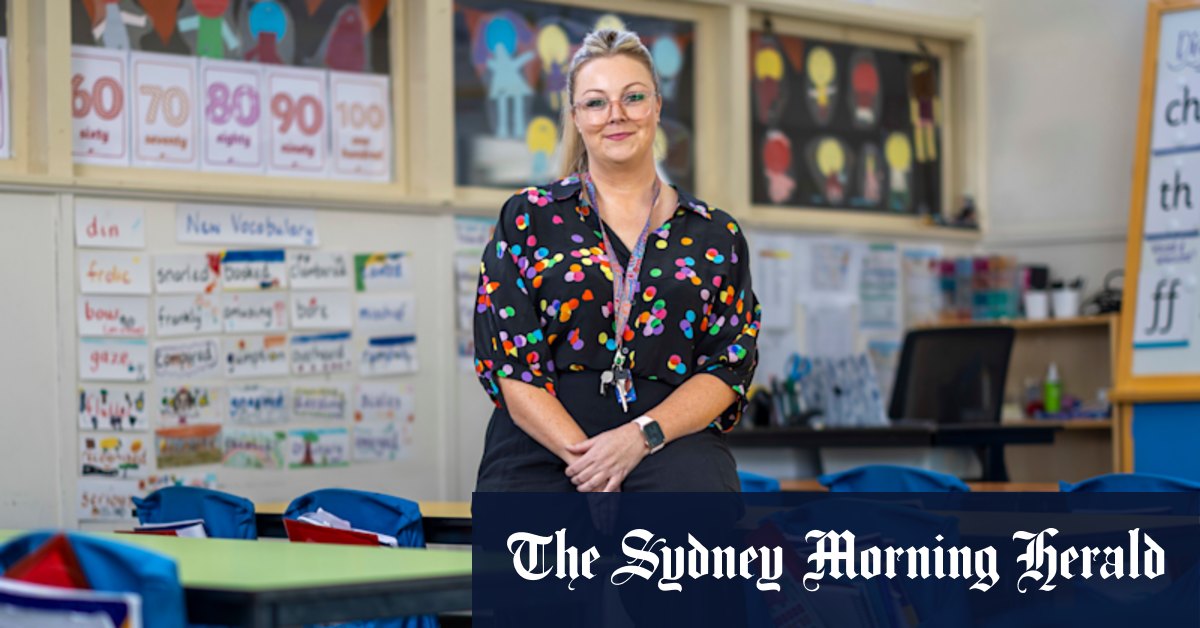
Heading into term two at a school in Melbourne’s west, Myers is now passing on what she learnt about the science of learning to her colleagues.
She said the La Trobe masters, unlike her initial degree, relied heavily on research-informed practice, which has drastically improved outcomes of students in her new role at a school in Melbourne’s west.
“I shouldn’t have had to have done two master’s degrees to accrue this knowledge,” Myers said.
With Lucy Carroll
Start the day with a summary of the day’s most important and interesting stories, analysis and insights. Sign up for our Morning Edition newsletter.
Read the full article here