



The government would not reveal the rates the SEC will charge for energy, citing commercial sensitivities, but said it would depend on the wholesale electricity price, and departments would not be worse off.
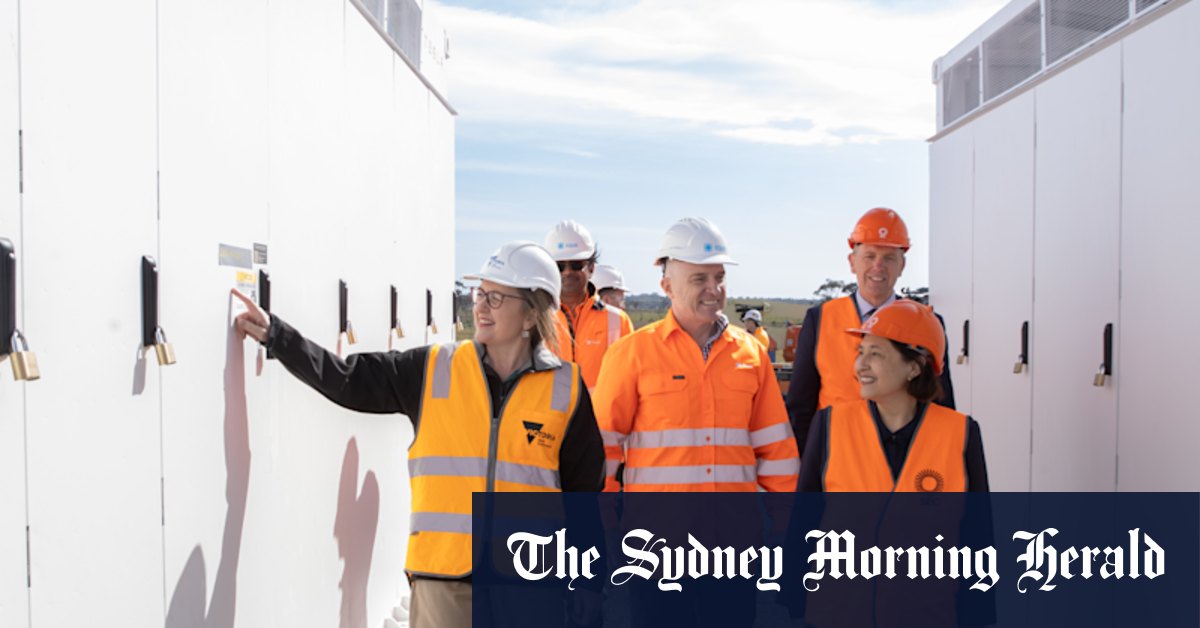
Premier Jacinta Allan maintained that the SEC would help families with the cost of living, and the government would put downward pressure on wholesale electricity prices by boosting supply.
“The SEC is back – and it’s powering Victoria with cheap, reliable, publicly owned renewable energy,” she said. “Families want help with the cost of living, and I’m on their side. So is the SEC.”
The SEC was originally established in 1918, building and operating coal-fired power generators and an electrical grid before former premier Jeff Kennett began privatising it in 1994. The government then revived the SEC in 2023, and it has since been enshrined in the state Constitution.
The renewable power that will be supplied has been bought from wind and solar farms, such as Berrybank Wind Farm, Cohuna Solar Farm, Dundonnell Wind Farm, Winton Solar Farm and Bulgana Green Power Hub.
Energy from the SEC’s own projects is expected to help meet demand once they begin coming online later this year.
Loading
It is expected that the SEC will supply 2200 gigawatt hours next financial year – about 5 per cent of Victoria’s total energy consumption in 2023. The government said this would make it the state’s fifth-largest commercial and industrial electricity retailer.
Professor Bruce Mountain, director of the Victoria Energy Policy Centre at Victoria University, said theoretically, the government taking over supply of energy from companies was sensible.
But the actual benefits were impossible to assess without knowing the commercial terms under which the SEC had bought the electricity.
“It all depends entirely on their own ability to procure electricity cheaply and meet the needs of their customer,” Mountain said.
However, the government’s claims that the SEC would drive down wholesale energy prices were not realistic, Mountain said.
“The sums are too small to make a difference at this stage,” he said.
“I think the main arguments in favour of the SEC is that they can perhaps do things more cheaply internally than they can externally.”
As part of the SEC revival, the government pledged $1 billion towards developing 4.5 gigawatts of renewable energy, enough to offset the closure of Loy Yang A in 2035.
Under this funding commitment, the government last year unveiled a $370 million solar farm and battery project in Horsham. And in 2023, it pledged $245 million to help build a battery farm in Melton big enough to power 200,000 homes.
Melbourne Renewable Energy Hub, the battery farm, is the first of the SEC’s projects expected to pump electricity into the grid when it comes online later this year.
Loading
On Monday, the Australian Energy Regulator revealed its final determination on the maximum prices that retailers can charge customers on standing power plans.
From July 1, the Victorian average annual retail price will increase slightly to $1675, up from $1655 over the past 12 months.
Price caps will rise by 5 per cent in the hardest-hit parts of Victoria, which is less than the 9.7 per cent increase in the most affected areas of NSW.
Rising infrastructure costs – needed to build new transmission lines connecting wind and solar farms to population centres – were cited as a contributing factor.
The Morning Edition newsletter is our guide to the day’s most important and interesting stories, analysis and insights. Sign up here.
Read the full article here