



“This may increase pest issues for surrounding properties,” the report said.
Loading
The committee acknowledged the Victorian government was undertaking some work to protect farmland around Melbourne by strengthening planning controls in areas known as green wedges.
Green wedges are areas outside urban growth areas in Melbourne that are preserved for farming, biodiversity protection and infrastructure, including water treatment plants.
“However, there is a broad view that these actions do not go far enough and should also be applied to protect farmland on the fringes of Geelong, Ballarat and Bendigo, which face similar challenges,” the committee report said.
Agricultural land in designated green wedge areas was being purchased and banked for redevelopment in case the land were ever rezoned, the report found, putting pressure on councils to allow for more urban growth.
RMIT planning professor Michael Buxton said the committee’s recommendation to prohibit the subdivision of small lots in farming, rural and green wedge zones was critical for ensuring there was enough viable land for larger-scale agriculture.
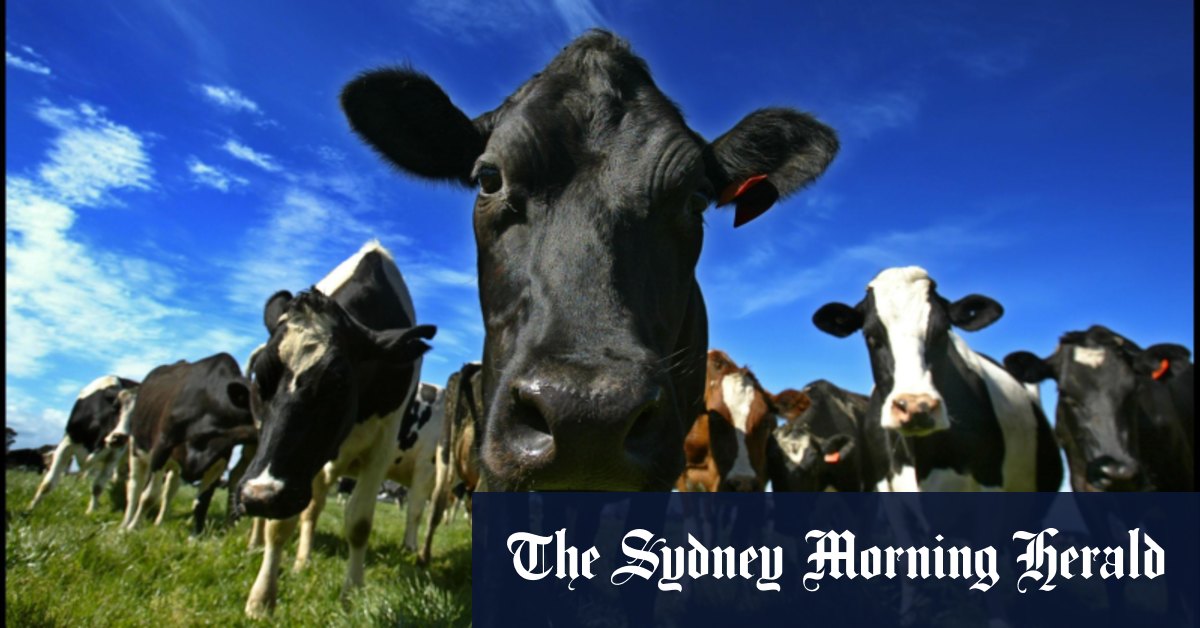
Green wedges are intended to protect farming in Melbourne’s outskirts. Credit: Justin McManus
He also supported the recommendation to review and amend land uses in green wedge and rural conservation zones so that only farming and environmental activities would be allowed in those areas.
Buxton said green wedges still allowed for schools, function centres and large religious institutions, permitting non-residential development to happen on land that should be preserved for farming or its environmental values.
“It undermines the whole purpose of an urban growth boundary, and it has a serious impact on the rural values you’re trying to protect,” he said.
The report cited figures from the City of Greater Bendigo showing that in 2006 there were 2000 farms on 963,000 hectares of farmland in the Bendigo region, but that fell to 985 farms on 842,938 hectares by 2020-21.
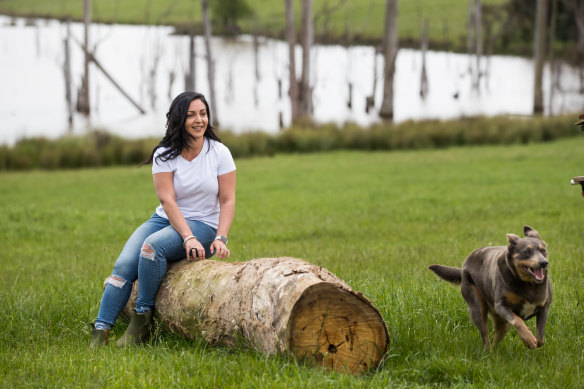
Victorian Farmers Federation president Emma Germano says agricultural land needs stronger protections from urban development. Credit: Jason South
Chicken farmer Colin Peel, whose farm is about 20 kilometres west of Geelong, said councils needed to leave rural zones intact.
“If that means areas can’t be developed, then so be it,” he said.
Peel said the spread of urban development into farmland meant agricultural operations, which generated noise and dust, could conflict with urban neighbourhoods.
“It just becomes more difficult and problematic to farm right near housing.”
Committee chair and Labor MP for Wendouree Julianna Addison said there was unanimous support for the report from the committee members. They included MPs from the Labor, Liberal and Nationals parties.
“This is an existential issue,” Addison said. “This is beyond party politics and election cycles.”
The Allan government has six months to respond to the report.
Victorian Farmers Federation president Emma Germano said agricultural land needed stronger protections.
“Once you lose prime agricultural land, it’s gone forever. We’ll be working to ensure these recommendations become a reality,” she said.
Get to the heart of what’s happening with climate change and the environment. Sign up for our fortnightly Environment newsletter.
Read the full article here