


Taxpayers subsidised Labor’s campaign by $5.58 million under the new reimbursement scheme.
Labor disclosed $4.3 million in donations in 2024-25.
A breakdown of Labor’s spending shows $1.5 million was spent on opinion polling, revealing the extent to which public sentiment was driving the direction of its campaign. The Liberals spent $323,000 on polls.
The WA Greens and WA Nationals also had most of their campaign spend reimbursed, with the Nationals getting $717,000 back from $888,000, while the Greens recouped $483,000 of $527,000 spent.
WA Liberals state director Simon Morgan defended the reimbursement his party received, saying it was in accordance with the changes introduced by the Cook government.
Morgan lamented the disparity in election spending between his party and Labor and conceded fundraising in the lead-up to the March election had been difficult.
Loading
“It is no secret that the Liberal Party was outspent significantly by WA Labor in the 2025 election,” he said.
“This reflected the fact we had effectively been reduced to minor party status at the 2021 state election, which made fundraising for much of the parliamentary term especially challenging.”
Greens democracy spokesman Tim Clifford was shocked at the level of money WA Labor spent.
“The amount of donations that WA Labor elicited from big corporations and property developers and then spent at the 2025 state election is absolutely obscene, and should be of great concern to the WA community,” he said.
Clifford said the Greens wanted to see publicly funded elections, as have recently been adopted in South Australia.
“That would improve equitable access to democracy and reduce the risk of corruption through corporate donations,” he said.
“This includes tightening up campaign spending rules to ensure that a repeat of the 2025 state election, where WA Labor outspent every other political party combined, does not happen again.”
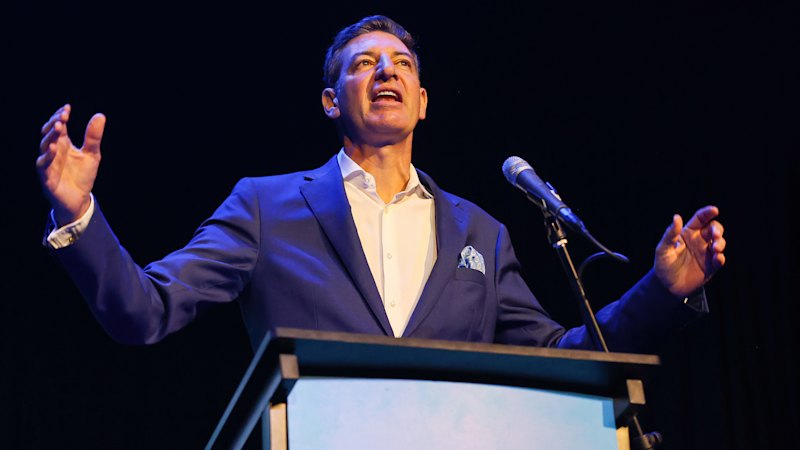
WA Labor secretary Mark Reed defended his party and said he was proud of his branch’s efforts in the past five successful state and federal elections.
He said parties needed to spend more money to reach voters directly, thanks to upheaval in traditional media.
“Elections in Australia are getting more expensive, no question,” he said.
“The decline of traditional media markets and the fourth estate mean that there is a higher requirement on political parties to communicate directly with voters. This requires funding.
“Each of these five victories was historic in scale. That is a testament to the messages and commitments communicated to voters during those periods and the results are a mark of voters’ faith in the Cook and Albanese governments’ capacity to deliver.
“Ultimately, a big part of WA Labor’s campaigning success was still, and will continue to be, local candidates and volunteers, hitting the doors to have one-on-one conversations with voters on the issues that matter to them.”
Reed denied Labor’s fundraising success came with strings attached.
WA Labor state secretary Mark Reed.Credit: Anacta
“WA Labor conducts its fundraising program in accordance with the law, and always at arms length from the decision-making of government, as is appropriate,” he said.
Long-time WA political commentator Peter Kennedy was not surprised to see record levels of spending from Labor.
“Parties spend money to win. They’re in it to win it,” he said.
Churchlands under siege
A breakdown of the individual seat spending has also shed light on party strategy and where each party thought it faced the biggest threats.
The highest-spending WA Liberal candidate was Zempilas in Churchlands.
The now-opposition leader spent $93,000 on his campaign compared to his opponents, teal independent Lisa Thornton, who spent $46,000, and Labor’s Christine Tonkin, who spent $37,000.
Zempilas only won his seat by 636 votes to Tonkin. Since the election, Labor strategists have kicked themselves for not pursuing the seat harder.
Zempilas’ spending reflected the threat posed by Labor’s broader campaign against his character and Thornton’s efforts to pull a Kate Chaney-style victory on a state level.
Former Liberal leader Libby Mettam spent $92,000, while Sandra Brewer in Cottesloe spent $79,000 and Johnathan Huston in Nedlands spent $75,000.
Labor’s target seats included Lisa Munday in Dawesville at $129,000, Hugh Jones in Darling Range at $124,000, and Rebecca Stephens in Albany with $125,000. Stephens ultimately lost to the Nationals’ Scott Leary.
Start the day with a summary of the day’s most important and interesting stories, analysis and insights. Sign up for our Morning Edition newsletter.
Read the full article here