A major change to how the federal government classifies nursing degrees is set to take effect this summer, prompting warnings from nursing groups and educators about its potential impact on the healthcare workforce.
Beginning July 1, a new Department of Education rule tied to federal student loan limits will exclude most nursing programs from the “professional degree” category. The designation determines how much students can borrow for graduate school and could have lasting effects on nursing programs, according to the American Nurses Association.
“Excluding nursing from the professional degree category has the potential to put patient care at risk, especially in areas where nurses are the only healthcare providers in their communities,” Jennifer Mensik Kennedy, president of the American Nurses Association, said in a statement. “We urge the Department to correct this proposal and explicitly include nursing as a professional degree before the rule is finalized.”
Why It Matters
The classification has nothing to do with whether nursing is considered a profession in a broader sense, but it has real financial consequences.
Under the change, graduate nursing students will face lower federal loan caps, and this could make advanced nursing education harder to afford.
Critics warn that the change could reduce the number of students pursuing advanced degrees and worsen existing nursing shortages. That could impact access to care, especially in rural areas.
What To Know
Under the new rule, there are new loan limits by degree type:
- Professional degrees (e.g., medicine, law):
- Up to $50,000 per year
- $200,000 total
- Other graduate degrees (including nursing):
- $20,500 per year
- $100,000 total
Nursing programs such as Master of Science in Nursing (MSN) and Doctor of Nursing Practice (DNP) will be classified in the lower borrowing tier, despite requiring advanced clinical training.
“The current administration is attacking the cost of college by capping the amount of money accessible to certain degree programs, specifically nursing, to roughly $20,000 per year,” Kevin Thompson, CEO of 9i Capital Group and the host of the 9innings podcast, told Newsweek. “The belief is that by reducing the amount of government money flowing into higher education, schools will eventually be forced to lower prices in the aggregate. In theory, the market adjusts when the funding dries up.”
However, the policy shift could also create a “class divide within certain professions,” Thompson said, especially with fields like nursing and social work, where many already feel underpaid relative to their societal value.
“Some believe these caps could reduce the pipeline of skilled workers entering those industries over time,” Thompson said. “The administration’s argument is that the amount available to borrow should coincide more closely with the potential economic value that a particular job creates.”
What Department of Education Says
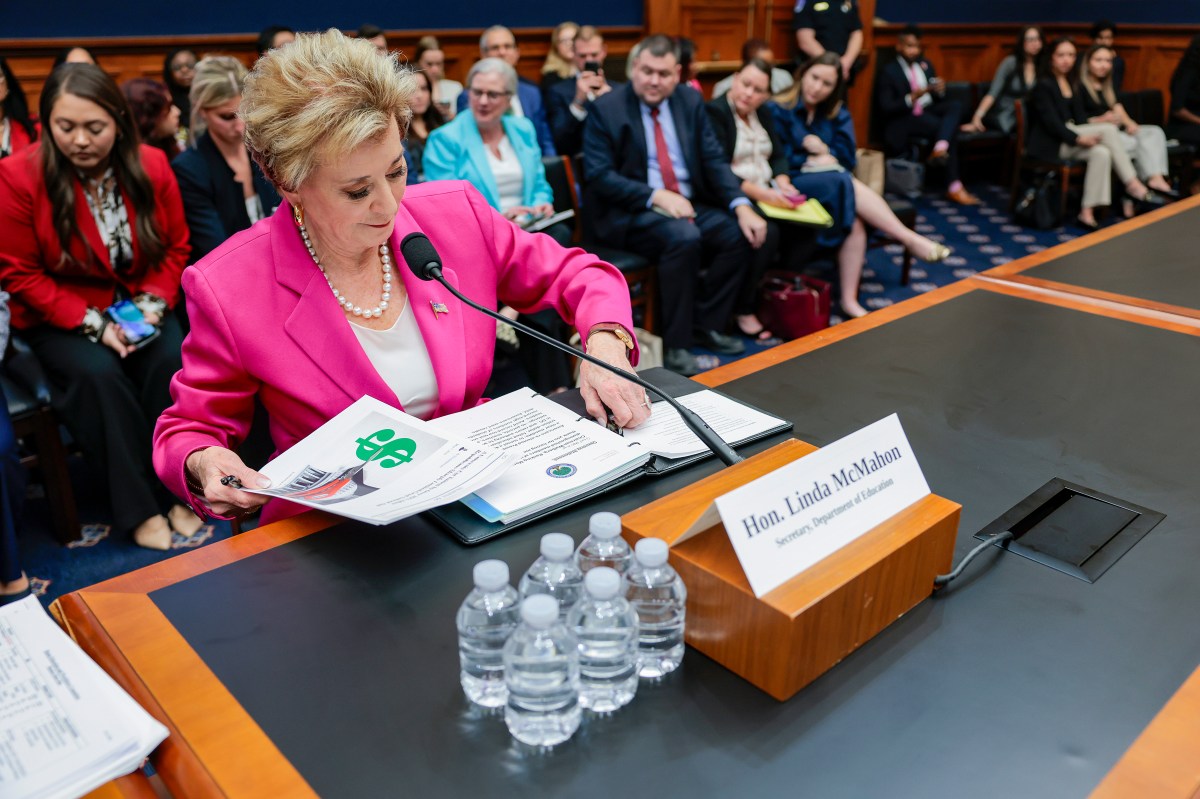
The Department of Education has pushed back on claims that it is downgrading nursing with the new classification.
“Myth: Nurses will have a harder time securing federal student loans for their programs and this would contribute to the nationwide nursing shortage,” the Department of Education wrote in a press release. “Fact: Department of Education data indicates that 95% of nursing students borrow below the annual loan limit and therefore are not affected by the new caps.”
The department said that placing a cap on loans will push the remaining graduate nursing programs to reduce their program costs, “ensuring that nurses will not be saddled with unmanageable student loan debt.”
Why Nursing Was Excluded
The new rule relies on a narrow list of professional degrees for higher loan caps, including:
- Medicine
- Law
- Dentistry
- Pharmacy
- Veterinary medicine
- Clinical psychology
“The reason is two-fold: Statistics show the vast majority of students in those [other] fields don’t exceed those loan amounts, and the hope is in the situations where the amount is exceeded, the new cap will encourage universities to lower prices,” Alex Beene, a financial literacy instructor for the University of Tennessee at Martin, told Newsweek.
“Ultimately, it’s difficult to say what the results will be. While the capped amounts will more than likely deter some students from pursuing those fields of study, many graduate schools are going to do their best to conform to the new rules in a bid to make sure students keep coming and employers have a pipeline of talent.”
Legal and Political Pushback
The change is already facing challenges as 25 states and Washington, D.C., have filed a lawsuit against the rule. Many argue it narrows the definition too much and goes beyond what Congress intended.
“This doesn’t hit undergrad nurses. It hits the nurse practitioners, nurse anesthetists and clinical educators training to fill the gaps where doctors aren’t,” Michael Ryan, a finance expert and the founder of MichaelRyanMoney.com, told Newsweek.
“Certified nurse anesthetists cover 70 percent of rural hospitals. Over half of U.S. counties have no obstetric physician. The people filling those gaps are exactly who this prices out.”
What Data Shows About Nursing Demand
The U.S. is already facing significant nurse shortages, with advanced practice nurses increasingly providing primary care and filling gaps in underserved areas.
According to the Health Resources and Services Administration, the U.S. is short roughly 260,000 registered nurses (RNs), representing about an 8 percent gap between supply and demand.
Moving forward, critics say limiting access to nursing education could further reduce the pipeline of new nurses and increase strain on the healthcare system.
“Students deciding whether to enroll this fall are making that call right now, under these rules,” Ryan said. “The shortage doesn’t show up in five years. It starts with the cohort that doesn’t enroll this September.”
What Happens Next
- The rule is set to take effect this summer
- Ongoing lawsuits could challenge or delay implementation
- Nursing groups continue to push for reclassification and legislative changes
Read the full article here