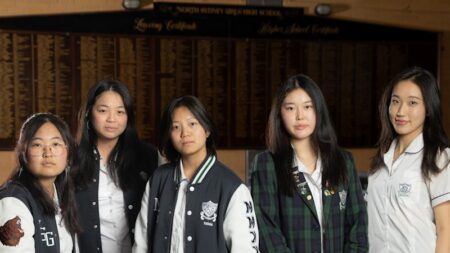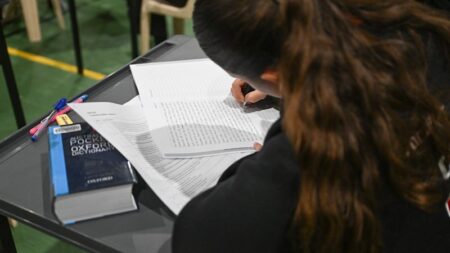





That great expression “If it ain’t broke don’t fix it” is the obverse of what Jane Caro describes (“Our kids are segregated in so many ways. We should look to Canada for a solution”, May 3). Australia had a well-functioning public education system that lasted over 100 years that didn’t need fixing. It should have been enhanced, but it has been allowed to be broken, slowly at first and now apace, based on “parent choice”. Now children are increasingly educated in silos of sameness, with public schools educating the most disadvantaged students looking more and more beaten down. This should shame a modern secular democracy that maintains the myth of a fair go for all. Canada is well known for breaking down educational disadvantage through its schooling. Japan, a country perhaps better known for strict gender and class distinctions, performs exceedingly well in educational attainment for all of its children. Children are not left behind, including those from the poorest backgrounds. Some may grieve what has been lost in public education over the years while others might cheer these changes on. The day may come when paying high fees is the expectation, and public education is welfare. That would truly be a foreign country. Brenda Kilgore, Red Hill (ACT)
Jane Caro’s article on school funding is so right. We have an excellent public school system, but over the years governments both state and federal have generously funded private schools, which continue to charge high fees while lavishly advertising their superior facilities such as sporting fields, theatres, “wellness” centres and libraries. They accept government money but claim the right to remove any child who might not be a good “fit”. Children all need a good well-rounded education. This is available in our public system, but while parents have boasting rights about private school for their child and governments insist that federal governments should only fund private schools, it has not been easy to counter perception that private and religious is somehow more desirable. Nola Tucker, Kiama
Jane Caro says it all. Our children should all be treated equally in funding and opportunities. Gender, academic, sporting and artistic abilities should enhance every school. Going local would end millions in bus travel expenses and time wasted. No school should be able to rid itself of a challenging child. Gonski advice and the Canadian and Scandinavian systems must be taken seriously. Jill Stephenson, Woolwich
Social disaster looms
Jacqueline Maley (“We love to blame the Boomers. But intergenerational warfare distracts”, May 3) refers to the belief that Boomers have “an iron grip on the nation’s tax benefits and capital”, but those benefits are available to everyone, from the school pupil who invests money saved from delivering newspapers to the superannuated centenarian and younger beneficiaries of inheritances or gifts. There are other benefits that come from raised taxes, such as for childcare and vocational education, that are useable largely by the young. She correctly disputes as myth that tax perks used by Boomers are the prime cause of the intergenerational wealth gap. In the near future that wealth gap will grow hugely as Boomers inevitably die and pass trillions of dollars to their children. Beneficiaries in rich families will become rich, while those careless enough to be born to poor families will receive little. Is it not time for a brave government to look at some form of inheritance tax to limit this impending social disaster? Brian O’Donnell, Burradoo
Hankie to the rescue
I am a hanky-carrier (“I’m bringing the humble hanky back into fashion”, May 3). Before I go out I check my bag for wallet, phone, keys and hanky. Some are from childhood and others were Mum and Dad’s. I also have beautiful hankies with lace edging from an aunt. Hankies not only dab an eye or a runny nose, they hold many memories. Lisa Clarke, Watsons Bay
Hankies are tops. Only this week a hanky has been used as a brow wiper, a water-soaked pad to ease a grandchild’s graze and a strainer for an ancient port full of tiny pieces of cork. I’m with you, Michael Bachelard, and will continue to be a hanky-carrier. Lyn Langtry, East Ryde
You are not alone, Michael Bachelard: I still carry a cotton handkerchief in my pocket/bag every time I go out. If I’m in the dentist’s chair – it’s my security, in my hand. Alison Stewart, Waitara
It’s refreshing to read of the humility and practicality of a fellow humble handkerchief carrier. Though I would now need a super-sized hanky to cover my large head and thinning grey curls, I always carry a hanky in my pocket. For 70 years I have rarely been far from the comforting embrace of what is now referred to as “Papa’s trusty hanky”. My granddaughter smiles knowingly as she comes to me with snot bubble trembling, looking forward to relief that will come only from the humble hanky. Changes in season, mishaps in the workshop, thorn pricks in the garden, any garden variety tear-jerker movie, trusty hanky to the rescue. I thank my mother’s persistent entreaties in my formative years for my habit of a lifetime. Geoff Nilon, Mascot
Attractive men
Ice packs, six eggs a day, no undies, where will it end? (“Fertility used to be women’s business, now want-to-be fathers are spermmaxxing”, May 3). How about doing the vacuuming, cleaning the windows, taking the bins out, let me count the ways. Kath Maher, Lidcombe
- To submit a letter to The Sun-Herald, email letters@smh.com.au. Click here for tips on how to submit letters.
- The Opinion newsletter is a weekly wrap of views that will challenge, champion and inform. Sign up here.
From our partners
Read the full article here