


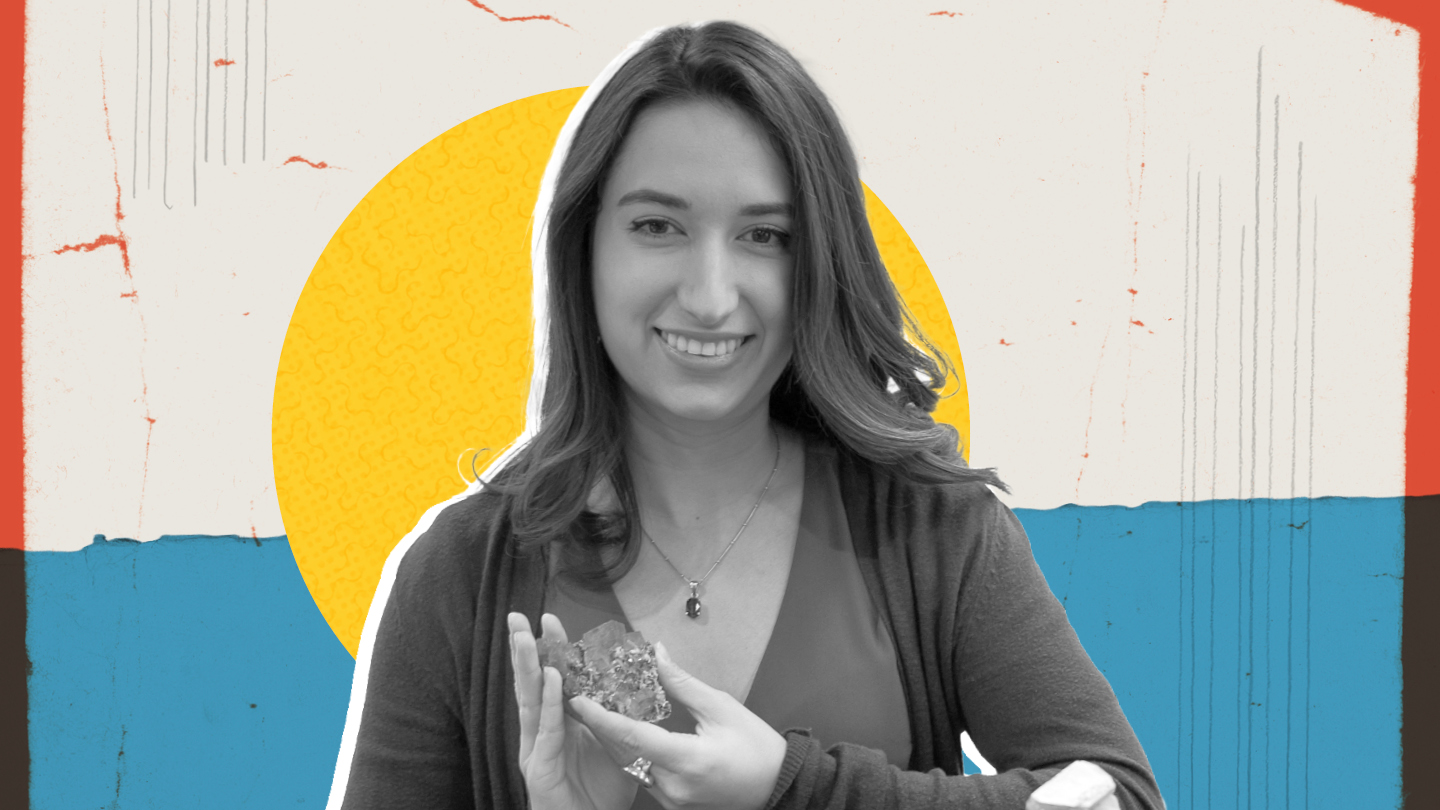
The minute Gabriela Farfan stepped into a small natural history museum in Madison, Wis., where she grew up, she knew she wanted to work with minerals. Farfan remembers seeing all different shapes and colors and being enthralled. “From that point forward, I knew I wanted to become a geologist someday,” she says.
Farfan is now living her teenage dream as the curator of gems and minerals at the Smithsonian National Museum of Natural History in Washington, D.C. Her specialty is biomineralization — how organisms build skeletons, corals, pearls and shells. Farfan hopes to answer questions about how they form and what stories they tell by studying crystal structures and the chemistry of minerals.
These days, she investigates signals trapped within minerals. Corals, for example, build layers of calcium carbonate mineral over time, trapping chemical signatures from the ocean. The data tell all kinds of stories — about stress, disease outbreaks and changes to ocean temperature and sea level. Farfan unlocks those tales using X-ray and Raman spectroscopies, bouncing beams off samples to see what they can tell us.
She hopes museum visitors will remember that the sparkly gemstones, the ones that first enamored her, are just as natural as the plants and bones in other exhibits. “Minerals are actual natural history objects,” Farfan says. “Those are actually formed by Mother Nature and it’s spectacular.”
Read the full article here