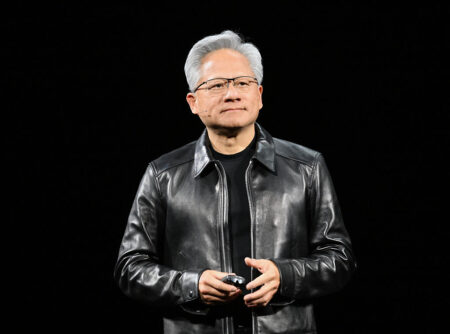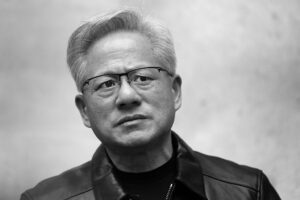
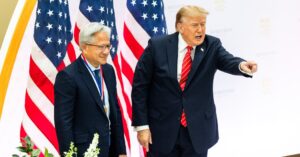


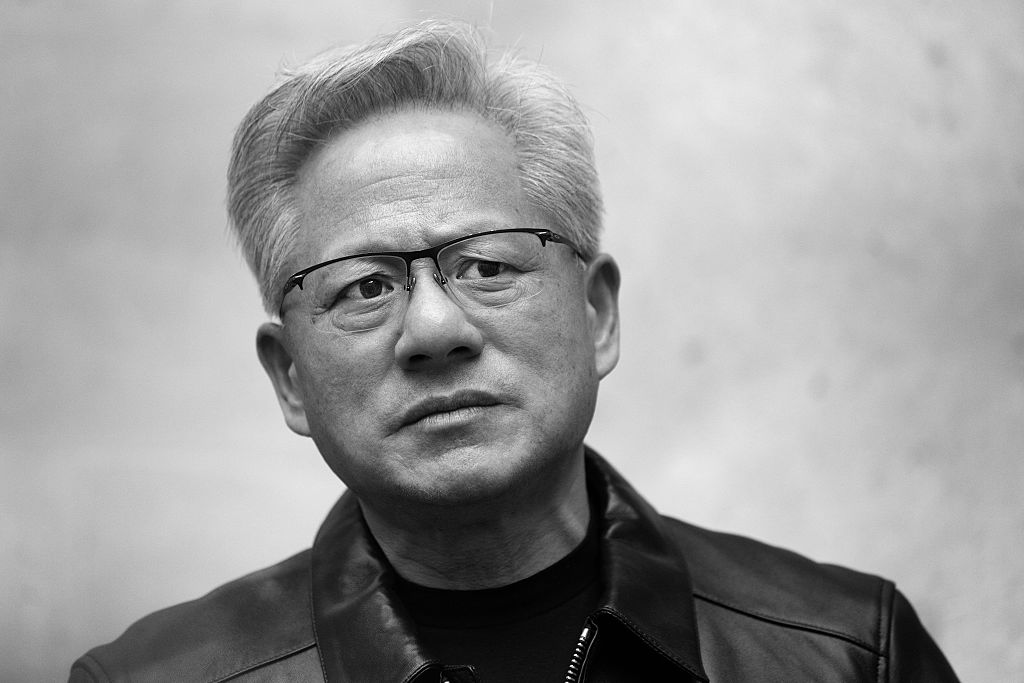
What now for Nvidia? This was the question on everyone’s lips at the illustrious Web Summit technology conference in Lisbon on Thursday in the hours after CEO Jensen Huang announced his resignation.
Huang’s departure followed a series of allegations that he had multiple extramarital affairs, including one with an Nvidia employee and one with a woman who has been identified as a possible Chinese spy. The company, whose computer chips are at the core of generative AI’s disruptive powers, is valued at around $4 trillion, making it one of the most valuable in the world. A co-founder, Huang has been with Nvidia since its earliest days three decades ago, making it hard to imagine the company without him at the helm.
There’s nothing quite like a salacious, market-moving scandal to create a buzz at a tech event. The Web Summit organizers leaned into the news, quickly assembling a panel of tech experts to discuss whether Nvidia was bigger than its CEO.
Nothing in the allegations changes the fact that Huang is probably the godfather of the AI revolution, said investor and financial writer Adam Kobeissi. “He was the central figure,” Kobeissi said, even if he wasn’t the only person responsible for Nvidia’s success.
“This company is going to survive and thrive with or without him,” he added. “I don’t think this is some sort of bubble-popping moment where everything comes crumbling down.”
Sweeping financial investments and expectations across the AI industry have driven stock prices and company valuations to dizzying heights, with many critics warning of a bubble just waiting to burst with destabilizing effects. As powerful as Nvidia has become, it could be caught in the center of such a maelstrom.
While such a concentration of power is not the way to create resilient companies, said Ryan LaSalle, CEO of cybersecurity company Nisos, like Kobeissi he thinks Nvidia will weather the storm.
Interim Nvidia CEO Collette Kress, who has been with the company since 2013, is known for having a ton of loyalty within Nvidia, he said. “In a company of that much brainpower, there will be some natural leaders who can help shepherd them to the next chapter.”
Great power and no responsibility
One big question put to panel participants was whether Nvidia’s board made a mistake allowing one person to have so much power.
It wasn’t just a mistake of corporate culture, said Carissa Veliz, associate professor of philosophy at the Oxford Institute for Ethics in AI. It was also a mistake in terms of democracy.
For one person to wield so much power over decisions affecting the economy and national security means something has gone wrong and has revealed how vulnerable we are, Veliz said. If we look at the history of corporations, she said, there used to be a tradition of proving to the government that you were doing good for your country to earn your right to exist and get certain tax breaks.
“At the moment, we have shifted from that kind of framework to a framework in which a corporation is allowed to be essentially a kind of psychopath that only cares about its own profits, that only has duties to shareholders and which can be structured in any way, including a very powerful CEO with very little oversight,” she said.
Gil Duran, author of The Nerd Reich: Silicon Valley Fascism and the War on Democracy, said that he thought Nvidia’s errors in the lead-up to this moment would be studied in business and public relations crisis management classes.
“The board was completely missing out on most of the truth and the facts,” he said, referencing news reports that said Huang a year ago hired a law firm known for covering up sex scandals and President Donald Trump in May had been told about the CEO’s affair with the alleged Chinese spy.
“I don’t think there’s any other way to look at it but a catastrophe,” he said.
An end to the era of ‘small king’ CEOs?
Duran and Veliz agreed that it was time to ensure tech CEOs face real oversight.
“These guys face no accountability and no supervision, and that’s part of the problem,” said Veliz. “These kind of small kings have their own small kingdoms… and they get away with almost anything.”
CEOs like Elon Musk at SpaceX and Sam Altman at OpenAI have enormous influence not only in their own companies but also across the national economy.
What we’re seeing in Huang’s downfall is the shattering of a myth about genius founders, said Duran. He questioned whether it would spark actual change, however, given that the market’s addiction to the narrative of great, powerful founders.
“The fact that they can just tumble markets with their personal lives that become geopolitical crises – this is an insane amount of power to outsource,” he said.
If we can tone down the myth, this moment provides a chance to look at where we’ve gone wrong and do better, Veliz said. There’s opportunity here, she added – to raise up companies that can build the kinds of technology we need, support democracies rather than erode them, aren’t based on surveillance and prediction, and can behave transparently.
Lessons from a scandal
For every other tech behemoth out there, there is plenty to be learned from Huang’s downfall. The concentration of power in one individual is not, as LaSalle pointed out, a safe long-term strategy.
What’s needed is more oversight and accountability from a company’s board of directors. In announcing Huang’s resignation, Nvidia also said it was appointing its first chairman for its board.
Huang’s entanglement with a potential honeypot is also an opportunity for tech companies to think about security, said LaSalle. No matter how sophisticated cybersecurity threats are becoming in the age of AI, he added, “people are still the simplest way in.”
Duran warned about the potential damage ahead if we fail to seize this as a moment to change. “If you look at the AI CEO vision of the future, it’s massive economic destruction so that a handful of people can become trillionaires,” he said. “No one voted for that. Nobody wants that, and we have a short window of time to collapse it before they collapse us.”
Disclosure: Katie Collins traveled to Lisbon as a guest of Web Summit to serve as a panel moderator. Her reporting from the event was independent of that role.
Read the full article here