



Bronze Age Greek nobles may have sported space bling in their rings.
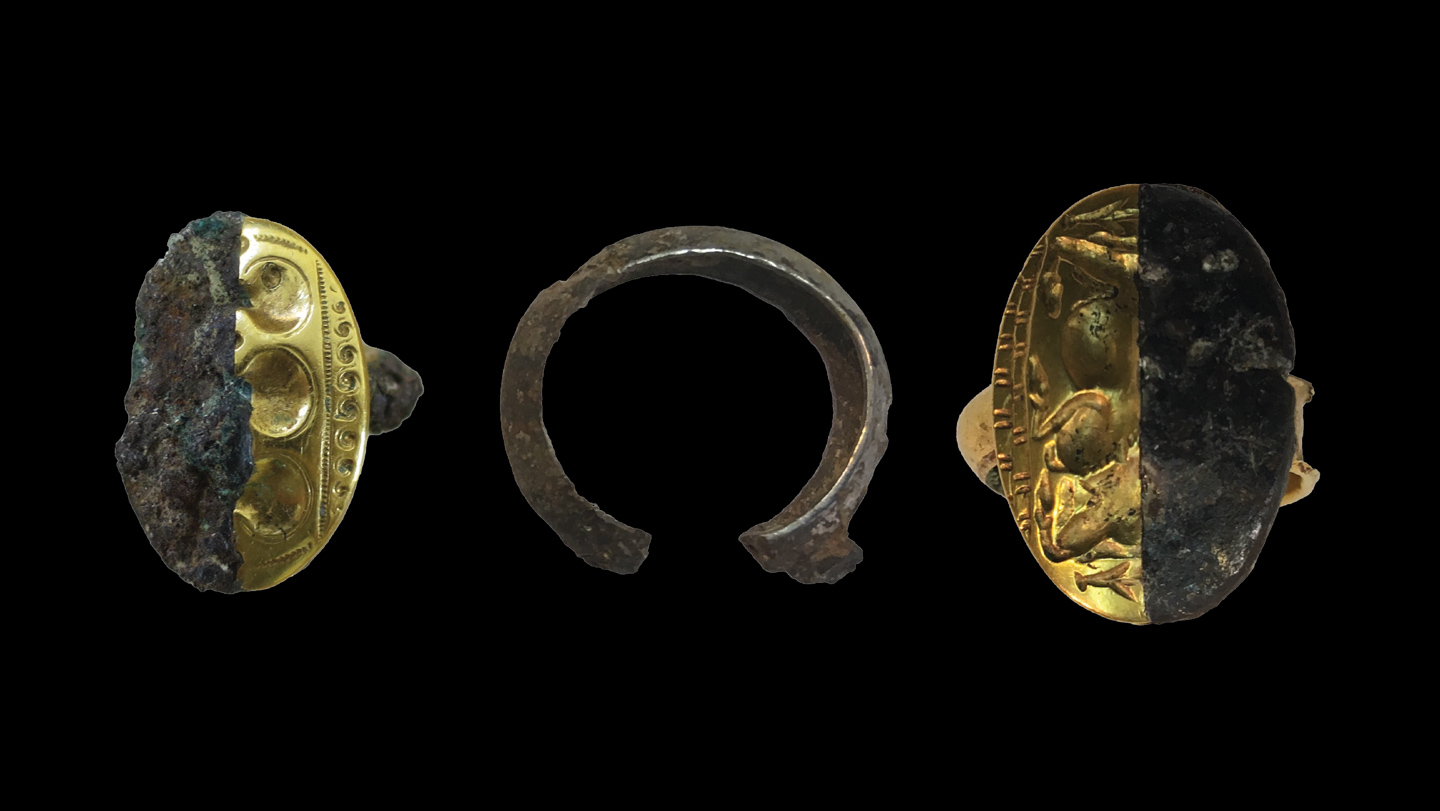
Chemical analysis of 91 ancient iron weapons and jewelry turned up traces of nickel in about a dozen signet rings — a sign the iron probably came from meteorites, researchers report in the August 2026 Journal of Archaeological Science. The rings were excavated from the ruins of elite tombs, houses and a temple in southern Greece and Crete and the meteoric metal was often layered with gold and silver.
“This shows that meteoritic iron was considered a very precious metal used for producing objects of special value and for a high-status group of people,” probably elite Mycenaeans and Minoans, says prehistoric archaeologist Eleni Mantzourani of the University of Athens.
Iron from meteorites was prized throughout the ancient world, especially in Egypt, where arid deserts preserve meteorites. A dagger of meteoric iron was even found in King Tut’s tomb. But it was unclear whether the ancient Greeks also favored iron from meteorites; the space rocks are rare in a coastal region where the sea swallows most of them.
Mantzourani and Matthieu Gounelle, an astrophysicist and chemist at the French Natural History Museum in Paris, used X-ray fluorescence to study iron objects from 33 archaeological sites, all dating from 3,000 to 4,000 years ago. Most contained no nickel, a sign the iron had been forged from ores with the rudimentary smelting technologies that preceded the Iron Age. In contrast, the iron in meteorites typically contains a high proportion of nickel, sometimes up to 50 percent, the researchers wrote.
But 13 objects held traces of nickel. All were rings or fragments of rings, many attached to a large flat piece of engraved metal that suggested they were signet rings. Of those 13 rings, the researchers think 10 were probably made with meteoric iron, while the other three need more study.
Given the scarcity of meteorites in Crete and Greece, the researchers suggest the valuable metal was imported from Egypt, a sign of ancient trade between these regions.
Meteorite iron rings from after the 12th century B.C. are not found in the region, which indicates this noble fashion disappeared around the time of the Late Bronze Age collapse, Mantzourani says. The collapse ended the Mycenaean civilization in southern Greece, while the Minoan civilization on Crete had already fallen by this time, possibly because of a volcanic eruption.
Read the full article here