


California voters on Tuesday approved Proposition 3, making permanent a tax on the state’s highest earners that pumps billions of dollars a year into public schools and community colleges, according to the Associated Press.
California’s Proposition 3 drew strong support, with 58.7% voting yes (4.4 million votes) compared with 41.3% voting no (3.1 million), according to Associated Press figures released early Wednesday morning.
The measure, a constitutional amendment, does not raise taxes.
It locks in the higher income tax rates — ranging from 10.3% to 12.3% — that California has charged its top earners since 2012, which are otherwise set to expire after 2030.
The rates apply to individual income above about $371,000, a threshold adjusted each year for inflation. Taxpayers below that line are not affected.
The tax brings in an estimated $5 billion to $15 billion a year, according to the state’s nonpartisan Legislative Analyst’s Office.
Under the measure, 89% of the education money goes to K-12 schools and 11% to community colleges, with excess funds going to health care in certain years. In flush years, the revenue makes up about 15% of the state’s K-12 budget.
It is the third time voters have weighed the tax.
It first passed in 2012 as Proposition 30, a temporary measure pitched by then-Gov. Jerry Brown to help schools recover from the Great Recession, and voters extended it in 2016 with Proposition 55.
Combined with the state’s separate 1% surcharge on income over $1 million for mental health services, California’s top earners pay a 13.3% rate — the highest state income tax in the nation.
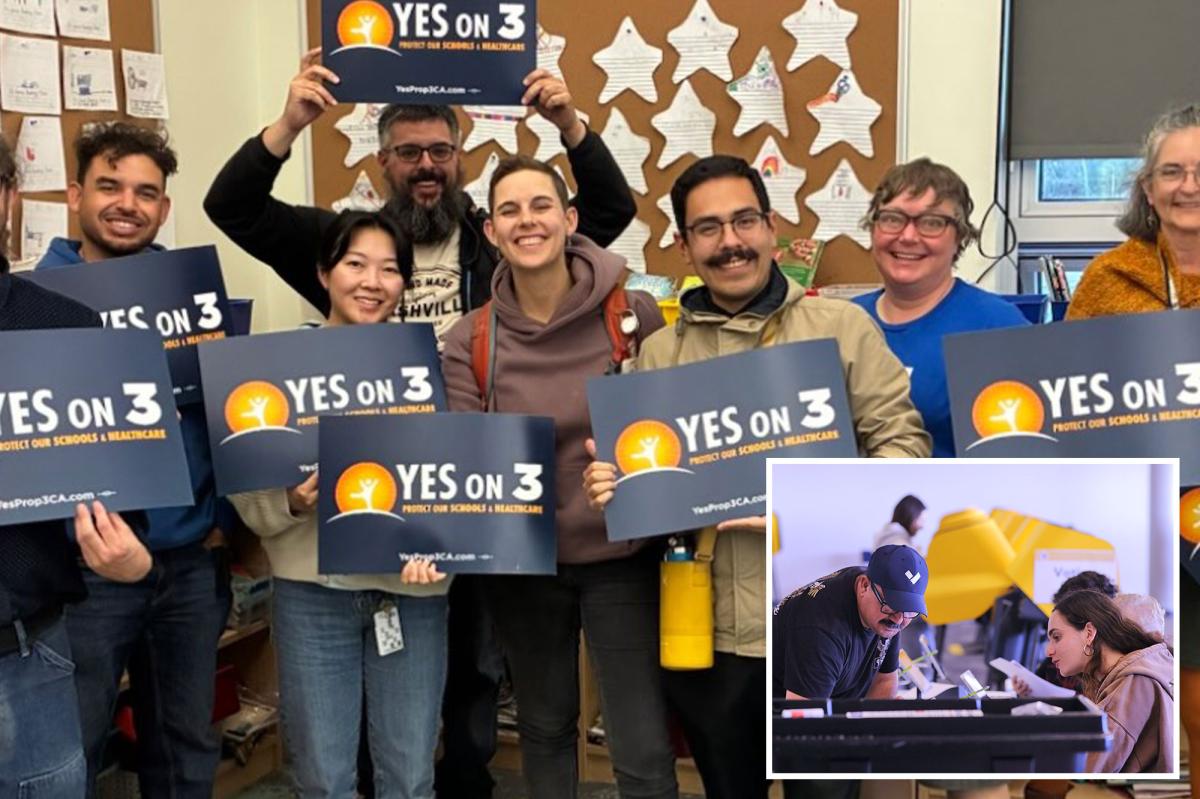
The California Teachers Association placed the measure on the ballot and poured about $30 million into the campaign. Supporters included the California State PTA, the California School Nurses Organization, the California School Employees Association, the California Medical Association and the California Democratic Party.
They argued that losing the revenue would mean layoffs and program cuts, particularly as federal funding cuts hit the state. The CTA framed the choice as continued school funding or “a tax cut for the wealthiest Californians.”
Opponents, led by the California Taxpayers Association, the Family Business Association of California and the California Hispanic Chambers of Commerce, argued the tax was sold to voters as temporary and that Californians already pay some of the nation’s highest income, sales and gas taxes. They urged the state to “fix spending first.”
The measure consistently polled well.
A Public Policy Institute of California survey of likely voters conducted Oct. 16-22 found 58% support and 41% opposition, nearly identical to its September poll. Democrats, independents, younger voters and renters backed it widely, while Republicans and older voters were opposed.
Prop. 3 shared the ballot with Proposition 40, a separate one-time 5% wealth tax on California’s roughly 200 billionaires, which lost majority support in PPIC’s final poll after tech leaders spent hundreds of millions of dollars against it.
The measure also became an issue in the race for state superintendent of public instruction, where CTA-backed Richard Barrera supported it.
Download The California Post App, follow us on social, and subscribe to our newsletters
California Post News: Facebook, Instagram, TikTok, X, YouTube, WhatsApp, LinkedIn
California Post Sports Facebook, Instagram, TikTok, YouTube, X
California Post Opinion
California Post Newsletters: Sign up here!
California Post App: Download here!
Home delivery: Sign up here!
Page Six Hollywood: Sign up here!
Read the full article here