


There are few things more annoying than having a bug fly into your ear. But the body is prepared to fend off these insect invasions, says David Hu, a bioengineer at Georgia Tech.
The goop inside our ears may act as a natural insect repellent, Hu’s team reports 28 October in Soft Matter. What we call earwax is not really waxy at all. Instead, the brownish substance absorbs water, a property that might help it regulate moisture in the ear and keep bugs out, the new analysis shows. “[This] familiar biological material may represent a sophisticated physical defense against small arthropods,” says Stanislav Gorb, a functional morphologist at the University of Kiel in Germany, who was not involved with the work.
Researchers have not studied earwax as much as other body fluids, such as snot, spit or even pee. “It’s a big mystery why we even have [it] in our ears,” Hu says. It can frankly seem like a nuisance. Earwax can build up, clogging earbuds and hearing aids and interfering with hearing, so understanding this substance better may help resolve those problems.
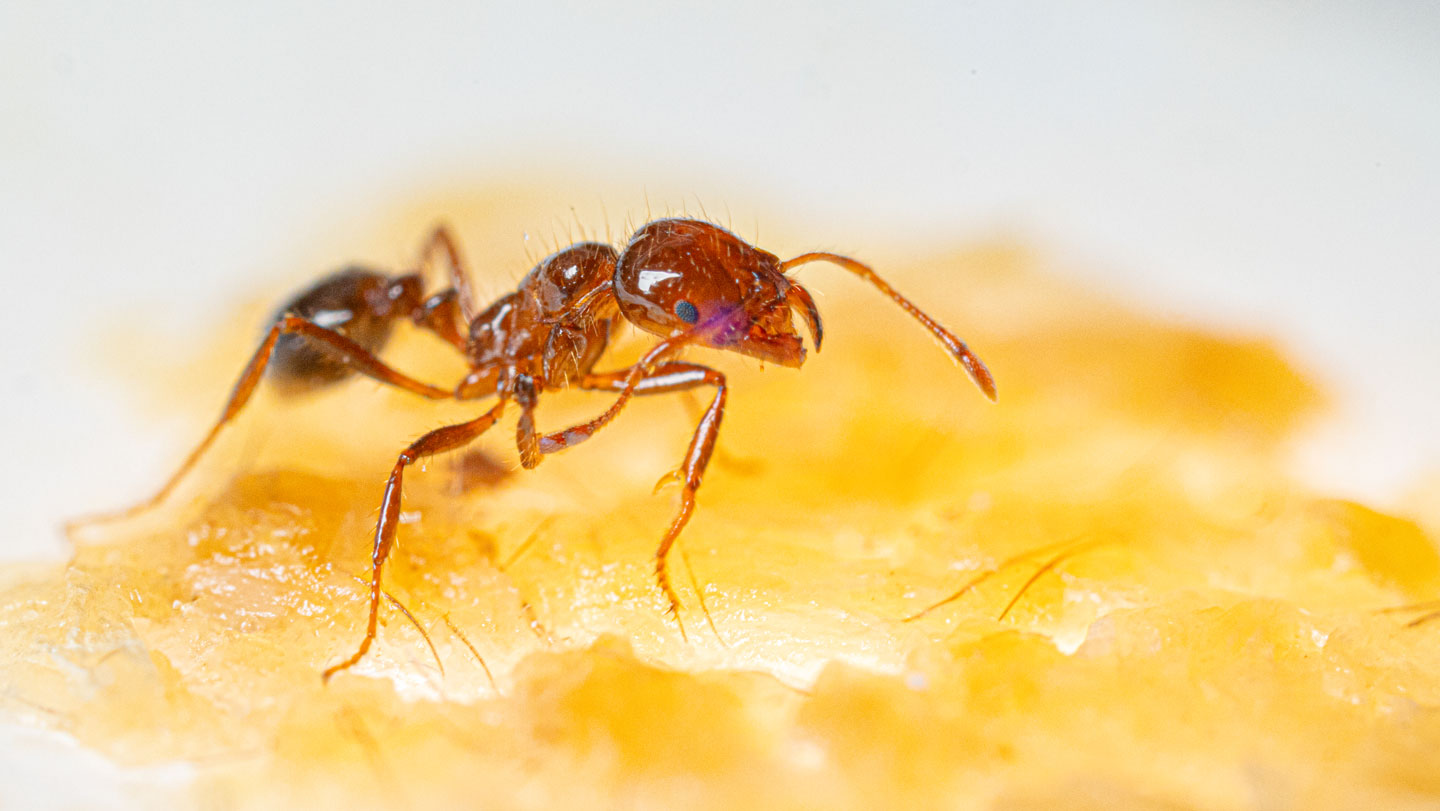
Hu and colleagues analyzed the mechanical and chemical properties of 36 earwax samples from pigs, sheep, dogs, cows, rabbits and humans. They also observed how fire ants (Solenopsis invicta) reacted to both natural and synthetic earwax.
Even though ants seem able to scale kitchen cabinets with ease to invade countertops, they flounder when they attempt to climb earwax. Hu thinks the earwax sucks moisture from the ants’ feet that helps them grip. But earwax also sticks to ants’ bodies, causing the insects to start grooming incessantly trying to get rid of it. “It’s both sticky and slippery,” Hu says.
The chemical analyses provide some clues about the origins of these properties. Dead skin cells make up 60 percent of earwax, along with a smattering of oils and moisture. The earwax contains pores that Hu believes may be shaped like ink bottles to help it absorb twice its weight in water and prevent water from sloshing around in the ear canal. Like snot, earwax has a huge range of consistencies.
Under normal conditions, earwax becomes dry and crumbly in about 10 weeks. As it dries, it’s moved outward by a layer of cells lining the ear canal that act as a cleaning conveyor belt. In this way, the ear maintains just the right thickness of earwax to keep insects at bay, Hu says. “It’s most potent when it’s thin,” he explains. “Too much, and the ants can use their tiny claws to grab hold and climb in.”
Hu admits there’s no practical way to turn earwax into a commercial insect repellent. Each person has a volume of earwax about equivalent to that of a grain of rice in each ear at any given time, says Hu, so even if you add up all the earwax on Earth, “it’s a pretty rare substance.” But, he adds, companies “are trying to come up with biodegradable and biofriendly ways to deal with insects.” And, says Gorb, perhaps earwax “could inspire a new generation of physical, nontoxic pest control surfaces,” that could provide coatings for protecting stored food, agricultural products and technology.
Read the full article here