

HELEN MARY HILL OT-L (Order of Timor-Leste) February 22, 1945-May 7, 2024
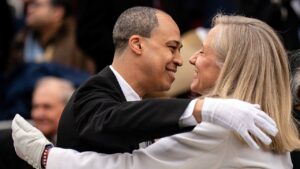
When Melbourne-born Helen Hill, an outstanding social activist, scholar and academic, died on May 7, 2024, at the age of 79, the Timorese government sent its Minister for Education, Dulce de Jesus Soares, to deliver a moving eulogy at the funeral service at Church of All Nations in Carlton. Helen will be remembered for many things, but above all for her 50 years of dedication to friendship with the people of Timor-Leste and solidarity in their struggle for independence.
At the funeral, Steve Bracks, chancellor of Victoria University and former premier of Victoria, also paid tribute to Helen’s lifetime commitment to social justice and to the independence and flourishing of Timor-Leste in particular. Further testimonies were presented by Jean McLean (formerly a member of the Victorian Legislative Council), the Australia-East Timor Association, representatives of local Timorese groups and Helen’s family. Helen’s long-time friend, the Reverend Barbara Gayler, preached on the theme of solidarity.
Helen was born on February 22, 1945, the eldest of four children of Robert Hill and Jessie Scovell. Her sister Alison predeceased her, and she is survived by her sister Margaret and her brother Ian and their children and grandchildren. Her father fought with the Australian army in New Guinea before working for the Commonwealth Bank and becoming a branch manager. Her mother was a social worker at the repatriation hospital. The family were members of the Presbyterian Church in Blackburn, which fostered an attitude of caring for others.
Helen’s secondary schooling was at Presbyterian Ladies College, where she enjoyed communal activities such as choir. She began a science course at the University of Melbourne but transferred to Monash University to study sociology and political science, graduating with BA (hons) in 1970. At Monash, Helen was an enthusiastic member of the Labor Club and the Student Christian Movement (SCM), where issues of social justice were regularly debated.
Opposition to the war in Vietnam was the main focus of concern during her time at Monash. In 1970, Helen was a member of the organising committee for the first moratorium demonstration in Melbourne and also a member of the executive committee of the Australian SCM (the national body) which was based in Melbourne. She edited Political Concern for ASCM, an alternative information service. In 1971, Helen was a founding member of International Development Action. Helen was a great networker, always ready to see what she could learn from others.
Perhaps the most formative moment in Helen’s career was her appointment as a frontier intern, to work on the Southern Africa section of the Europe/Africa Project of the World Student Christian Federation, based in London (1971-1973). This project aimed to document how colonial powers had exploited the resources of their colonies, as well as the impact of apartheid in South Africa. In those years, she also studied at the Institute d’Action Culturelle (IDAC) in Geneva, which was established by Paulo Freire, arguably her most significant teacher. The insights and contacts from this time of engagement with global issues of justice and education provided a strong foundation for Helen’s subsequent career.
In 1974, Helen embarked on a master of arts course supervised by the late Professor Herb Feith. Helen had met student leaders from the Portuguese colonies of Mozambique and Angola in the Europe/Africa project, who asked her about East Timor (“so close to Australia”). Recognising that she, along with most Australians, knew very little about East Timor, Helen proposed East Timor as the focus of her master’s thesis. She began to learn Portuguese for this purpose. Following the overthrow of the authoritarian regime in Portugal in April 1974 and the consequent opportunities for independence in the Portuguese colonies, she visited East Timor for three months in early 1975, where she was impressed by the program and leadership of Fretilin, the main independence party.
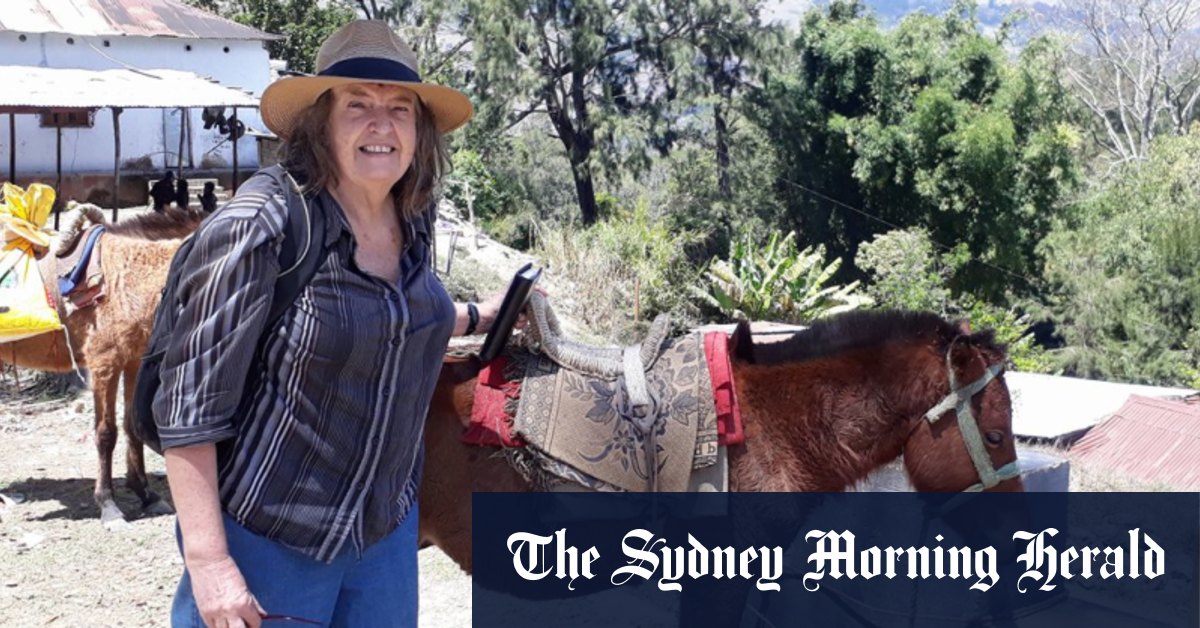
Helen Hill.
Her plans were thwarted by the Indonesian invasion of East Timor in December 1975, and she was unable to revisit East Timor until after the achievement of independence in 2000. Her 1978 Master of Arts thesis included an account of the Fretilin plans rather than the Fretilin achievements. Her 1976 book, The Timor Story, was a significant document of the desire of East Timorese people for independence and influenced the keeping of East Timor on the UN decolonisation list. She was a co-founder of the Australia-East Timor Association, which was actually founded in the initial days of the Indonesian invasion.
Read the full article here