




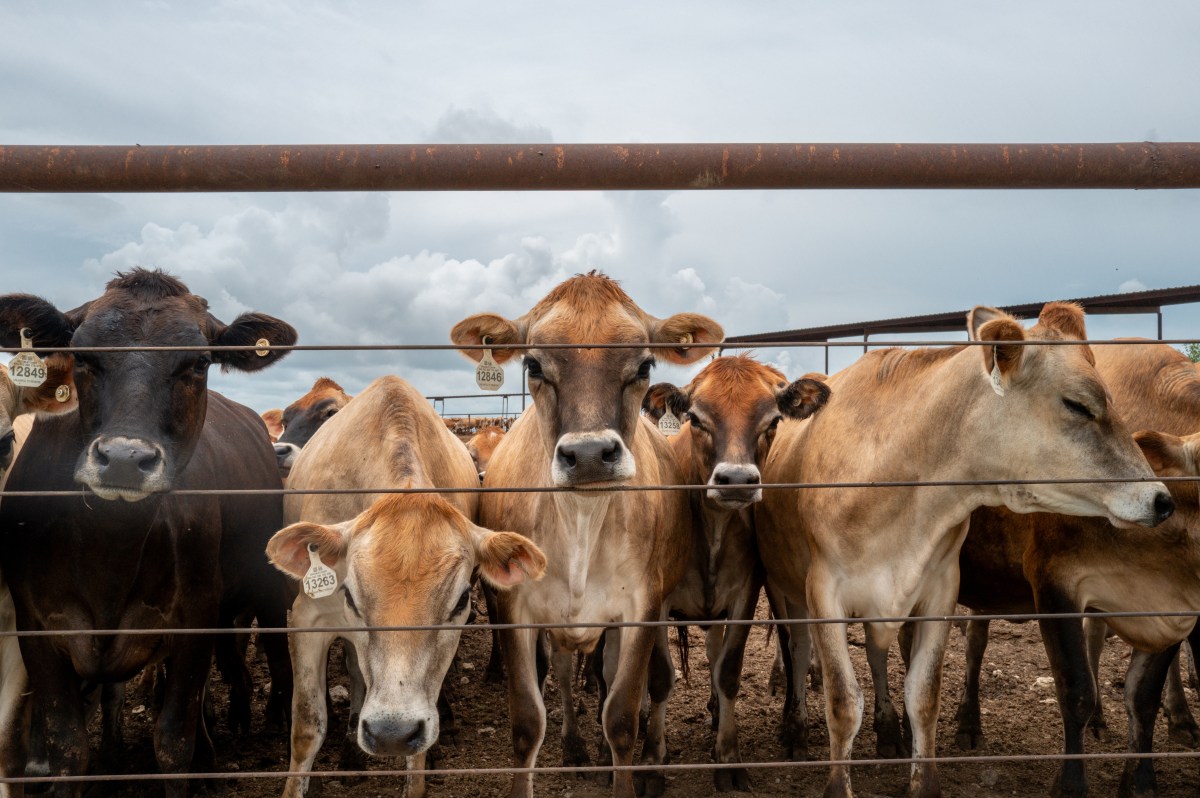
Democrats and Republicans are clashing over who is to blame for a series of New World screwworm cases reported in recent days—an outbreak that threatens the nation’s livestock industry and risks putting upward pressure on already record-high beef prices.
Since the Department of Agriculture (USDA) confirmed a case in Texas last week, the flesh-eating parasitic fly—which was eradicated in the United States in the 1960s—has now been detected in five animals: three calves and a goat in Texas, as well as a dog in New Mexico.
Female screwworm flies lay eggs in open wounds, and the resulting larvae feed on living tissue, potentially causing severe injury or death in livestock if left untreated.
Canada has already banned imports of Texas cattle in response to the cases, and some experts warn that a wider outbreak could further tighten cattle supplies and increase costs for consumers.
As officials work to contain the parasite by releasing millions of sterile flies into affected areas, USDA Secretary Brooke Rollins has laid responsibility at the feet of the previous administration and is treating the outbreak as a border-security failure inherited from Joe Biden.
Newsweek has contacted the USDA via email for comment.
Republicans Point to Biden-Era Border Policies
In an appearance on CNBC’s Squawk Box on Monday, Rollins said that “not much had been done” to prevent another screwworm outbreak under the previous administration and argued that the parasite’s movement from Central America into Mexico and eventually the United States occurred during Biden’s presidency.
Other Republicans have echoed that argument.
“This is another thing we can thank Joe Biden for,” Kansas Senator Roger Marshall told Newsmax on Monday.
Marshall went on to suggest migrants may have helped bring the parasite northward.
However, no evidence has linked human migration to the current outbreak. Scientists and agricultural authorities have largely attributed the parasite’s spread to the movement of infested animals as cases gradually advanced north from Central America into Mexico.
What Is Not in Dispute
While politicians disagree over who is responsible, several aspects of the outbreak are largely uncontested.
The parasite has been moving north for years. Cases began spreading beyond the Darién Gap region in 2023 and gradually advanced through Panama, Costa Rica and Mexico before reaching the United States.
U.S. officials were also aware of the growing threat before the recent cases emerged domestically.
In November 2024, Mexico’s chief veterinary officer informed the USDA of a confirmed screwworm case in Chiapas near the Guatemalan border. The department responded by restricting imports of certain animal products from Mexico and freeing up emergency funding aimed at slowing the spread of New World screwworm in Mexico and Central America.
The central political disagreement is whether policy decisions made during that period accelerated the outbreak or simply failed to stop an advancing threat.
Democrats Point to DOGE-Era Cuts
Others have blamed actions taken during President Donald Trump’s administration.
Democratic Representative Shri Thanedar of Michigan accused the administration and the now-disbanded Department of Government Efficiency (DOGE) of weakening monitoring efforts designed to track the parasite’s spread.
“Trump GUTTED funding for screwworm detection and fired 25 percent of workers whose job it was to monitor the disease,” Thanedar wrote on X.
Early last year, as DOGE worked to dismantle the United States Agency for International Development (USAID), funding was cut for a program focused on monitoring and containing the spread of New World screwworm in Central America, according to a March 2025 report by Agri-Pulse, an industry news outlet.
Forbes later reported that the cuts occurred shortly before the United States lifted restrictions on Mexican cattle imports that had been imposed following the November 2024 detection.
It remains unclear whether those cuts directly contributed to the recent U.S. cases, though concerns were reportedly raised at the time by agriculture officials.
Response Efforts Face Scrutiny
Beyond questions about how the outbreak reached the United States, the administration is also facing criticism over its current response.
Among those raising concerns is Texas Agriculture Commissioner Sid Miller, a longtime Trump ally.
“For months, the screwworm has advanced rapidly through Mexico in spite of the USDA’s existing gameplan,” Miller said last week.
“Even though billions of sterile flies have been dispersed by USDA, the screwworm has still advanced over 1,100 miles from southern Mexico to Texas.”
Miller has urged the USDA to supplement sterile-fly releases with additional prevention measures that use attractants, bait and targeted insecticides to reduce adult screwworm populations.
According to Rollins, however, the department is already in “full combat mode” and has significantly expanded surveillance and response efforts.
The USDA has also begun releasing millions of sterile flies each week in affected regions as part of a strategy designed to disrupt screwworm reproduction and prevent the parasite from becoming established in the United States again.
Read the full article here