




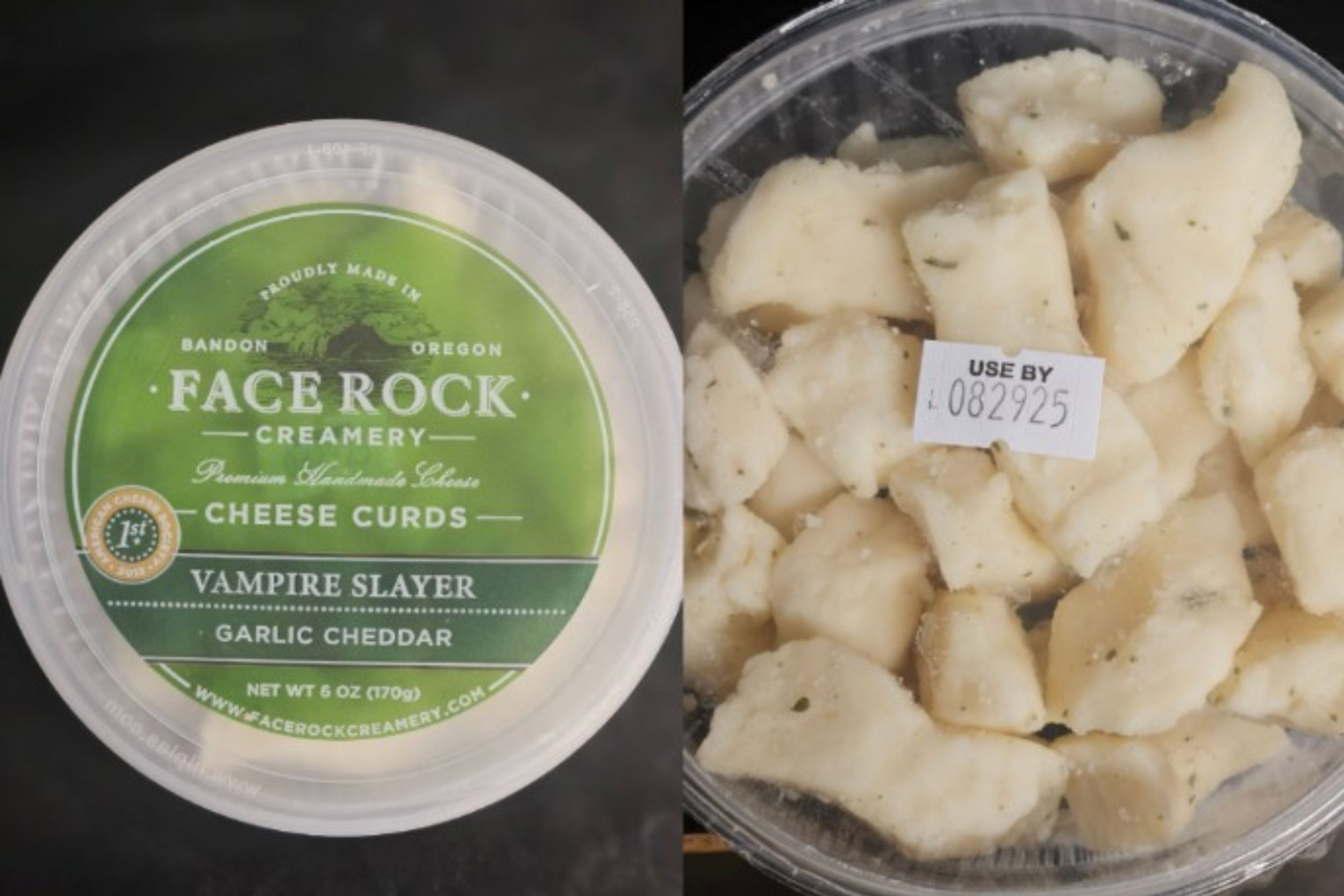
A recall of cheese curds over potential contamination with Listeria monocytogenes has received the highest risk warning from the Food and Drug Administration (FDA).
Face Rock Creamery LLC, based in Oregon, issued a voluntary recall for specific lots of its Vampire Slayer Garlic Cheddar Curds on June 20. The FDA issued a Class 1 risk classification for the recall on July 7.
Newsweek contacted Face Rock Creamery LLC for comment by email outside regular working hours.
Why It Matters
A Class I risk classification represents “a situation in which there is a reasonable probability that the use of, or exposure to, a violative product will cause serious adverse health consequences or death,” according to the FDA.
Listeria infection, or listeriosis, may lead to a range of symptoms in infected individuals. For those experiencing less severe infections, symptoms may include fever, muscle aches, nausea, vomiting and diarrhea, which often last between one and three days, the FDA said.
For more severe and potentially life-threatening infections, symptoms may include headaches, stiff neck, confusion, loss of balance and convulsions.
Severe infections are particularly dangerous for young children, frail or elderly people, and those with weakened immune systems. It can also lead to miscarriages and stillbirths in pregnant women.
What To Know
These are the details of the recalled product:
- Vampire Slayer Garlic Cheddar Curds. UPC: 8 51222 00528 7. Lot numbers: 20250519VS01 and 20250519VS02. Use-by date: August 29.
A total of 260 cases of the product were affected by the recall. They were distributed to Trader Joe’s retail stores in Northern California (Monterey, Fresno and all locations north) and northern Nevada (Carson City, Reno and Sparks).
As of June 20, no illnesses had been reported in connection with the recalled product.
The problem was discovered during routine sampling conducted by the company, which showed the presence of the bacteria in the finished product.
The company is continuing its investigation into what caused the problem, according to the FDA.
What People Are Saying
Face Rock Creamery LLC said in a statement in the FDA’s recall notice: “Face Rock Creamery is committed to ensuring the safety and quality of our products and is working closely with our distribution partners and regulatory agencies to resolve the matter swiftly and thoroughly. We apologize for the inconvenience and appreciate the trust our customers place in us.”
Haley F. Oliver, a professor of food science at Purdue University, told Newsweek previously: “Listeria monocytogenes is a common microorganism that can be found in the natural environment, for example in soil. There are many factors that determine if someone gets listeriosis—a listeria infection. In most instances, an immunocompromised person—so young, old, pregnant or otherwise immunocompromised—must eat contaminated food. The number of bacteria resulting in infection and the amount of time before illness varies considerably. Symptoms vary among people but can include fever, flu-like symptoms, headache, stiff neck, confusion and loss of balance.”
Mary O’Riordan, a professor of microbiology and immunology at the University of Michigan Medical School, previously told Newsweek: “Listeria has an unusual capacity to grow at refrigerated temperatures. Although the bacterium can contaminate many types of food, cheeses or deli meats that are kept in cold storage for long periods in stores or at home are a place where listeria can keep growing.
“Early symptoms of listeria infection look similar to other common foodborne infections, including fever, diarrhea and vomiting, so it’s often not diagnosed right away. Unfortunately, sometimes listeria can spread into the brain and cause more serious illness, like meningitis. In those cases, if people experience headache, stiff neck or confusion, they should seek urgent medical attention.”
The FDA said on its website: “Pregnant women and their unborn or newborn baby, adults over the age of 65, and those with weakened immune systems, are all considered to be high-risk groups that are susceptible to the serious and adverse effects of listeriosis.”
What Happens Next
The recall is listed as ongoing, according to the FDA.
Consumers who purchased the product are advised not to consume it and to return it to the place of purchase for a full refund.
Read the full article here