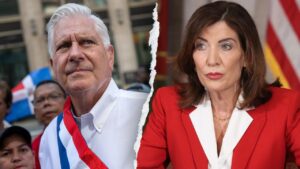



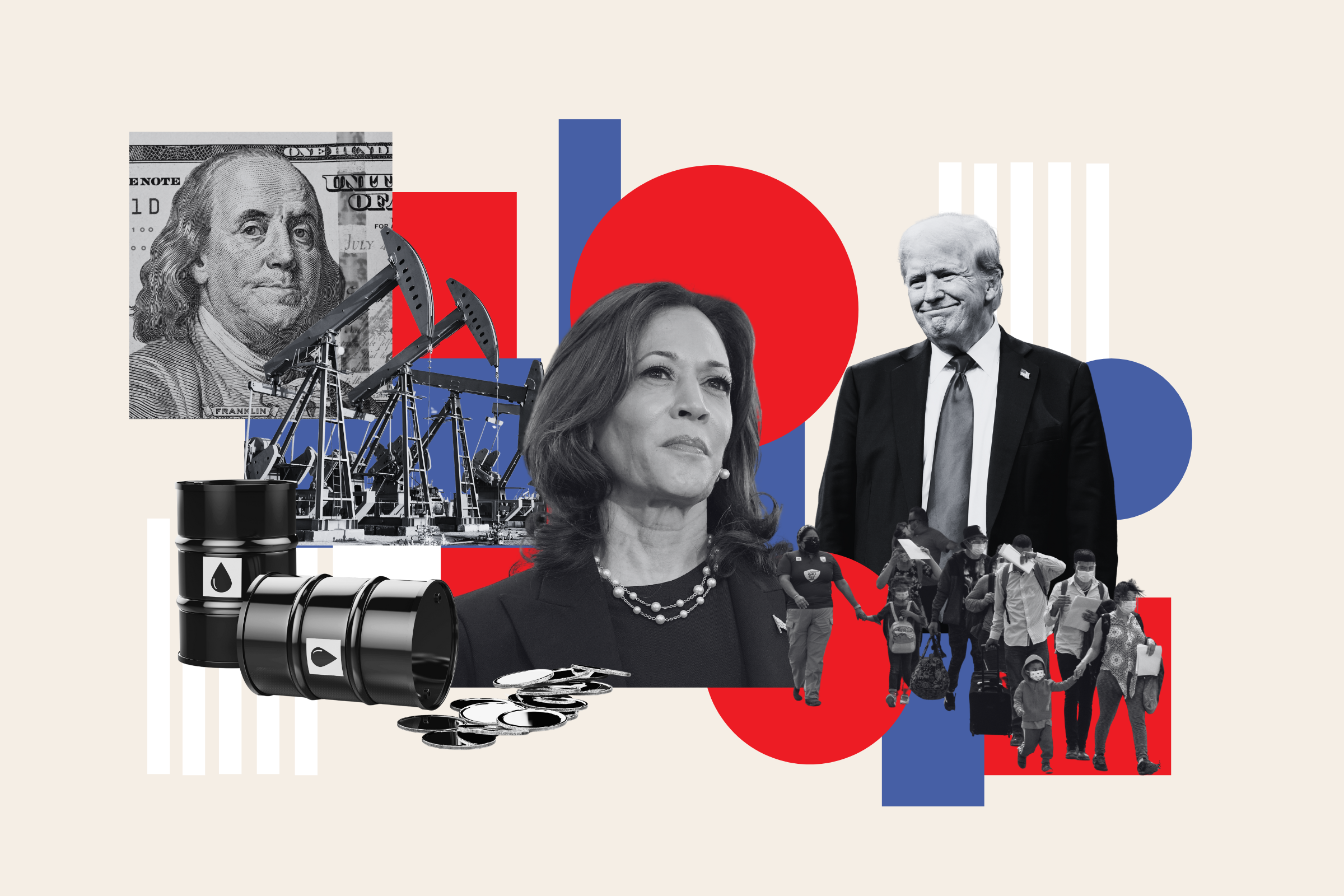
Kamala Harris and Donald Trump are just months away from success or failure in their respective bids to win the White House, and while there have been many points of disagreement, the two have found a rare common ground: axing taxes on tips for America’s service workers, and there could be more.
Trump first pledged to do away with federal income taxes on tipped income in June this year, telling a rally in Nevada that it would be one of the first things he would do if he gets back into office for a second term.
Earlier in August, Harris announced that if her election bid is successful she would also let workers keep all of their tipped income, earning her the nickname “Copy Cat Kamala” from the Trump campaign.
Harris is set to outline much of her governing policies on Friday, with key issues like the southern border, tariffs, and corporation taxes all likely to be on the agenda. But given her decision to meet Trump on one economic policy area, could she also match him on others?
Higher Tariffs
Donald Trump’s proposal: A 10 percent across-the-board tariff on all U.S. imports, as well as a 60 percent tariff on imports from China.
Could Kamala Harris copy it? The Biden-Harris administration has retained most of the tariffs brought in by the former Trump administration, and in May 2024, announced tariff hikes on an additional $18 billion of Chinese goods, including semiconductors and electric vehicles.
Harris has not yet fully outlined her position on tariffs, but in 2019, prior to becoming vice president, she said she is “not a protectionist Democrat” and opposed widespread tariffs.
“It appears she will follow a similar path to President [Joe] Biden’s trade policy, but with some differences in emphasis and from a perspective best described as several steps to his left,” William Alan Reinsch, a senior adviser at the Center for Strategic and International Studies, said.
“Predicting her position on trade with China is easier because all politicians are pretty much in the same place—critical of China and supporting a variety of proposals to restrict trade and investment further. Since one of the Republican themes has been that Democrats are soft on China, she will likely play defense and take pains to show that accusation is not true.”
Donald Neiman, professor of history and provost emeritus at Binghamton University, State University of New York, has said Harris can now afford to more closely align her tariff policy with Trump.
“She can do so because the Biden administration has been perhaps even more aggressive on tariffs on Chinese products than Trump was. So, in a sense she will simply be endorsing a policy that is generally popular and is consistent with the administration’s record,” Neiman told Newsweek.
“Trump, of course, advocates higher tariffs on products from a range of countries, not just China. But I think to the extent that this is an issue that resonates with many voters, it’s tariffs against China—which has become widely perceived as a threat—that will be the issue and where Harris will take a tough stand. She can avoid broadening her support for tariffs on products from other countries, especially allies.”
Lower Corporate Tax Rate
Donald Trump’s proposal: A 15-percent federal corporate income tax rate. During his 2016-2020 tenure in the White House, Trump cut the corporate tax rate from 35 percent to 21 percent as part of the 2017 Tax Cuts and Jobs Act.
Could Kamala Harris copy it? It seems unlikely. In a Biden-Harris budget issued in March this year, it proposed raising the corporate tax rate to 28 percent, as well as raising the Inflation Reduction Act’s corporate minimum tax rate on billion-dollar corporations from 15 percent to 21 percent.
Neimann said Harris is more likely to “emphasize the importance of creating greater tax equity,” including “increases on corporations and the wealthy—against whom there is a great deal of popular resentment.”
“Campaign tax plans are known to be highly aspirational, and it would be a surprise if Democrats’ wish list for revenue-raisers in 2025—currently centered on ideas like raising the 21 percent corporate rate—change much even with the upcoming shift atop the ticket,” Politico’s tax reporter Bernie Becker reported earlier this year.
Immigration Crackdown
Donald Trump’s proposal: One of the defining sticking points of the Trump campaign, Trump has assured his supporters that he will “seal” the southern border and “stop the migrant invasion.” His policies include completion of the border wall which began during his administration, stationing troops in the area, increase penalties for illegal entry and overstaying visas, and begin the “largest deportation program in American history.”
Could Kamala Harris copy it? The vice president’s position on immigration is certainly not as extreme as that of her opponent, but she has still made commitments to tackling the border crisis.
She also supported a bipartisan border security bill—defeated in the Senate in February after Trump came out against it—that would have boosted funding for border agents and detention facilities.
Any switches to align closer to Trump’s policies is unlikely as it would struggle to resonate with the Democratic voter base.
“She has already criticized him for advocating massive arrests and deportations. That’s not only important to her base, but it will resonate with many Hispanic and swing voters,” Neiman said. “They want a secure border, but they don’t want a reprise of draconian Trump-era policies that resulted in children separated from their parents and held in cages.”
Increase Supply of Oil, Natural Gas and Coal
Donald Trump’s proposal: Trump has pledged to make America the “manufacturing powerhouse of the world,” saying he will “remove all red tape that is leaving oil and natural gas projects stranded, including speeding up approval of natural gas pipelines into the Marcellus Shale in Pennsylvania, West Virginia, and New York.”
In a September 2023 post from Agenda47, his official policy platform, Trump’s campaign said his administration will “DRILL, BABY, DRILL.”
Could Kamala Harris copy it? During her campaign, Harris has said numerous times that Trump “intends to surrender our fight against the climate crisis.” She has shown concern over environmental issues before, such as when she sued the Barack Obama administration to block plans to drill off the California coast when she was attorney general for the Golden State. However, under Biden, the White House has done little to restrict America’s fossil fuel output.
According to Reuters, a campaign spokesperson for Harris said: “As president, Kamala Harris will finish implementing the IRA [Inflation Reduction Act] and the bipartisan infrastructure law and build on their successes,” referring to legislation that contains clean-energy subsidy programs.
“She will tout the increase in energy production under Biden, but mainly expect her to emphasize sustainable energy as the path to energy independence and the survival of the planet,” Neiman observed. “She will point to investments in green energy as a source of job growth throughout the country and do it a way that is more specific than Biden seemed capable of doing.
“Expect her to challenge the notion that support for green energy kills jobs and to underscore how it has led to economic resurgence in communities across the country.”
Direct Control of the Federal Reserve
Donald Trump’s proposal: Trump has said that if he wins a second term he wants a more direct role in how the Federal Reserve sets interest rates.
“I feel the president should have at least [a] say in there,” Trump said during a press conference in August. “I feel that strongly. I think that in my case, I made a lot of money, I was very successful, and I think I have a better instinct than, in many cases, people that would be on the Federal Reserve or the chairman.”
Could Kamala Harris copy it? Trump’s proposal comes at a time when Fed has held interest rates at their highest level in more than 20 years. But despite this, Neiman doesn’t believe Harris will aim to take control of the Fed as it is unlikely to sway some of the electorate toward supporting her.
“I don’t sense a clamor from the public to give the president greater control over the nation’s banking system,” he said. “Harris will look stateswoman-like by supporting traditional institutional arrangements and citing Trump’s position as just more evidence of his disrespect for American institutions and norms and his dictatorial tendencies. But even though interest rates are of concern to many Americans, there doesn’t seem to be a hue and cry against the Fed.”
Read the full article here