



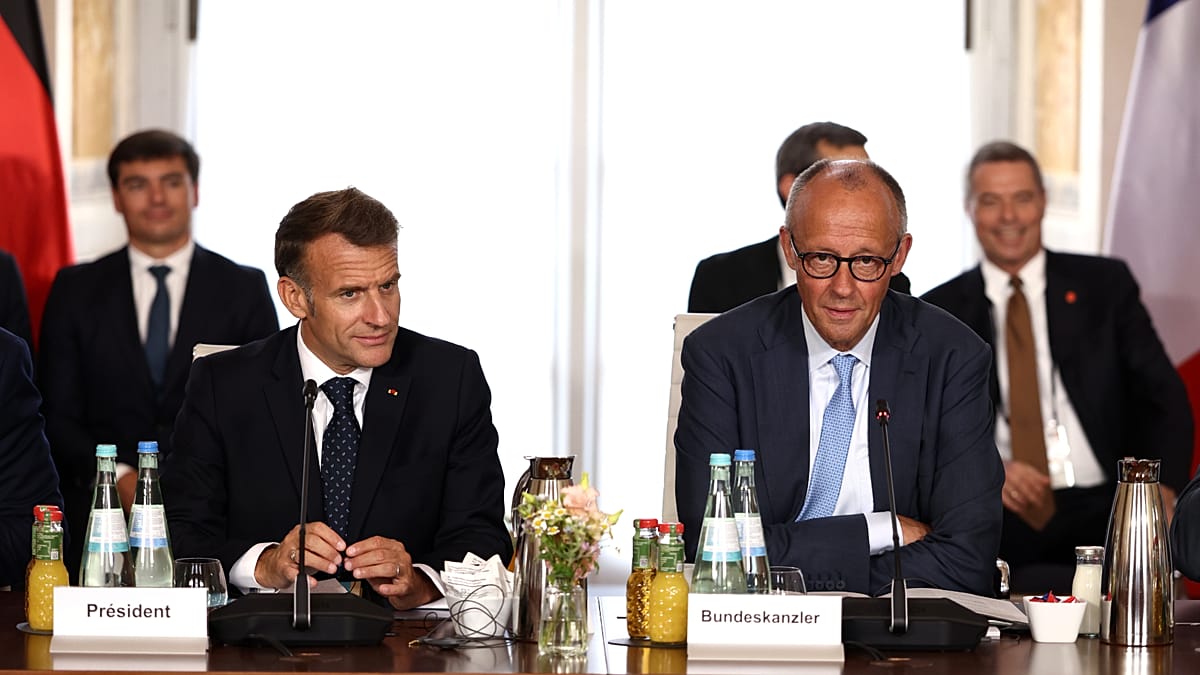
German Chancellor Friedrich Merz said on Friday that Germany will take part in a French nuclear exercise later this year, following a joint meeting of the French and German governments near Cologne.
“Alongside this work on a shared doctrine, German conventional forces will this year take part in a nuclear exercise of the French military,” Merz said.
Speaking at a press conference alongside French President Emmanuel Macron, the Chancellor said a “strategic steering group” created by the two countries would examine how to strengthen deterrence in the future.
“This is complementary to our nuclear participation and deterrence within NATO, which we still hold to,” he added.
Germany to join French-led Ukraine military manoeuvre
Regarding Ukraine, Merz said Germany would also take part in “a manoeuvre in the autumn held on the initiative of France.”
“We will clarify together what form exactly this participation will take,” he said.
The manoeuvre will take place under the so-called Coalition of the Willing, a group of Ukraine’s allies that held its latest meeting in Paris earlier this week, attended by both Merz and French President Emmanuel Macron.
At the meeting, Macron said a Multinational Force for Ukraine, which would be deployed once the fighting ends, would hold exercises in the coming months in countries neighbouring Ukraine “to validate our deployment plans and demonstrate that we are ready.”
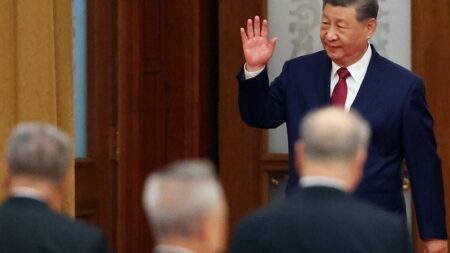
China trade ‘roadmap’
The two countries aim to draw up a joint “roadmap” by September to address China’s unfair trade practices, Macron said, adding that “right now we are being shaken” by Beijing’s trade policies.
Paris and Berlin want “to have a Franco-German roadmap on this issue by September”, he said, with their economy, finance and foreign ministers tasked with formulating the plan.
“We are going to push again very strongly to reinforce the mandate given to the European Commission to move much faster on market investigations and on these instruments to protect our industries,” Macron added.
“We want to protect our companies and our industries. We’ve seen it in chemicals, we see it in machine tools, in the automotive sector and in many others.”
Merz also noted that EU’s trade deficit with China had been sharply rising in recent years.
“I think it goes without saying that we have to address this imbalance, because it comes at the expense of our industry.”
The European Union is grappling with how to deal with China’s growing flood of exports, which critics say are supported by generous states subsidies, as well as an allegedly undervalued currency that makes its products cheaper.
The bloc has been struggling to come up with a clear position, with France long pushing for a tougher approach while Germany – whose businesses are more heavily invested in China – has traditionally taken a more cautious stance.
Read the full article here