



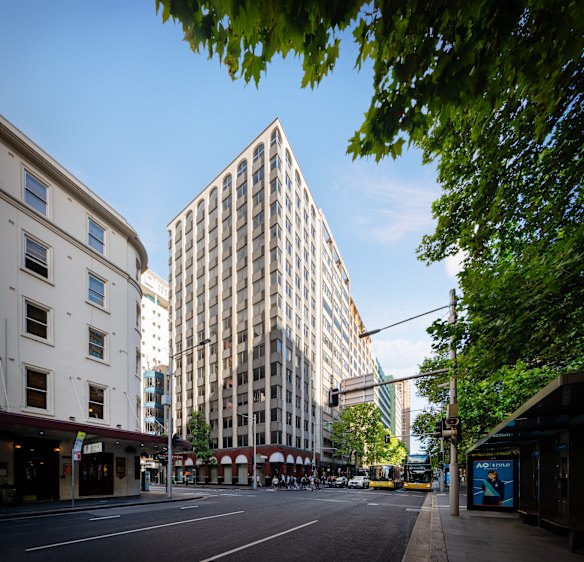
If a building could wear platform shoes and flared jeans, this one would. With its big arches, the retro style of the Bank of China’s former Sydney head office block opposite Wynyard Park in Sydney’s CBD encapsulated the early 1970s.
Rather than raze and build something new, the block is now being converted into a new lifestyle hotel, the first Motto by Hilton in Australia, scheduled for completion in late 2027.
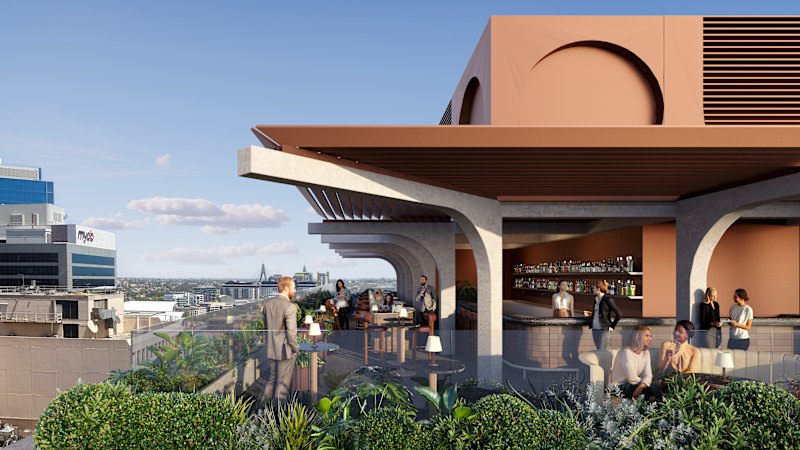
The adaptive reuse project by architects Bates Smart will retain much of the building’s existing structure and go big on its original style.
The architecture practice’s interior design director Brenton Smith said the 1970s had been a moment of real experimentation in colour, form, and a “kind of unapologetic vibrancy”.
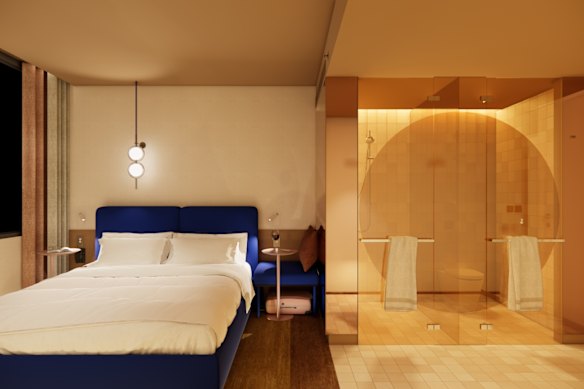
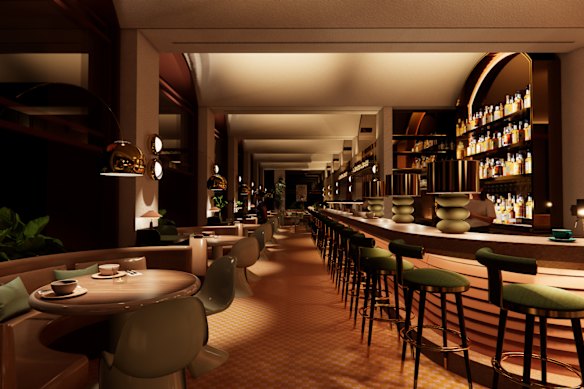
The design for the new hotel lent into that spirit “with bright finishes, carpet up the walls in the corridors, a circular motif that echoes the glazed screens of the era”.
Smith said every design decision traced back to the “DNA of the 1970s”, including checkerboard tiling, amber glass, louvred joinery, and Panton chairs by Danish designer Verner Panton.
With its arched colonnades, it was a nice building, said Philip Vivian, the managing director of Bates Smart and advocate for adaptive reuse of older buildings.
“Rather than demolish it and build again, we wanted to keep it and maximise its features,” he said.
Compared to a new build, retaining its structure saved 72 per cent of its embodied carbon, Vivian said. The World Green Building Council says new buildings are responsible for 39 per cent of global energy-related carbon emissions.
Vivian said they would keep most of the structure and update other parts – including painting the mullions (dividers) in the windows – because there was no point throwing them away. They had hoped to keep the glass, too, but opted for improved glazing for insulation and to reduce sound from the street below.
The 4412 square metre floor plate is relatively small, and a fraction of those in bigger blocks now being built.
Updating the building will involve cutting through its core to add a new lift and staircase.
Other hotel conversions include:
- Capella Sydney in the former Department of Education offices.
- Crystallbrook Kingsley, the conversion of Newcastle’s round council administration centre.
- Punthill Tuggeranong, ACT, formerly an innovation centre.
- Vibe Hotel, previously an old office block on Goulburn Street Sydney for Transport NSW.
Vivian said the climate crisis had made it “imperative for humankind to cut carbon emissions” and preserve or adapt older buildings, such as the bank site, and those with heritage listing.
His comments coincide with a promise by Heritage Minister Penny Sharpe to make it easier for owners of heritage buildings to adapt them for future use.
Unlike hotels that look the same in Shanghai as they do in Toronto, Motto by Hilton hotels are built to suit the local neighbourhood.
Experts say the growth of lifestyle hotels allows for more unusual floor plates like the new Motto. It will have 96 standard rooms, 14 bunk rooms, 14 flex rooms, 20 suites and many rooms that connect.
Architects Gensler say converting smaller office blocks into hotels is faster than a new build, and allows for the façade and mechanical systems to be saved or reused.
Start the day with a summary of the day’s most important and interesting stories, analysis and insights. Sign up for our Morning Edition newsletter.
Read the full article here