

Acontentious decision to build a third runway at Sydney Airport did more than pour fuel on simmering anger about noise from flights over the city’s inner suburbs.
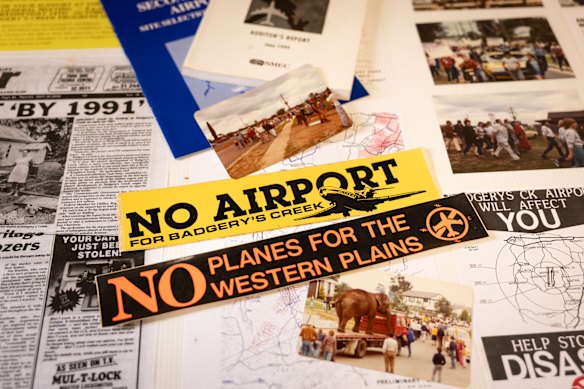
Three years after selecting a site at Badgerys Creek for a second airport in Sydney and starting the purchase of 1780 hectares of land for it, the Hawke government decision in 1989 for a third runway at Mascot arguably gave future governments political cover to delay committing to a new aviation hub.
“The Hawke decision was a blessing and a curse,” recalls John Morandini, a policy adviser in the Wran government who was involved in considering options for a second airport in the late 1970s and ’80s. “It cemented the Badgerys Creek site enough because it led to the acquisition of land, but the building of the third runway killed the prospect of construction for decades.
“It is a small miracle, if not a big miracle, after the third runway was built, that Badgerys Creek ever got up and running again. In any case, it wouldn’t have happened if the land was not acquired at that time.”
Former Labor prime minister Paul Keating rejects the suggestion that it was the third runway that delayed a second airport, instead laying blame on a lack of “political courage” by governments that followed his. Not only had he secured the land at Badgerys Creek for the second airport when he was federal treasurer, he argues, but in 1995 his government budgeted $762 million to construct it.
That was undone a year later when the incoming Howard government scrapped the funding, leaving Keating to lobby repeatedly in the years that followed against any sale of the land. It was another twist in the politics of airports in Sydney which stretched back to 1946 when the Chifley Labor government became the first to seriously consider building a second one.
While site options over the following decades ranged from Towra Point in the Sutherland Shire to Wilton in the outer south-west, the focus repeatedly returned to the rolling hills of Badgerys Creek.
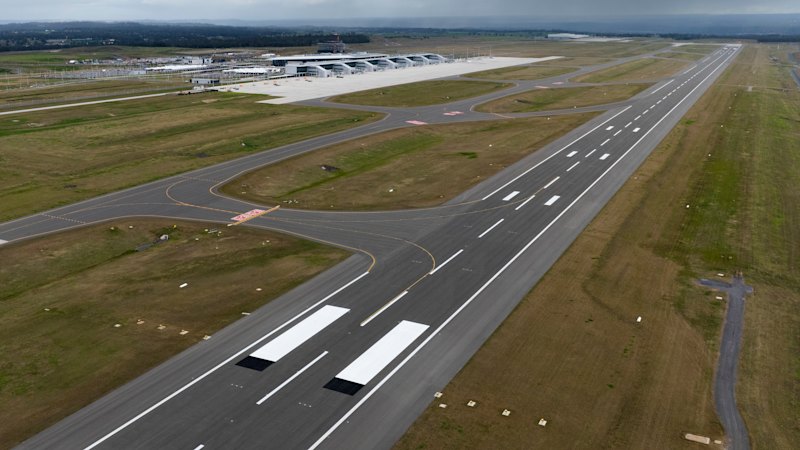
On Sunday, eight decades after the journey towards Western Sydney International Airport began, passengers will board the first commercial flight at the new gateway officially named after pioneering aviator Nancy-Bird Walton, known as the “Angel of the Outback”.
Growing up on a dairy farm at Luddenham near what became the airport site, Wayne Willmington never thought it would be built. “My Dad used to say, ‘There’s no way they’ll flatten the hills,’ ” he recalls.
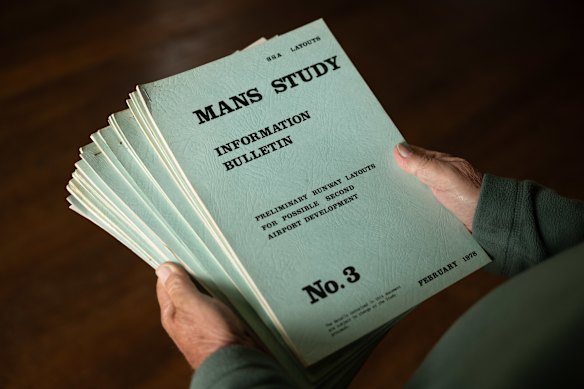
In the mid-1970s, the Fraser Coalition government formed the Major Airport Needs of Sydney group to study all possible sites and report back on whether to build a second airport or a third runway at Kingsford Smith Airport. The so-called MANS study laid the groundwork for what was to happen decades later. It recommended the need for a third runway at Sydney Airport, and that Badgerys Creek be the preferred site for a second airport.
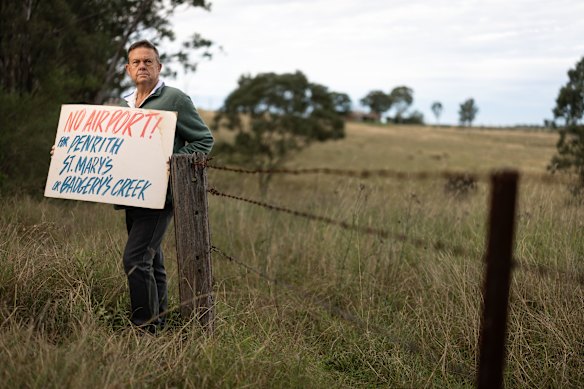
Having lived in Luddenham his entire life, Willmington says his family did not seriously think about an airport until the MANS study sparked his involvement in an anti-airport group. That ended in 1986 when he performed an about-turn to favour the airport after the Commonwealth started acquiring land.
“I knew we weren’t going to stop it,” the Luddenham Progress Association president says. “Once they started to buy the land, I thought it was inevitable. If we hadn’t got the airport, we would have just been swallowed up with housing like Oran Park and Glenmore Park. Now it’s going to be a special destination area.”
In the decades after the Hawke government selected Badgerys Creek as the site, and the decision later to build a third runway at Sydney Airport, both the Coalition and Labor walked away from policies to build the new airport.
“Yet some 20 years after the third runway opened, the realities of rapid growth and limited airport capacity in Sydney hit home again,” recalls Morandini, a policy adviser to deputy premier Jack Ferguson.
“The Badgerys Creek site had survived its exile, only just.”
In 2009, then-federal transport minister Anthony Albanese commissioned a joint federal-state study into aviation capacity in the Sydney Basin, despite Labor’s policy at the time to not build an airport.
A co-chair of the study’s steering committee was Sam Haddad, then director-general of the NSW Department of Planning. He recalls “meetings after meetings” in which Badgerys Creek kept coming up as a site. Towards the end of their work, Haddad recounts one meeting that stood out. “It was when we said, ‘This is it,’ ” he says.
The committee concluded in 2012 “beyond doubt” that Badgerys Creek was the best site. “It was a clear-cut, strong position,” Haddad says. “I was almost certain that it would be very difficult for any government not to tick it because essentially the evidence was very strong. It’s either this one or nothing.”
The report’s release in March 2012 failed to immediately spur politicians into backing Badgerys Creek. In releasing the study’s findings, Albanese ruled out Badgerys Creek and instead said he would investigate Wilton, which was the report’s second-best option. At the state level, the O’Farrell government reiterated its opposition to another airport in the Sydney Basin.
Despite the pushback, the two-year study paved the way. A year later, Albanese promised during the election campaign that he was “absolutely determined” to start building an airport if Labor won another term. It failed to do so, but just over six months after winning the 2013 election, the Abbott government confirmed Badgerys Creek as the location of Sydney’s second airport, and that construction was expected to start in 2016.
Notably, it sparked a swift about-turn by the O’Farrell government in its opposition to a new airport. “It was surprising and sudden,” a staffer in the then state government recalls. “It was unlike any other policy announcement – we were just told. It wasn’t on the radar that we were going to do this.”
Haddad is convinced it would have been difficult for a final decision to be made to build the airport without the study two years earlier. “There are two constants in all of this: the ownership [of the site] with the Commonwealth government … and secondly, planning controls,” he says, citing a statutory direction in the 2000s, which protected land near the airport site from housing development. “I wanted to make sure this direction survived at all costs because that would signal to everybody, ‘Don’t come near us.’ ”
Without it, residential sprawl would have made an airport “much, much harder” because of the need for restrictions on aircraft movements and noise if large areas nearby were turned into homes.
After years of opposition, local councils also began to shift their positions early last decade. “Ultimately, mayors changed their positions because they saw votes in economic development from an airport,” says David Borger, Business Western Sydney executive director and a former NSW minister.
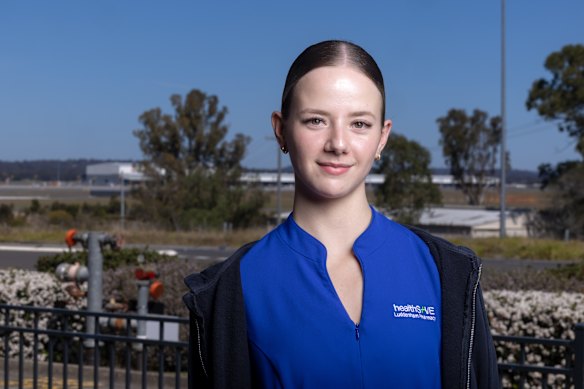
From the chemist where she works at Luddenham, Sienna Hayes-Davis, 21, can easily see the airport runway. She is supportive of the airport, but admits some elderly locals are disappointed it is making the area busier. “It’ll be closer and better than going into the city [to catch flights],” she says.
Long-time senior federal public servant Mike Mrdak knows better than most what it took to make the airport a reality. “There were moments we didn’t think it would happen,” he recalls.
He cites proposals during the Howard government’s final term to sell the site in the lead-up to the 2007 federal election. “It got close,” he says. “To their credit, the government of the time decided to hang on to the site, even if they hadn’t committed to building it.”
Mrdak’s involvement with the airport stretches as far back as 1988. Back then, his first Commonwealth job involved work on the airport project, shortly after the government decided to buy land for it. He later became co-chair of the steering committee for the landmark 2012 study, and has since become Western Sydney Airport deputy chair.
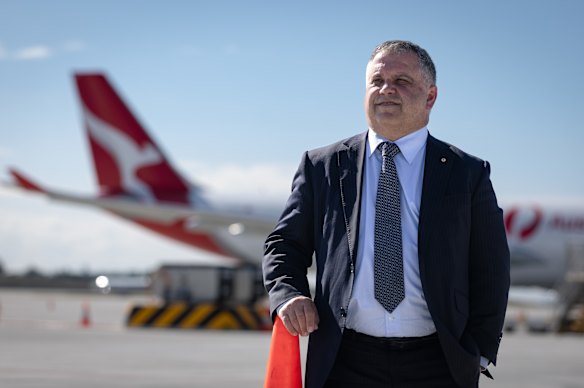
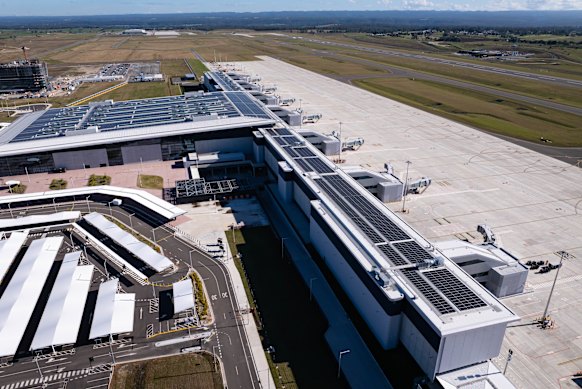
“It’s taken successive governments of both major parties to reach this point. Ultimately, it’s been driven by the fact that this is a major economic driver – it’s not just an airport,” he says.
Mrdak says the other time he worried that the project would be in doubt was when, as federal Infrastructure and Transport secretary, he had to negotiate with the privately owned Sydney Airport for its “right of first refusal” late last decade. “That was a tough conversation,” he recalls.
He expected Sydney Airport would take up the chance to build and operate the airport, and was surprised when it turned it down in May 2017. “They would have controlled the basin for 100 years in terms of the major airports. It didn’t work with their business model at the time. I do wonder if they regret that for today,” he says.
“It was from that time that I believed we were going to build it. We went back to the government and said, ‘If we put equity in and build it ourselves, we’ll do it.’ And they did. That for me was the moment where I thought this would happen.”
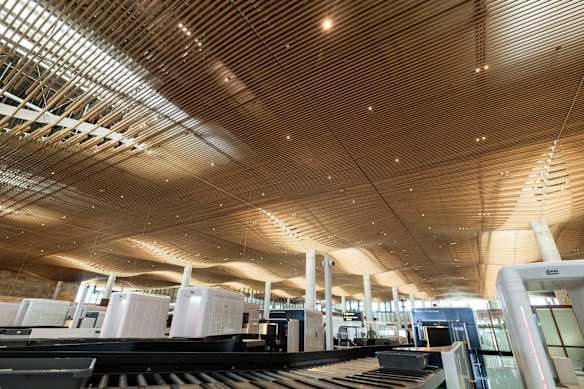
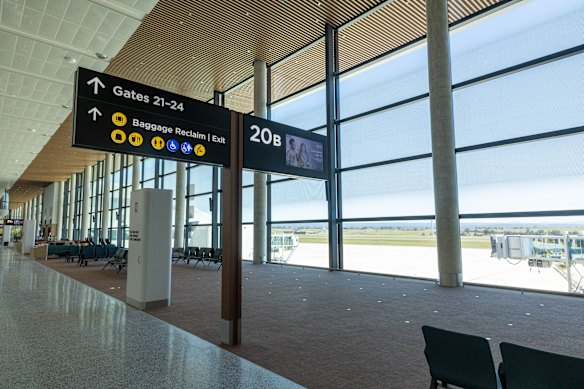
With the first passenger flight from the curfew-free airport set to take off, the question is whether it will flourish or become an expensive white elephant.
Sydney University transport professor David Levinson believes it will be a “very long time” before the airport becomes profitable or competitive with Kingsford Smith despite the federal government subsidising airlines to fly to the new hub. “They’re going to be eating losses for decades,” he says.
He argues Sydney risks repeating the mistakes of Montreal, which “built an airport in the middle of nowhere and nobody used it”. Located more than 50 kilometres from the centre of the Canadian city, Mirabel airport’s passenger terminal was demolished a decade ago despite being designed to one day replace Montreal’s main airport at Dorval.
Mrdak rejects the suggestion it will fail, citing its location on the doorstep of Australia’s third-largest economy in western Sydney. “It’s a very young, vibrant community with a lot of small and medium-sized businesses,” he says, adding the area has a large and dynamic population with a high propensity to travel.
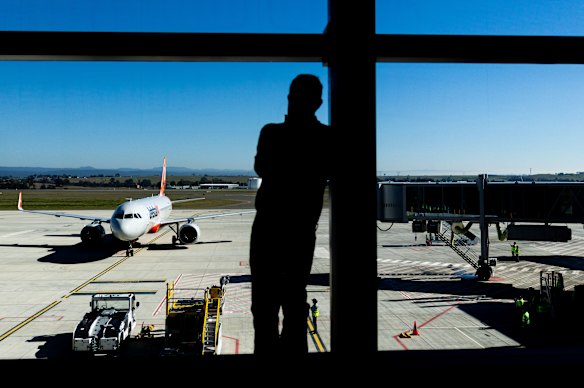
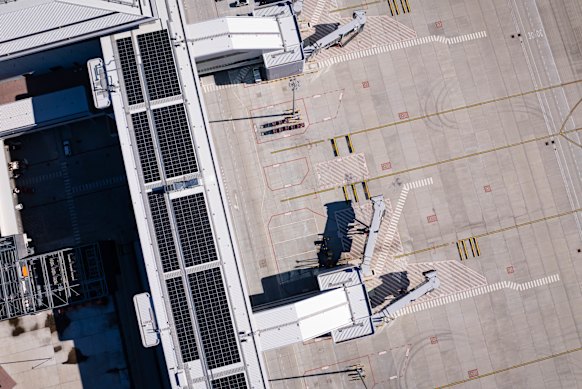
“This is not going to be a white elephant. We’ve already got something of the order of 20 or 30 aircraft operating a day. We’ll see that grow quite quickly. And you compare that to other international start-up airports that haven’t had that start-up volume that this place has, nor have they had the population attachment that this place has.”
Western Sydney Airport chief executive Simon Hickey is adamant it will grow and ultimately become the city’s largest airport. “We have not built a tin shed, and a runway next to that,” he says. “We’ve built a beautiful airport that’s going to thrive into the future, and it’s going to do that with the demand from the population and from the industry that’s around it.”
Looking out to the airport from Luddenham, resident Carmela Varano finds it surreal that a terminal is now standing on what was farmland a decade ago. “It’ll bring more opportunities and more people out here. The dynamics will change,” says Varano, who has lived in the township for more than 40 years.
Former Transport for NSW executive Terry Lee-Williams says the airport will serve people flying to visit friends and family in South-East Asia and New Zealand in its early years before growing demand encourages airlines to put on more flights.
“I wouldn’t be surprised that five or six years after opening there will be substantial demand,” says Lee-Williams, who is now Transport Strategy Global chief executive. “Australia as a whole has a big flying population.”
He believes the airport will reshape Sydney as businesses and residents relocate near it. “Just as the city changed as [famed Sydney engineer John] Bradfield built his railways … whole businesses will relocate around the 24-hour airport,” he says. “And as industry encroaches, it pulls in residents. This is a 50-year plan. Access changes everything. The closer you are in time to a place, the more likely you are to go to that place.”
Keating says Sydney was always going to need a second airport as it expanded westwards in a basin bound by natural landmarks such as the Blue Mountains and the Hawkesbury River.
“It’s always about long-sightedness – the big picture always wins,” he says.
“The big picture here is the needs of a city of 6 to 8 million in the coming decades. A very big city could not rely on a small inner-city airport – it had to have a bigger sister.”
Start the day with a summary of the day’s most important and interesting stories, analysis and insights. Sign up for our Morning Edition newsletter.
Read the full article here