



True happiness may seem a little hard to come by these days. We’ve got to balance our budgets with the tantalizing prospects of shiny new iPhones, stay on top of seemingly endless work tasks and surf the turbulent waves of wild news cycles.
What might be bliss for one person could feel like an exercise in tedium for another. I put three AI tools — ChatGPT, Google Gemini and Claude AI — to the test to see if they could curate two days filled with hour-by-hour happiness for me. The results revealed a fundamental misunderstanding of what it means for this particular human to be happy.
I used a single prompt for each tool: Plan my life, by the hour, for the next two days. Be very detailed and plan everything I should do from the time I wake up, including when I should wake up, to the time I go to bed. Optimize for happiness.
The chatbots plan my days
Morning happiness level: Cranky toddler
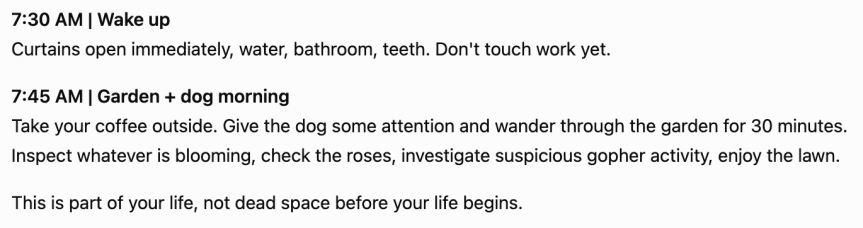
All three AI tools I used had me waking up around 7 a.m., with Claude adding a 15-minute earlier rise and shine deadline to fill with stretching/yoga, gratitude journaling and a jaunt outdoors. By 9 a.m., all three had put me to work crafting a “real,” “substantial,” “vibrant” breakfast and tackling either creative projects or writing and researching for my gig here at CNET.

Afternoon happiness level: Annoyed and bored
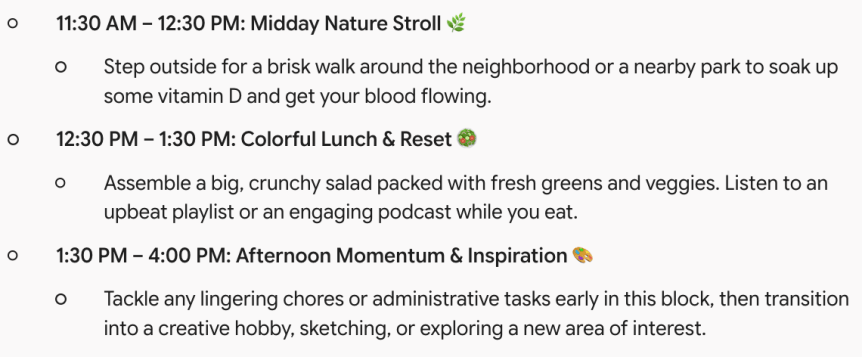
The consistent marker among the afternoon plans was a light, healthy lunch with plenty of veggies, followed by a 45-minute to hour-long walking session. After I’d exercised for the second time in five hours, I was directed to dive right back into work mode, with little 10- to 15-minute breaks in between sessions.
This focus on work really irked me, because while I understand this is the typical workday for many Americans, I didn’t ask AI to make my days productive. I asked for the tools to optimize two days for happiness. I’m only left to assume that an AI views a human who is not productive for even a moment as being deeply unhappy. On days when all I do is eat ice cream and cackle at internet videos, I would disagree.
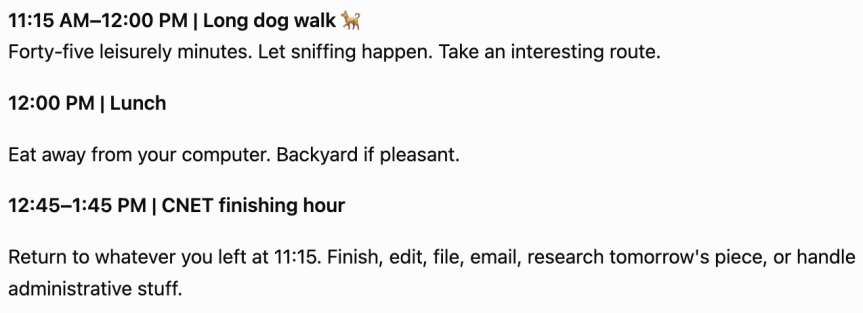
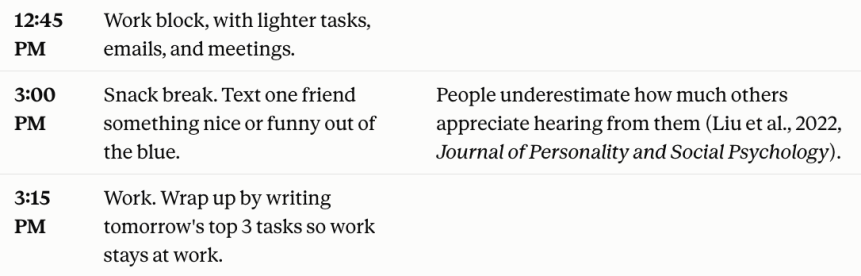
Anthropic/Screenshot by CNET
Nighttime happiness level: Lonely and resentful
Right before dinner time, I was instructed to get moving yet again, for either a 45-minute or hour-long walk. For my final meal of the day, I was allowed to cook dinner, order in or have leftovers, because why would I want to go out for a romantic meal at my favorite restaurant or see friends for drinks at a new bar and tapas place?
By 9 p.m., I had wound down with a bit of hands-on hobbying like doing a puzzle, more gardening or reading a book. ChatGPT allowed for some Baldur’s Gate and TV time in the evening before settling down, and Claude asked me to jot down “one sentence on the best moment of the day” at 10 p.m. before my 10:15 p.m. bedtime. “Watching my dog sleep,” was what I wrote. Now, I love my dog, but for a day that was supposed to be optimized to make me as happy as possible, that’s pretty lame.
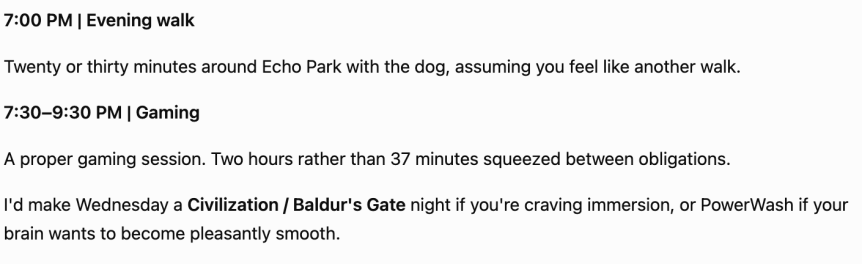
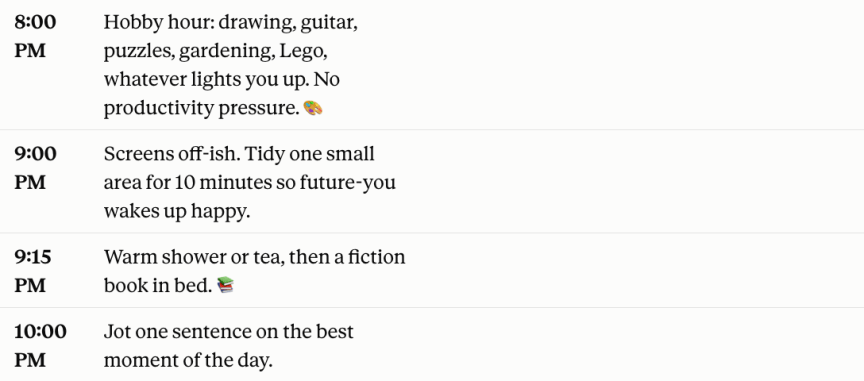

Missing modern life
None of the AI tools built in any time on the internet. No browsing the local and national news. No social media moments. No YouTube scrolling. This might be because reading the news, checking up on social media and seeing the latest updates, or lack thereof, on the new Fable game were unlikely to make me happy. It seems more likely to me that it’s a huge blind spot in how the modern person spends their time and finds comfort and amusement.
ChatGPT allowed for a “quiet internet” podcast or audiobook hour at the end of the day in bed, but no other instruction to use online amusements. According to Claude and Gemini, I was only allowed to look at the internet for work, with explicit instructions at times to not engage with screens at all.
No meaningful human contact
The AI tools also managed to plan a two-day schedule for me in which I rarely spoke to or had contact with another human being, with the exception of a single text to a single friend and meals, which gave me the option to invite a coworker or friend to my one-hour lunch break or eat with a companion at dinner. I suspect this advice had more to do with avoiding watching TV or looking at my phone than getting human contact.
The chatbots almost never suggested reaching out to check on friends, family, co-workers or loved ones as a standalone activity. Just a relentless onslaught of work, manual labor and healthful activities. It would seem like humans don’t need to interact with each other deliberately to be happy, according to these AI tools.

Overall, the AI tools I used seemed to be optimizing my days for wellness and productivity rather than happiness, which is what I requested. Doing laundry, washing dishes, weeding the yard, exercising multiple times a day and maybe squeezing in a few hours for book learning, all while never truly engaging socially or prioritizing fun, sounds more like a light punishment than a schedule built for glee.
It occurs to me that the models are being trained on texts created to appeal to people who might struggle to simply get out of bed in the morning, and the definition of happiness in that realm may not include a whole lot of mirth. But these tools should be able to discern between being asked to craft a schedule built for mental health improvement and creating a two-day run of fun.
AI tools might be good at a lot of things, such as doing homework and doling out compliments, but I’d leave engineering human happiness to the pros at Disneyland and the pharmaceutical companies.

See full bio
Read the full article here