



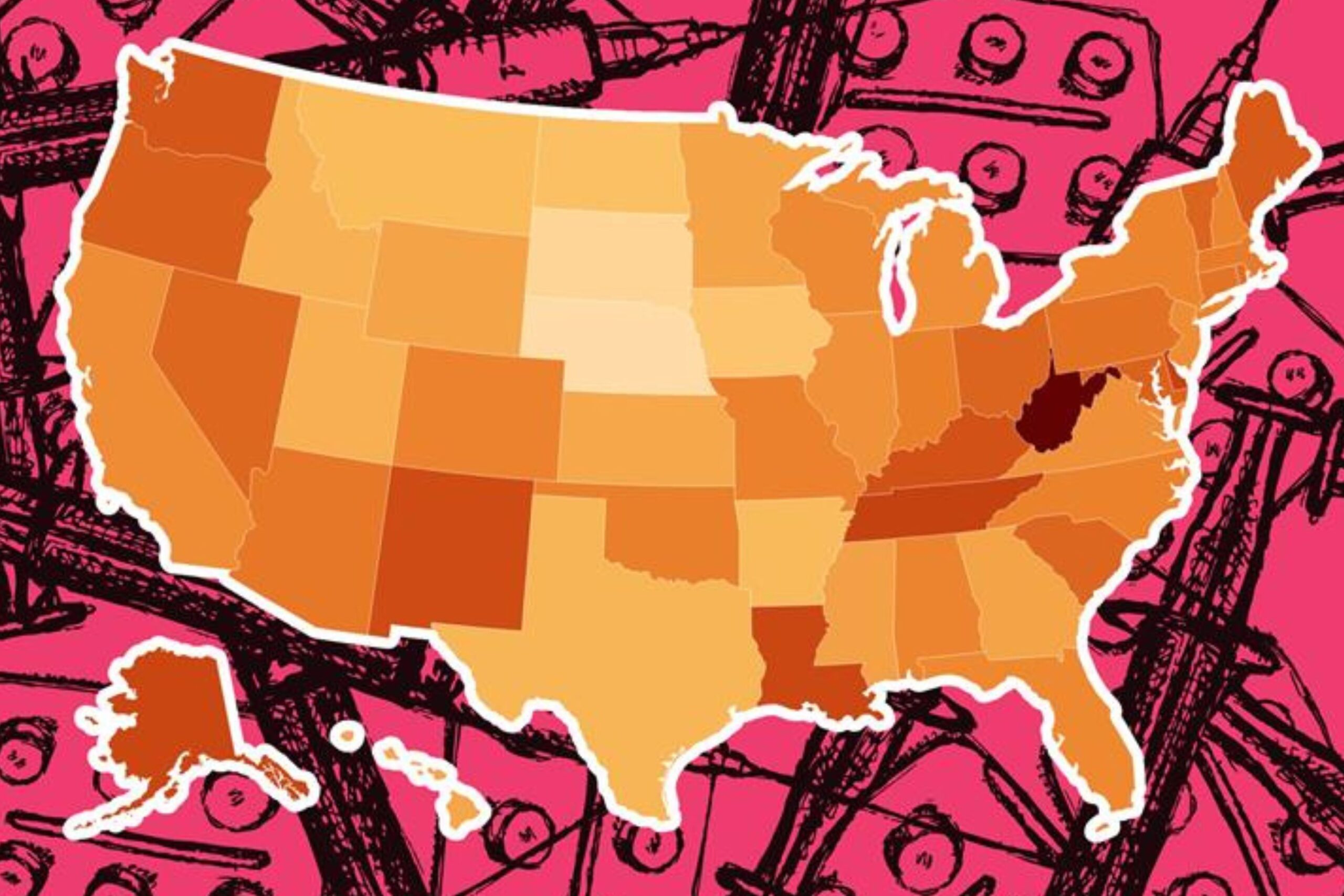
West Virginia has the highest mortality rate from drug overdoses in the United States, with 77.8 deaths reported per 100,000 residents, while Nebraska has the lowest.
This is according to an analysis by CPR First Aid, the first aid course training provider, which reviewed drug overdose deaths in all 50 states using 2023 data from the Kaiser Family Foundation (KFF), a health policy research organization.
The number of deaths for each state was measured against each state’s population to find a figure for overdose deaths per 100,000 people.
West Virginia’s drug overdose mortality rate was much higher than the national average of 31.51 per 100,000 people, with 1,377 total overdose deaths reported in the state in 2023. Opioids accounted for 86 percent of all overdose deaths in West Virginia as well as 90.7 percent in New Hampshire.
West Virginia was followed by Tennessee, where there were 50.03 overdose deaths recorded per 100,000 residents. Opioid-related fatalities accounted for 81 percent of its total 3,616 overdoes deaths.
Delaware came in third place with 49.91 deaths per 100,000 people and opioids were involved in 87 percent of its 525 total drug deaths.
Despite its small population, Alaska ranked fourth at 48.50 deaths per 100,000 residents, with 80.8 percent of its 359 total overdose deaths being from opioids.
Rounding out the top five states with the highest drug overdose mortality rate is Louisiana, with 48.37 deaths reported per 100,000 residents. While the state recorded 2,224 total overdose deaths, it had a lower percentage of fatalities related to opioids at 50.3 percent.
At the other end of the scale, Nebraska was reported to have the lowest rate of fatal drug overdoses, with 8.58 deaths per 100,000 people. Just under half (45.3 percent) of its 172 total overdose deaths were attributed to opioids, marking one of the lowest opioid involvement percentages across the country.
South Dakota and Iowa ranked second and third, respectively, among states with the lowest overdose mortality rate. Around 10 to 14 drug deaths were recorded per 100,000 residents in each state, with about 50 to 55 percent of the total deaths involving opioids.
North Dakota ranked fourth with 15.32 deaths per 100,000 residents and around three-quarters (71.3 percent) of its 122 drug fatalities being opioid-related.
Montana rounded out the five states with the lowest rates at 16.53 deaths reported per 100,000 people. The state recorded 188 total overdose deaths, with 129 involving opioids, which makes up 68.6 percent of its fatalities.
The latest research comes as annual drug overdose deaths were projected to reach their lowest level since 2019, the U.S. Centers for Disease Control and Prevention (CDC) said in May.
Data from the CDC’s National Center for Health Statistics showed that there were approximately 80,391 drug overdose deaths in the country last year, marking a 26.9 percent drop from the 110,037 deaths estimated in 2023.
Almost all states saw decreases, with Louisiana, Michigan, New Hampshire, Ohio, Virginia, West Virginia, Wisconsin as well as the capital Washington, D.C. reporting declines of 35 percent or more. South Dakota and Nevada reported slight increases compared to the same period in 2023, the CDC said.
Owena Cleary, the director at CPR First Aid, stressed the urgent need for public education on overdose response due to significant regional disparities in overdose rates. “Many lives could be saved if more people knew the signs and basic first aid responses,” she said in a statement.
In a suspected opioid overdose, the first action should always be to call 911. While waiting for emergency personnel, it’s crucial to assess the person’s responsiveness and breathing. “If they’re unresponsive but breathing, place them on their side in the recovery position to prevent choking,” Cleary advised.
If the person is not breathing or only gasping, CPR should begin immediately. “Push hard and fast in the center of the chest, allowing the chest to fully recoil between compressions,” Cleary said.
She emphasized that while naloxone is commonly carried by emergency responders and can quickly reverse opioid overdoses, timely CPR may be critical before help arrives.
“Learning these skills through certified training could mean the difference between life and death in states most affected by high overdose rates,” Cleary said.
Do you have a tip on a health story that Newsweek should be covering? Do you have a question about drug overdoses? Let us know via science@newsweek.com.
Read the full article here