


As federal investigators review a wave of cases involving missing or deceased U.S. scientists, online speculation has surged, with some suggesting a covert operation is targeting individuals with sensitive knowledge. But a retired FBI agent says the claims fall apart when examined against basic investigative principles.
The deaths and disappearances include scientists affiliated with NASA’s Jet Propulsion Laboratory, Los Alamos National Laboratory and other institutions linked to government research. In several cases, official causes of death have not been publicly disclosed, while others remain open missing‑persons investigations. Authorities have stressed that circumstances vary widely, with some incidents occurring thousands of miles apart and under markedly different conditions.
The cases have drawn attention from Congress and the White House. While the FBI is coordinating with other federal agencies to determine whether any links exist, officials have stressed that no confirmed evidence currently supports coordinated foul play.
Retired FBI Special Agent Jennifer Coffindaffer told Newsweek it is easy to construct conspiracies out of raw data when individual cases are stripped of personal context.
She pointed to suicide statistics among medical professionals as an analogy, saying that hundreds of doctors die by suicide each year. Viewed in isolation, she said, those deaths could be framed as something sinister—even when they are not.
Coffindaffer said a true conspiracy would show consistency: similar victims, a narrow professional focus, comparable access levels and repeated methods.
Instead, the cases under scrutiny involve researchers and workers spread across multiple disciplines—from astrophysics and pharmaceuticals to administrative and contractor roles—working at different institutions and agencies.
She said the theory would be more credible if it was everybody in the same group, such as researchers working exclusively on a single classified program. The list spans multiple government organizations, job titles and clearance levels, undermining the idea of a targeted effort to suppress or steal specific research.
What Do the Conspiracy Theories Allege?
Online theories broadly suggest that scientists with access to classified or sensitive information are being abducted or killed to conceal research, sabotage U.S. capabilities, or extract secrets for foreign adversaries.
The speculation gained traction earlier this year after several high‑profile cases were publicized in quick succession, prompting posts on social media platforms that claimed patterns among the deaths and disappearances.
Those claims escalated into the political sphere, with some lawmakers publicly questioning whether foreign governments could be involved and pressing federal agencies for briefings. President Donald Trump has acknowledged the issue, calling it “pretty serious stuff.”
However, reporting has repeatedly noted that no evidence shows coordination among the incidents, and several cases have either identified suspects or been ruled suicides.
Some theories point out how it’s strange that some of the victims left behind important everyday items before they died or went missing, such as phones, wallets or glasses. However, Coffindaffer said, one key investigative mistake made by conspiracy theorists is focusing solely on the items victims leave behind.
“It’s not just what they leave behind that’s important. Even more important is what they choose to take,” Coffindaffer told Newsweek.
In several cases, missing individuals reportedly left behind everyday essentials but took a handgun with them, a detail Coffindaffer said does not align with abduction scenarios.
When it comes to victims who were later found dead, she said it’s not uncommon for people to leave behind important everyday items before they die by suicide.
“Essentially, they are saying goodbye to their life and they don’t need any of those things,” she said. “That’s always one of the telltale signs you look for when trying to decide is something a homicide, is something a possible suicide, or an accident.”
Who Are The Scientists?
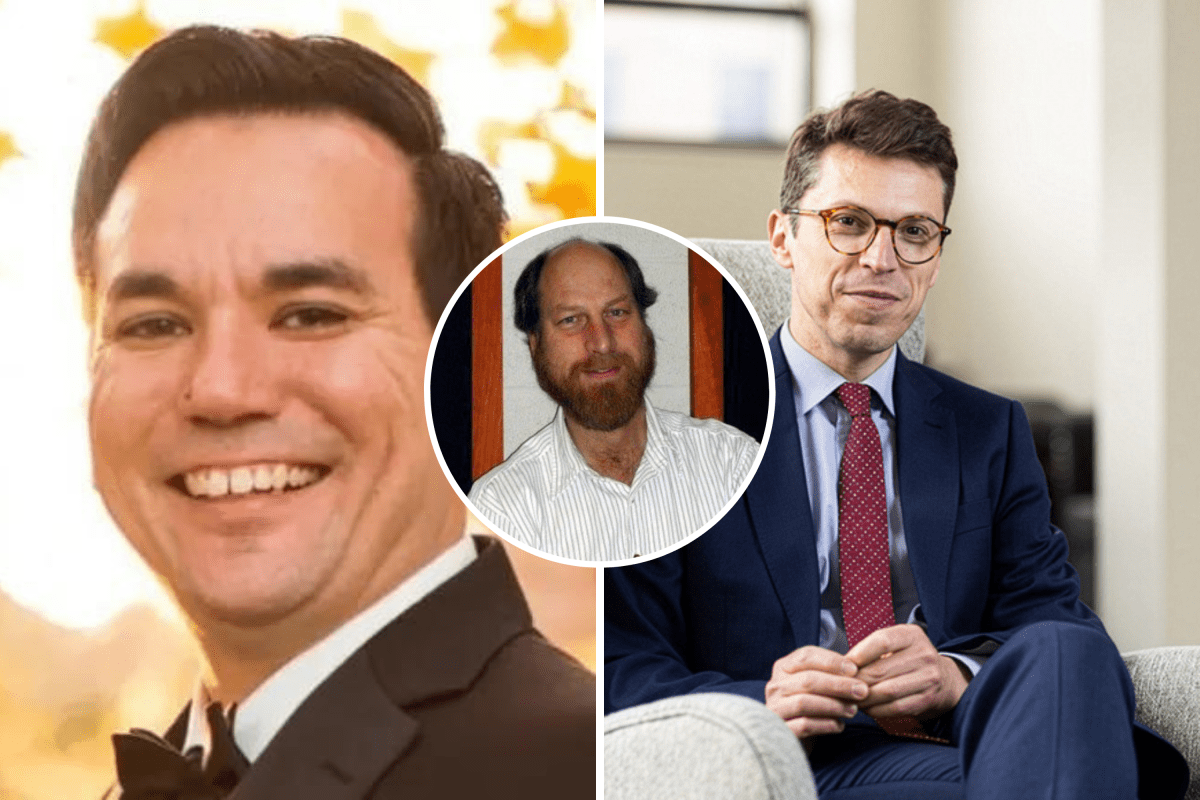
Many cases are under review, involving individuals connected to space, aerospace, nuclear or military-related research facilities across several states. Below is the list of workers with ties to advanced research whose disappearances or deaths have attracted public interest.
Amy Eskridge—Scientist reportedly researching anti-gravity technology.
Died in 2022 from a reported self-inflicted gunshot wound.
Michael David Hicks—Research scientist at NASA’s Jet Propulsion Laboratory; worked on the DART Project and Deep Space 1 mission.
Died: July 2023. Described as an astronomer and artist. No cause of death reported.
Frank Maiwald—Principal researcher at NASA’s Jet Propulsion Laboratory.
Died: July 2024. No cause of death reported. His obituary said he led a life of “dedication, love, and kindness.”
Anthony Chavez—Former employee at Los Alamos National Laboratory.
Missing since: May 2025.
Monica Reza—Director of Materials Processing at NASA’s Jet Propulsion Laboratory.
Missing since: June 2025.
Melissa Casias—Administrative worker at Los Alamos National Laboratory.
Missing since: June 2025.
Steven Garcia—Government contractor at a New Mexico facility for the Kansas City National Security Campus.
Missing since: August 2025.
Nuno Loureiro—Director of MIT’s Plasma Science and Fusion Center.
Died from a gunshot in December 2025.
Carl Grillmair—Caltech astrophysicist who worked on NASA’s NEOWISE and NEO Surveyor missions.
Died: February 2026 from a gunshot at his home in California.
William “Neil” McCasland—Retired U.S. Air Force major general, former commander of Air Force Research Laboratory and current director of technology at Applied Technology Associates.
Missing since: February 27, 2026.
Jason Thomas—Pharmaceutical researcher.
Found dead: March 2026. According to his Legacy.com obituary, which was published in April of this year, Thomas “passed away unexpectedly after having been missing since December 12, 2025.”
Officials have stressed that no definitive connection has been established and that some of the incidents might ultimately prove unrelated, despite surface similarities such as the victims’ professional backgrounds.
The issue drew heightened attention after lawmakers, including Representative Eric Burlison, a Missouri Republican, called for briefings and greater transparency, warning that even the appearance of a pattern involving experts with access to sensitive information could raise national security concerns.
Read the full article here