



When the fruit runs low, some monkeys’ appetite for meat gets a boost.
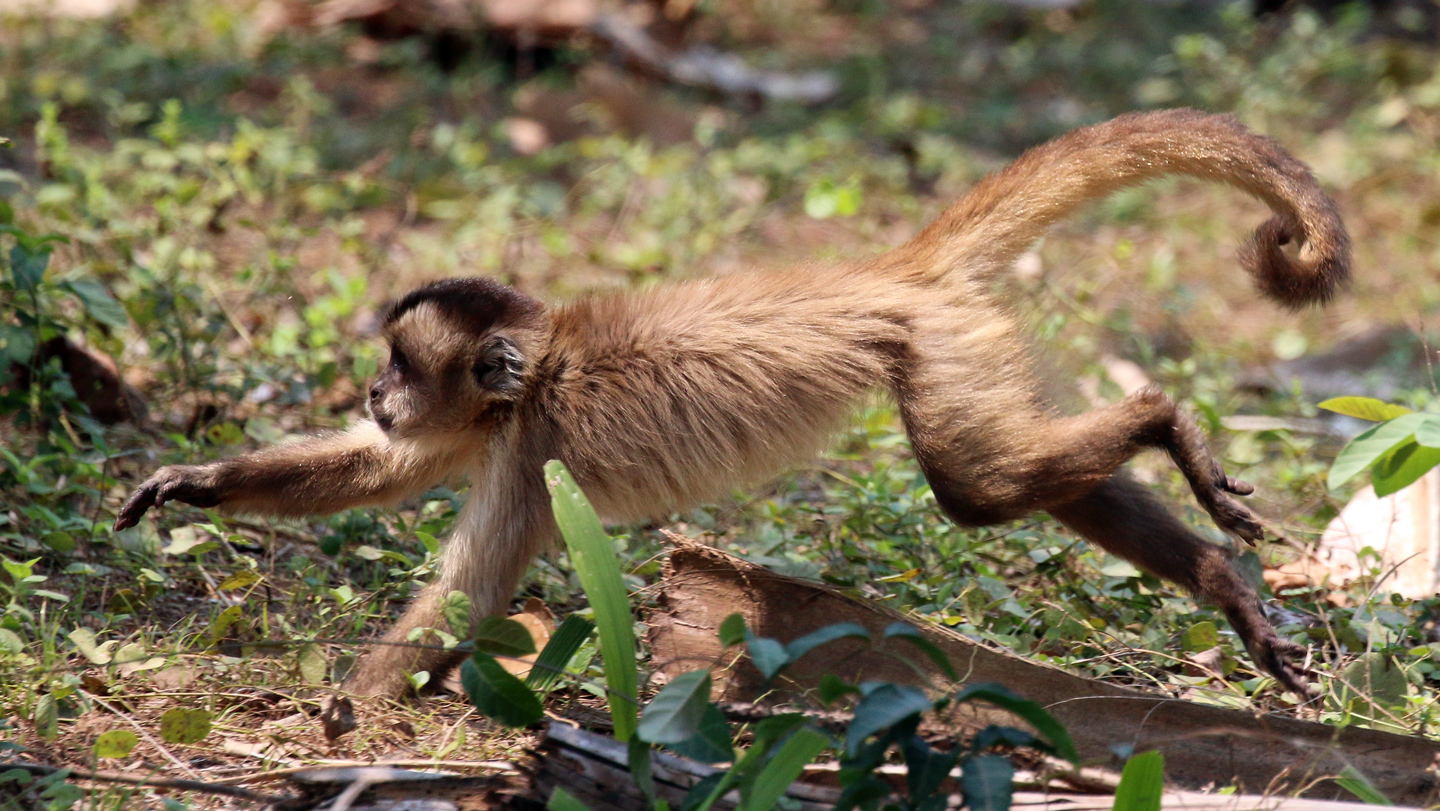
Bearded capuchin monkeys (Sapajus libidinosus) hunt and eat small vertebrates more often when fruits are less abundant. The findings may help researchers get insights into the early evolution of human diets and our lineage’s move to meatier fare, researchers report August 26 in PLOS One.
In the 2000s, Noemi Spagnoletti and her colleagues were engaged in a long-term study of the behavior and ecology of bearded capuchins in northeastern Brazil. “We repeatedly observed the monkeys actively hunting and consuming vertebrates, including lizards, snakes and iguanas,” says Spagnoletti, a zoologist at the Sapienza University of Rome.
Curious about the capuchins’ meat-eating habits, Spagnoletti and her colleagues analyzed observational data collected between June 2006 and December 2010. During the field study, the team logged what and how the monkeys were eating, making over 5,000 hours of observations in total. The team compared the dietary data with other information collected from the field, including the relative availability of plant foods during the wet and dry seasons, environmental factors like temperature and the age and sex of the monkeys.
The team recorded 281 instances of the capuchins eating small vertebrates. Nearly half of these were lizards and over a quarter were rodents. But the monkeys were also munching on birds and opossums.
Chimpanzees tend to get the most headlines when it comes to their hunting and eating of vertebrates, says Margaret Bryer, a biological anthropologist at the University of Wisconsin-Madison who was not involved with this research. She says, however, a diverse set of nonhuman primates eat these animals too, including capuchins.
The researchers found some intriguing patterns associated with meat-eating. As fruits became less common in their habitat during seasonal fluctuations, the monkeys hunted and ate more vertebrates. They often ate the brains and guts first. Eating vertebrates may be worth the extra hunting investment in times of scarcity, says Spagnoletti, and the rich fats and nutrients in brains and viscera might be a quick way to consume those dietary needs.
This kind of flexibility in tough times may have been shared by early hominids, helping them transition to a more meat-filled diet.
“Meat may be important to buffer seasonal changes” for the monkeys, says Susana Carvalho, a primatologist at Gorongosa National Park in Mozambique. “This may have also been the case for hominins.”
Bearded capuchins and humans share some curious traits. The monkeys have proportionally large brains, eat meat and use tools that they transport by walking on their hind legs, notes Carvalho. Also, like some humans (and unlike chimpanzees entirely) capuchins dare to eat snakes.
“These similarities mean that some behaviors seen in these primates could be a good model to understand how early hominin behavior emerged,” she says.
Carvalho says that future work should assess predation of small vertebrates as a kind of stepping-stone to humans’ eventual targeting of big game.
“This opens a new window to revisit the fossil record and pay attention to the smaller species that could have been prey.”
Read the full article here