



Kate Adamala has a vision of the future. In it, biology would replace chemical manufacturing.
“Ultimate success,” says the synthetic biologist, would be that “all the atoms we’re moving in our economy are moved with biology.”
Adamala and her colleagues at the University of Minnesota in Minneapolis announced one step toward that future on July 1 when the team unveiled SpudCells, synthetic cells that can replicate their DNA and divide multiple times.
Some people have hailed SpudCells as the first synthetic life. Adamala is not one of them. SpudCells are “obviously not living,” she says. “They’re cells but they’re not alive.”
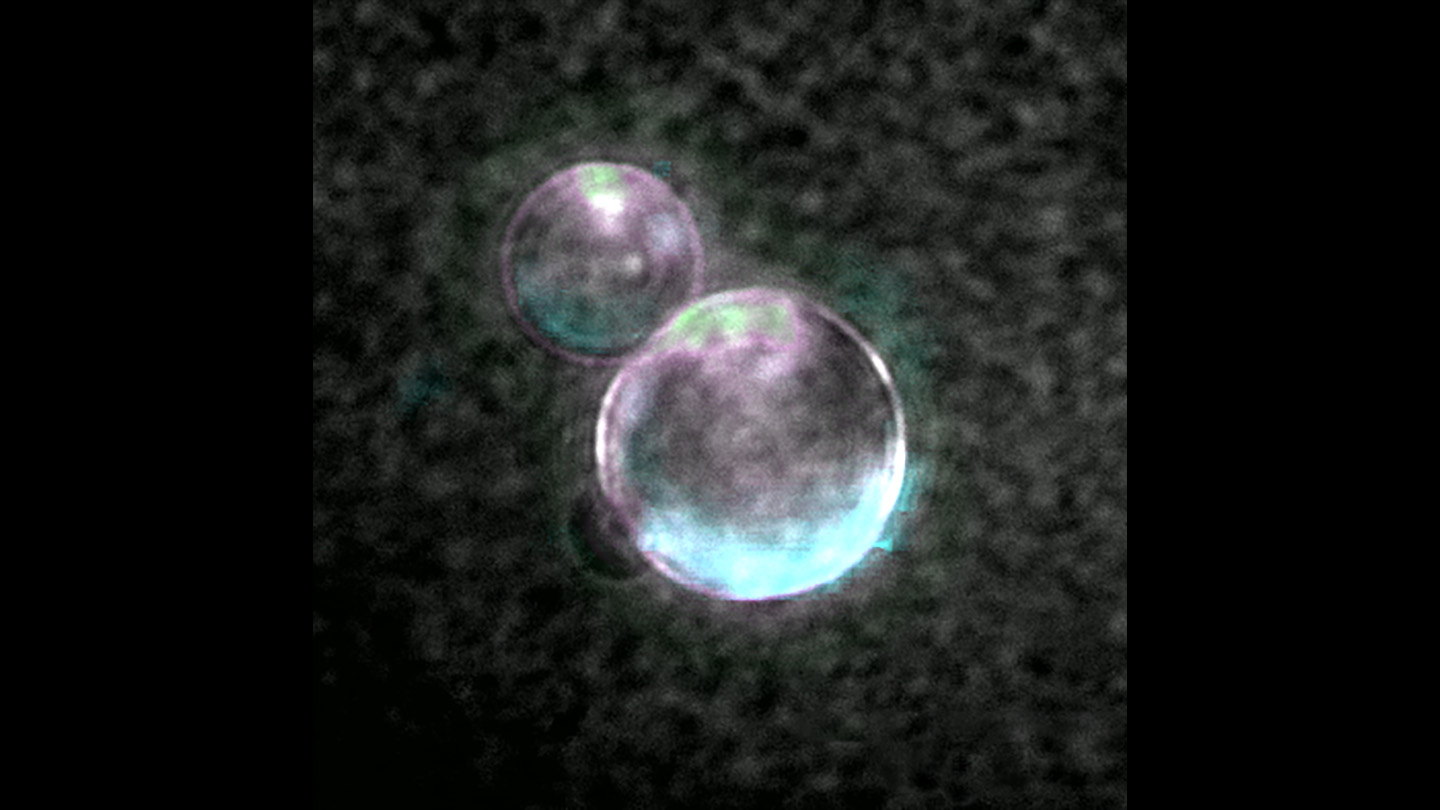
SpudCells are little more than bubbles of fatty membranes that contain DNA and proteins borrowed from various viruses and bacteria. Eventually, such synthetic cells may be able to produce chemicals, fuels and drugs such as antibiotics, Adamala says. SpudCells can’t do that yet.
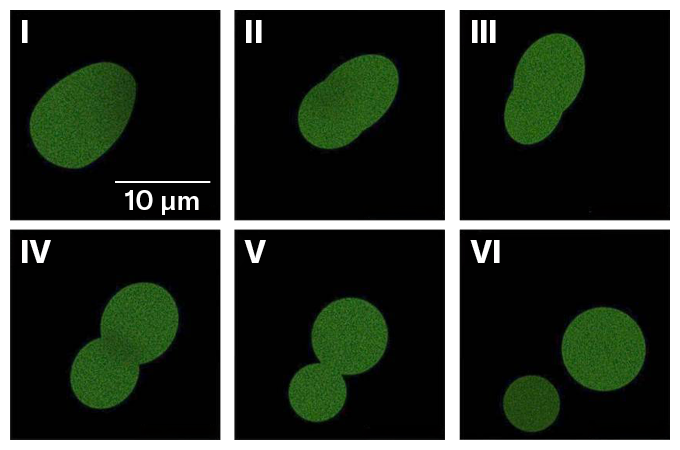
Unlike natural living cells, SpudCells aren’t self-sufficient. To function, they require researchers to feed them bubbles packed full of protein-building machinery and raw materials. Researchers must also chemically coax SpudCells to “grow” — fuse with the feeder bubbles and take on cargo — and divide.
Both fusion and division depend on proteins encoded by the cells’ DNA. That’s the innovation that sets SpudCells apart from previous attempts to build cells from scratch, says physicist Tom Robinson of the University of Edinburgh in Scotland. Robinson and others have produced membranes that can divide like cells, while other groups have gotten DNA to replicate within artificial cells. But linking the two so that DNA controls growth and division has not been accomplished before, he says.
Robinson wasn’t involved in this work but he has joined Biotic, an international nonprofit research coalition led by Adamala and three other scientists. “We’ve pushed this technology as far as a single lab can push it alone,” Adamala says. “We need collaborators to add their expertise to it.”
Biotic, short for Biology is Open Technology Inspiring Civilization, Inc., will coordinate and finance research aimed at turning SpudCells into independent cells. It will also standardize protocols and methods used to build synthetic cells.
“We’re quite far from a working synthetic cell,” Robinson says, “but we’re on the way.”
There are many steps before SpudCells can work independently. For one, the cells can’t make their own ribosomes, cellular factories that manufacture proteins. That may be the hardest part of building a cell from the bottom up, Adamala says.
Ribosomes are complex machines that are composed of more than 50 proteins and 20 to 30 pieces of RNA. They must read instructions in the form of messenger RNA and interact with other types of RNA as well as amino acids to build proteins. Assembling the massive structures costs natural cells huge amounts of energy, says biophysicist Jamie Williamson of the Scripps Research Institute in La Jolla, Calif. “In bacteria, about one third of the ribosomes are actually making parts of [other] ribosomes so the cells can divide,” Williamson says. “It’s a tall order for a protocell to take on this task.”
No one has yet succeeded in making working ribosomes from scratch. “It requires — all of biology requires — such high precision,” says developmental biologist Douglas Blackiston of Tufts University in Medford, Mass. “Errors very, very quickly become catastrophic.”
Natural cells have many layers of quality control to correct errors that synthetic systems usually lack. If bioengineers one day manage to build ribosomes, they will also need to assemble cellular maintenance crews to keep the machines running smoothly, Blackiston says.
Natural cells’ systems are so intertwined that humans trying to build synthetic cells have been hard-pressed to mimic them. “It seems like the more that we try to micromanage them, the worse we get at it,” Blackiston says.
A cleanup system to recognize and degrade worn-out or damaged proteins is on Adamala’s must-have parts list for future iterations of SpudCells. So is a cytoskeleton — internal scaffolding that helps cells organize their insides, maintain their shapes, move cargo and divvy up DNA when dividing. That’s important for inheritance.
SpudCells’ genome is divided into seven circles of DNA. For the cells to function properly they need to inherit at least one copy of each circle. Without a cytoskeleton to guide division only about 30 percent of SpudCells inherited the full seven-piece genome after five generations, Adamala and colleagues reported in their manuscript, which posted to bioRxiv.org the day after the announcement and has yet to undergo peer review.
Their insides are a mess, too. When SpudCells fuse with feeder bubbles, “everything just kind of goes in and mixes itself at will. We need to fix that,” Adamala says. “We cannot have this gumbo.”
She has big plans for SpudCells — named to evoke the pioneering Sputnik satellite — over the next 18 months, starting with organizing a meeting of scientists who want to join Biotic. The coalition is just one of several groups scattered across the United States, United Kingdom, Europe, Asia and elsewhere that are attempting to build synthetic cells from scratch. Many of those efforts use the same tools that helped build SpudCells.
“The work’s not done,” Adamala says. “This is not an announcement that’s like a mic drop. ‘We’ve done it. We’re going home.’ This is an announcement that says we’ve shown what’s possible.”
Read the full article here