



Loading
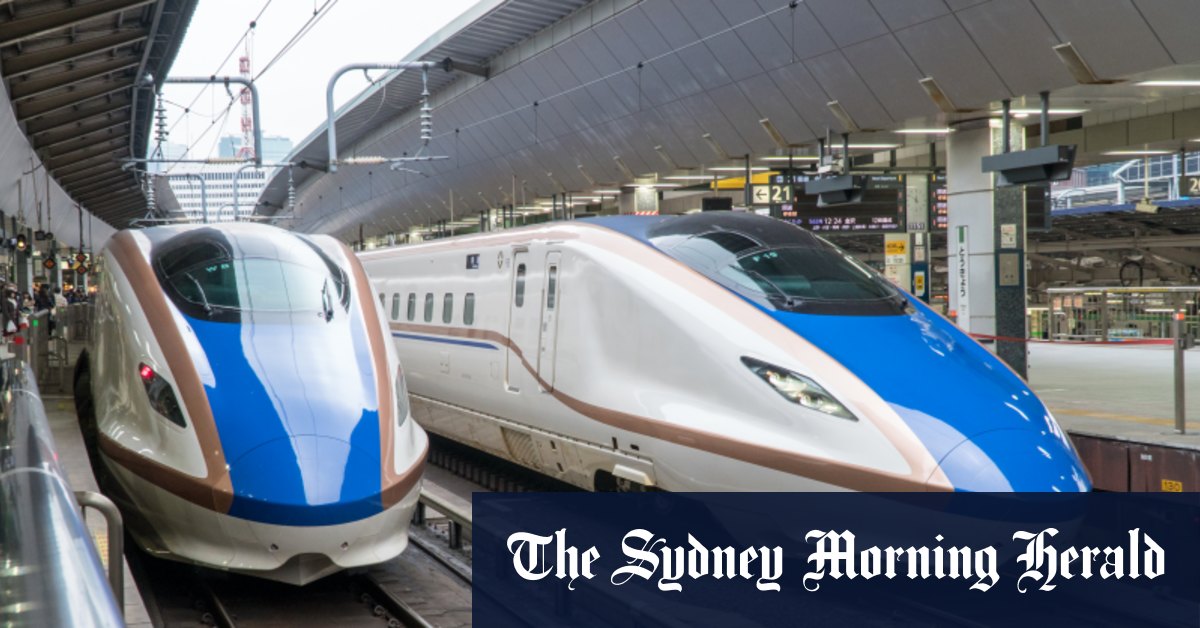
Parker said building an initial stage would prove the value of high-speed rail and make it easier for subsequent sections to be approved to Canberra, Melbourne and Brisbane.
While planning for the Victorian end is at an early stage, Parker thought the line should commence at Southern Cross Station and stop at Melbourne Airport, Shepparton and Albury, on the NSW boarder. A link to Geelong would also make sense, he said.
Parker said the Victorian leg should also be built and commence operating in smaller segments before eventually extending from Albury to Canberra where it would connect to the track from Sydney.
“Even if you terminated a stage at Shepparton that would still provide huge economic benefits to Melbourne and to the region,” he said.
Parker’s call for a high-speed link from Southern Cross to Melbourne Airport comes amid continued uncertainty about a long-awaited train line to Melbourne Airport. In July, airport management agreed to a station being built above ground rather than underground, ending a dispute with the state government.
However, Premier Jacinta Allan said the stand-off had forced it to delay the project and push its opening date back from 2029 to 2033. The state and commonwealth have each committed $5 billion to airport rail but the cost of building it will be at least $13 billion.
Parker said fast trains and airports work well together, and would allow easier connectivity to the airport and regional Victoria for both residents and tourists.
A 2013 federal government study estimated a 1748-kilometre Brisbane-to-Melbourne high-speed railway would cost close to $114 billion.
Parker said that whatever the estimated costs, they needed to be compared to the cost of widening major freeways, worsening road congestion, and planet-warning pollution from road and air travel.
Loading
High-speed rail would open up regional areas for new housing development that would help tackle the housing crisis and take pressure off Sydney and Melbourne, he said, pointing to Spain as an example of what was possible when countries embraced the possibility of people living in smaller towns and commuting to work in larger cities.
Spain has built almost 4000 kilometres of high-speed rail since 1992 – more than twice what would be needed for Brisbane-Melbourne – and has another 1561 kilometres under construction or planned.
“There is a lot of people that would like to move to the regions if it was better connected,” he said.
Sydney-Melbourne is one of the world’s busiest air routes, with close to 8 million passengers a year, and Parker said at least half of those passengers would shift to high-speed rail if available.
Flight time between the two capitals is 1.5 hours. Parker said that once the time it takes to travel to and from airports, check in and enduring frequent delays are taken into account, four hours by train from Melbourne’s CBD to Sydney’s CBD was “very, very competitive”.
A spokesperson for the Allan government said it welcomed the Commonwealth’s work planning for high-speed rail and would “work with them on any future proposals”.
The private AirRail consortium proposed in 2018 building a dedicated train line between Southern Cross and Melbourne Airport, including a new tunnel which would pave the way for a future high-speed rail service.
However, the Andrews government opted to build its own airport connection from Sunshine, with airport services running through the CBD in the new Metro Tunnel.
The Allan government has also flagged that Melbourne Airport will be the final stop on the east and north sections of the Suburban Rail Loop, which it envisages being built around 2053.
Read the full article here