

Children have been making art with help from grown-ups for millennia.
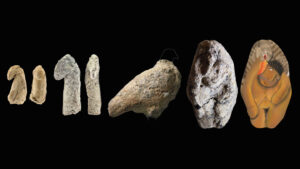
Fragmented clay figurines dating as far back as 15,000 years ago, discovered in what is now Israel, preserve the fingerprints of both adults and young children. The finding suggests the grown-ups taught the kids how to shape and decorate clay, researchers report November 11 in PLOS One.
Children’s contributions to prehistoric art and culture aren’t well understood. Concrete evidence of their involvement has been hard to find, says archaeologist Laurent Davin of the Hebrew University of Jerusalem.
In recent decades, researchers have found a handful of objects made by children — including 200,000-year-old rock art bearing child-sized handprints in Tibet and 30,000-year-old clay sculptures pockmarked with child-sized fingerprints in Czech Republic.
Davin and colleagues hadn’t set out to find Stone Age children’s artwork. They were investigating whether the Natufian culture — a group of hunter-gatherers who formed some of the first permanent settlements in the Levant about 14,000 years ago — made clay art before the advent of agriculture in the region.
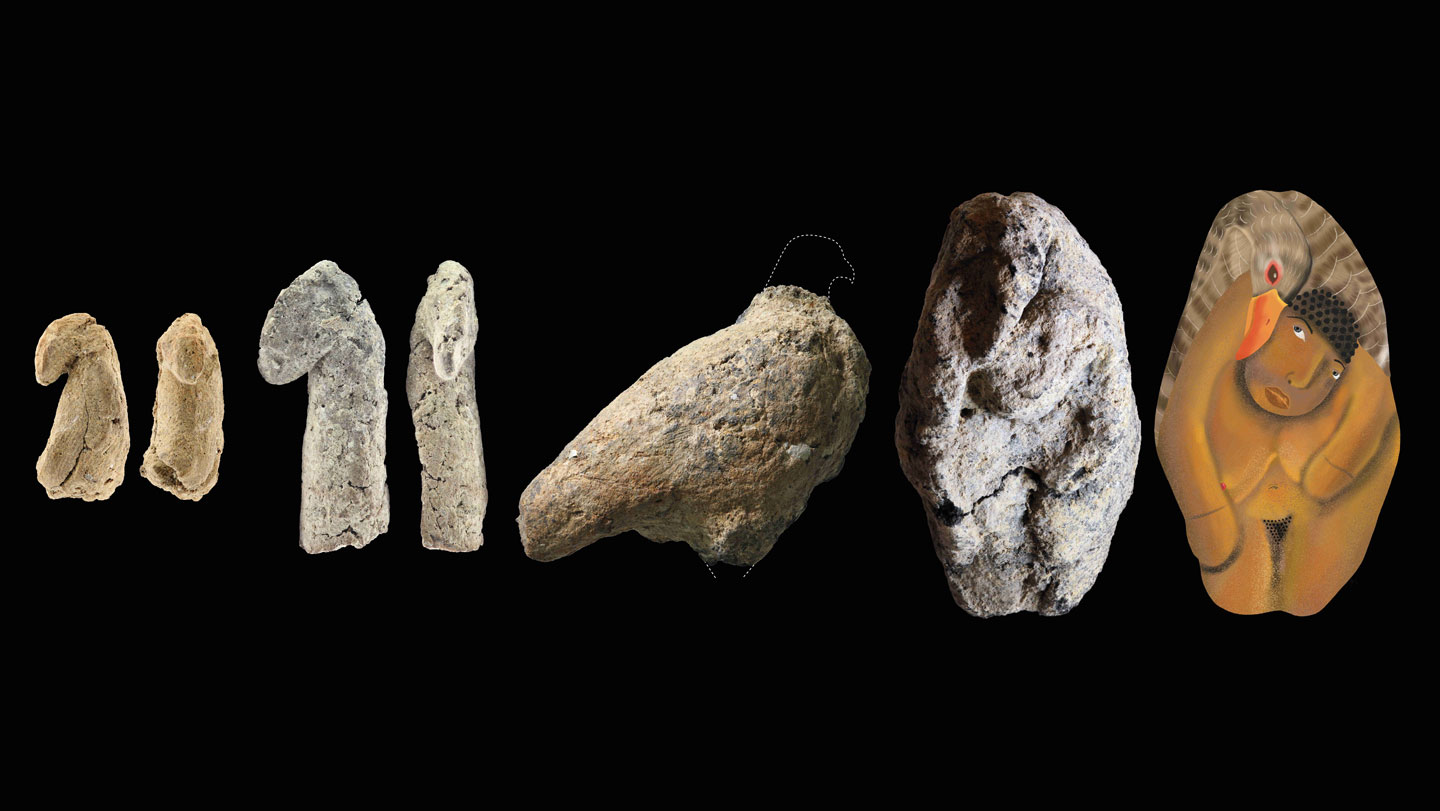
The archaeologists came across the first set of fingerprints while sorting through 40 kilograms of clay collected at three Natufian sites, which range in age from 15,000 to 11,600 years old. Among tens of thousands of clay lumps, the team found some 150 fragments of sculptures, including 15 recognizable bird, gazelle and human figures. Around 60 of these pieces preserved fingerprints from where people had pinched or prodded the clay.
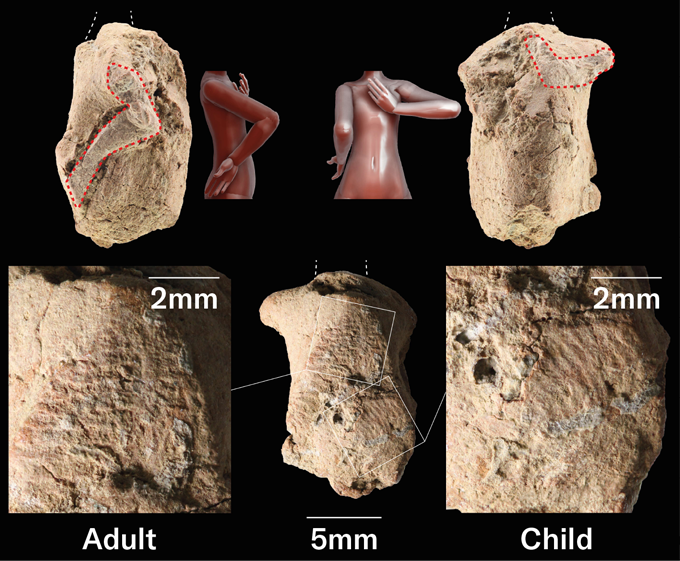
The distances between the fingerprints’ ridges, which are influenced by age and sex, suggest that most of the figurines were made by women and children — some younger than 10. Only a few sets of fingerprints belonged to men. And the torso of one tiny human statue had both adult and child fingerprints, hinting that an elder and child had passed it back and forth. Davin suspects that the adult actively taught a child how to work the clay.
Laurent Davin (CC-BY 4.0)
The torso of this 14,500-year-old human figurine preserves the fingerprints of an adult (left) and child (right). Researchers think the adult taught the child how to shape the clay.Laurent Davin (CC-BY 4.0)
This evidence of intergenerational learning so far back in time is fascinating, says archaeologist Steven Dorland of Grand Valley State University in Allendale, Mich. It demonstrates how much researchers can learn from broadening their focus beyond adult males, he says. Dorland has used pottery to understand social learning in Indigenous societies of the Great Lakes region. He has even studied children’s fingerprints on some of those artifacts.
The purpose of the Natufian figurines is unclear. Most of the statues are less than 2 centimeters long and don’t display signs of intense use, the team found, suggesting they weren’t treated as precious heirlooms.
Davin suspects the figurines may have represented stories, like how kids draw Disney characters today, he says. “Maybe the idea is that the role of children here is not necessarily to learn to make figurines, but more to learn the story behind them.”
Read the full article here