

The life and times of a dinosaur may be written in its blood — if blood can be preserved in bone.
Tiny microstructures found in the limb bones of a fossilized 115-million-year-old specimen are the remnants of red blood cells, researchers report November 2 in the Proceedings of the National Academy of Sciences. The team says these are both the oldest red blood cell structures yet identified and the first to be chemically proven. But not everyone is as sanguine about that conclusion.
The ability to identify such structures could offer a powerful molecular window into the physiology of long-extinct animals, including their metabolism and even activity levels, says paleontologist Kliti Grice of Curtin University in Bentley, Australia.
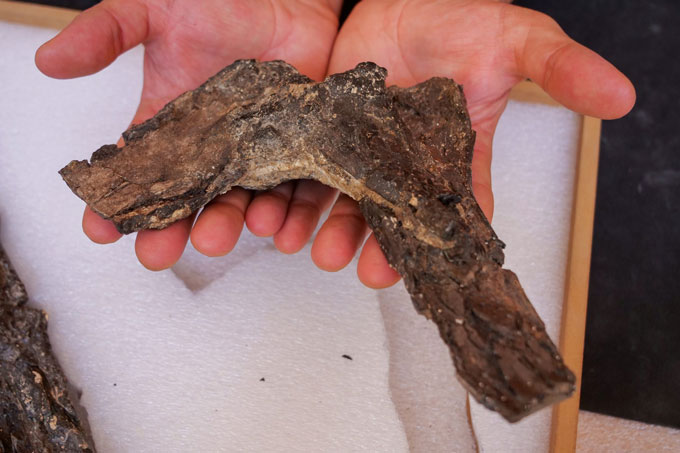
The bone, from a fossil-rich site in northeastern Brazil called Mina Pedra Branca, belonged to the dinosaur Aratasaurus museunacionali. Grice and her colleagues used a variety of chemical and imaging analyses to study the Cretaceous Period specimen.
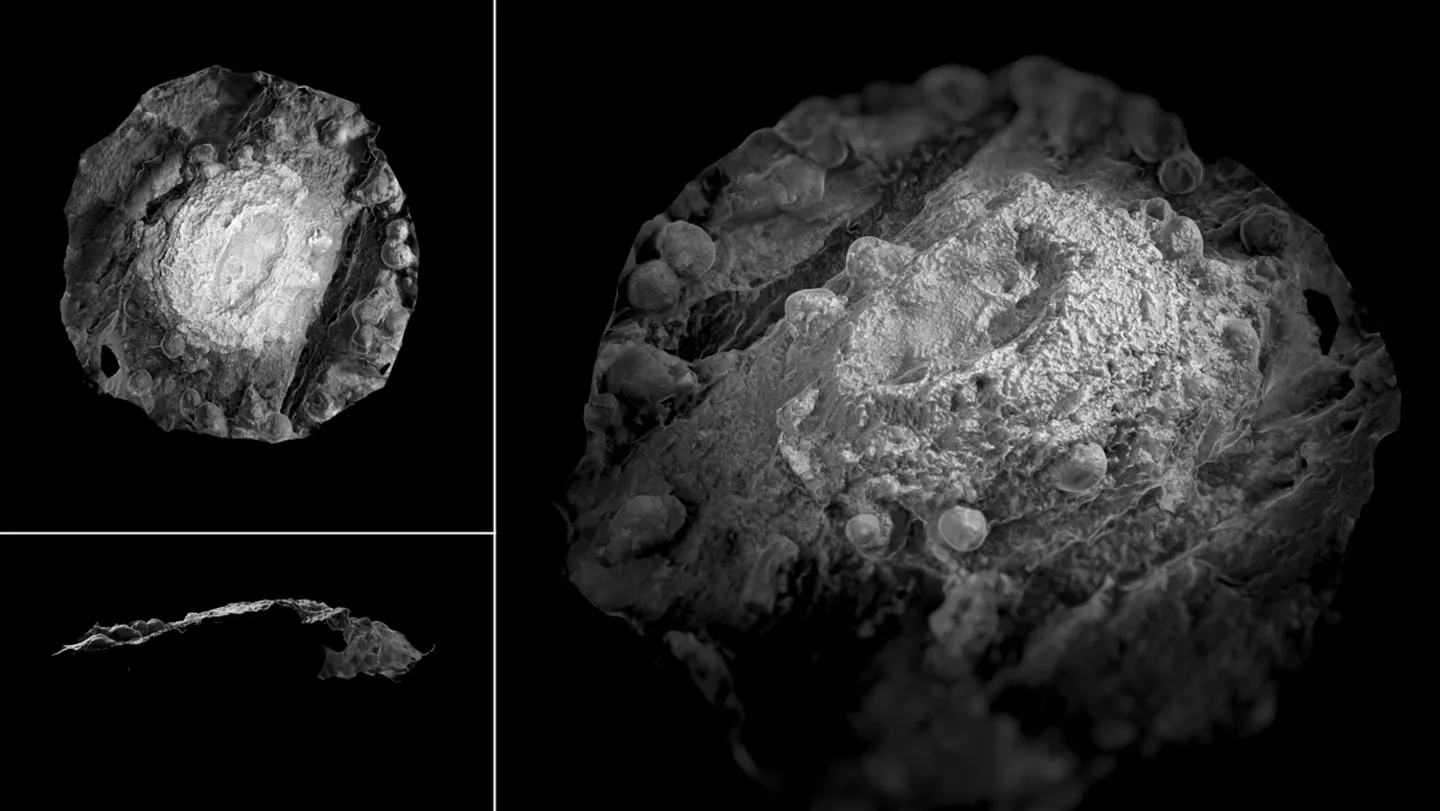
The team prepared thin cross-sectional slices of bone and imaged details of the limb bone’s internal structure with focused electron beams. That revealed ellipse-shaped microstructures within the limb’s fossilized network of blood vessels.
A map of the ellipsoids’ chemical element composition revealed that they were full of iron, carbon and nitrogen, all components of a biomolecule called heme. Heme is an iron-bearing, ring-shaped molecule found in hemoglobin, the protein in red blood cells that carries oxygen throughout the body.
Then, the researchers used a technique that identifies molecules by how they scatter laser light. Those analyses suggested the presence of porphyrins, ringlike organic compounds found in blood — and the precursors of heme. Finally, they ruled out contamination from other porphyrins, such as the pigment chlorophyll, by separating and identifying the molecular contents of a bone extract. That experiment also suggested heme.
Taken together, these findings point unequivocally to the preservation of molecular traces of ancient blood, the team says. They also offer a clue to a novel pathway that might preserve those traces for so many millions of years.
Blood cells decompose within days of the death of an organism. Only unusual and fast-acting environmental and biochemical conditions could have stopped decay and held those tissues in place as the organism fossilizes.
In this fossil, the secret ingredient was a manganese oxide mineral called hausmannite, the researchers say. The team’s analyses had found the mineral within the ellipsoid structures. That mineral, they propose, may have acted as a time capsule, preserving the cellular structures and protecting the molecules within, including collagen amino acids.
Distinguishing fossilized blood cells from nonorganic minerals that formed within a fossil after the organism’s death is a tricky task. During fossilization, mineral-rich fluids seep in and around the bones, and the minerals that form within the fossil can bear a strong resemblance to bodily structures.
In a 1997 study, two paleontologists analyzed tiny spheres found inside the limb of a fossil, possibly a pterosaur. The spheres were once thought to be the fossilized remnants of ancient blood cells, but the duo determined that the spheres were instead pyrite, an iron mineral that had been deposited in the bones after death.
Those paleontologists suggested that, going forward, several criteria should be met before proposing a blood cell origin for fossilized structures, including comparing the shape of the structures with that of living related organisms and identifying certain biomarkers in the structures. One of those biomarkers is heme compounds.
Grice and her colleagues say that their study meets these criteria. Unlike the pyrite, hausmannite was crucial to preservation, “rather than simply a mineral that replaced biological material after it had disappeared,” she says. The close spatial relationship between the hausmannite, the blood cell-like structures and the chemical signatures of heme “raises the possibility that mineralization helped stabilize, entomb and protect components of the original biological material during fossilization.”
But Mary Schweitzer, a paleontologist at North Carolina State University in Raleigh who was not involved in the new study, says she doesn’t think these findings do fully meet those criteria.
The heme biomarkers, for example, don’t appear to be localized to the round structures alone, as would be expected in fossilized blood cells, but come from analysis of the entire bone. The proposed red blood cells also differ in size and shape compared with red blood cells from living birds and reptiles, she says.
Schweitzer is no stranger to skepticism over the discovery of ephemeral tissues in fossils. In 2005, she and her colleagues reported the first recovery of flexible, soft-tissue blood vessels from the 68-million-year-old fossilized leg bone of a Tyrannosaurus rex. It was a landmark study that sparked debate, including over how it would even be possible to preserve such tissues through deep time, as well as the most surefire way to detect them in the present.
“I am not convinced” that the research team has definitively identified heme compounds, Schweitzer says. “I do applaud them for bringing a plethora of methods to the study. Extraordinary claims require extraordinary evidence, and that does require state-of-the-art technology.”
No one really knows what a dinosaur’s red blood cell shape would be, let alone how the process of fossilization might distort the original shape of the structures, or allow heme-related molecules to escape their cellular confines over time, Grice says.
And, she says, her team’s interpretation of the evidence doesn’t just rely on the observations of those structures. “[It] rests on the convergence of anatomy, morphology, mineralogy, elemental analysis and molecular chemistry,” she says. “That combination is critical.”
As for whether other fossils might have molecular traces that have been preserved by hausmannite, “we simply don’t know yet,” Grice says. “But this type of preservation may not be quite as rare as we currently think.”
Read the full article here