



A craving for sweets may have helped set the stage for the evolution of the human brain.
Over 4 million years, our lineage’s brains grew from about 300 grams to 1,500 grams. Much of the brain growth occurred before early humans had mastered both fire and cooking, which would have unlocked access to the energy of starches.
A new analysis of existing data from human ancestors, as well as chimps, suggests that a large proportion of that energy probably came from sugary foods like fruits and honey. These simple carbohydrates may have played an important, overlooked role in humankind’s evolutionary story, researchers argue August 6 in Science.
A major part of the story of diet and human evolution revolves around meat-eating: Around 2.5 million years ago, our hominid ancestors began increasing their intake of animal food. This influx of protein and fat is seen as instrumental in fueling our ancestors’ ever-expanding brains.
But Jennie Brand-Miller, a human nutrition scientist at the University of Sydney, was interested in how dietary sugars factored into the lives and overall evolution of our early ancestors. A 2017 study suggested that fruit-eating primates had bigger brains than leaf-eating species.
Other researchers had hypothesized in the 1990s that the cognitive demands of fruit eating may have kick-started the evolution of big brains in humans. “You need to remember when various species of ripe fruit begin to ripen, then you need to remember where it is in the forest,” Brand-Miller says. “Your memory is associated with a bigger brain.”
Additionally, there was evidence of tooth decay in fossil primates and in later hominids like Homo erectus, Brand-Miller says. This suggests a diet containing soft, sugary foods.
“All these things kept adding pieces to this lovely tapestry, this puzzle that said fruit containing sugars must be important [in human evolution],” she says.
Brand-Miller and her colleagues calculated and compared the dietary needs of chimpanzees, humans and three early human ancestor species by combining existing data from fossils, teeth, metabolism and physiology.
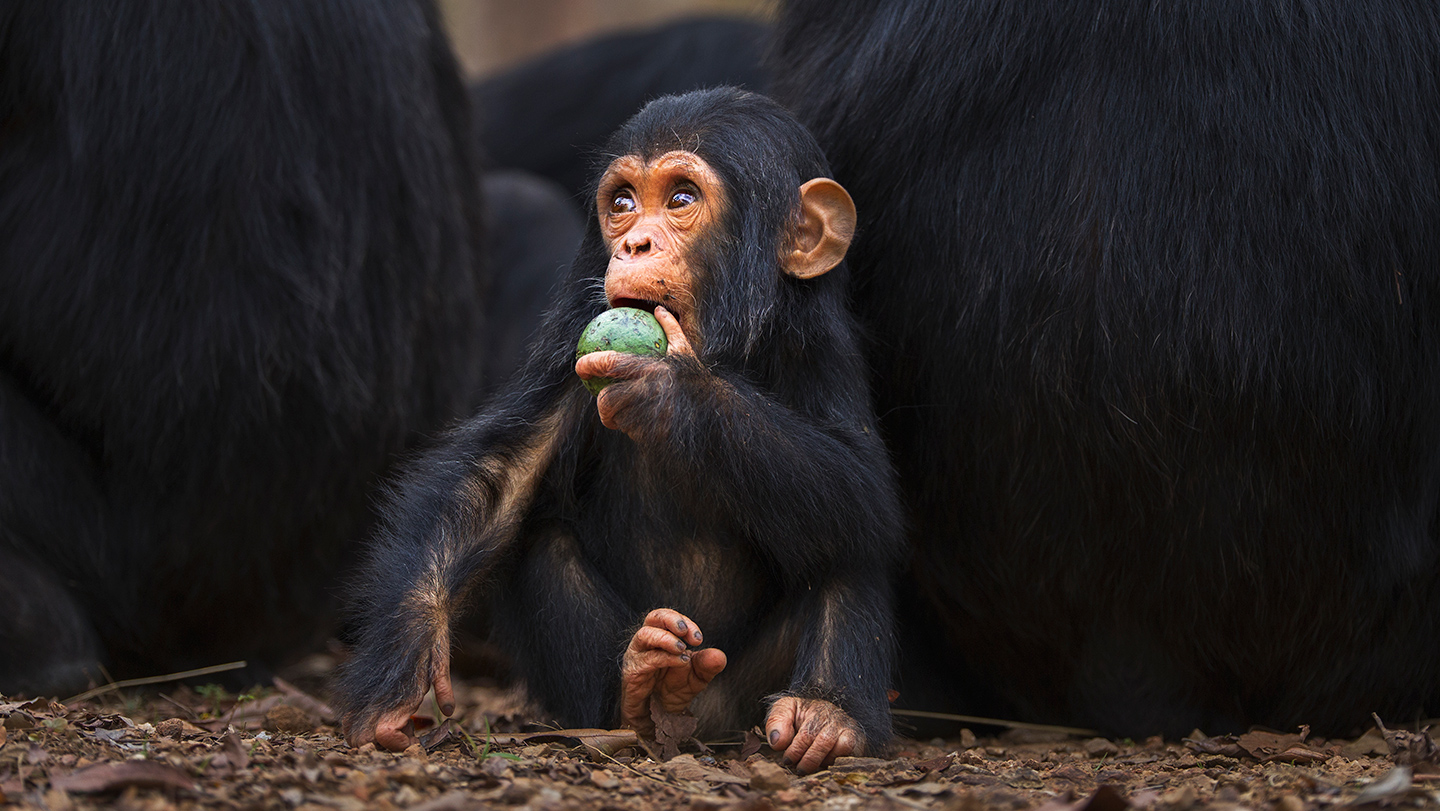
The team found that our earliest chimpanzee-like ancestors from around 4 million years ago had a fairly vegetarian diet and probably received over two-thirds of their dietary energy from fruit. This reliance on fruit remained quite high as hominid brains grew over the next few million years, the data suggest.
Creative foraging strategies, like hunting, cracking nuts, grinding seeds or extracting bone marrow would have helped meet the demands of these energy-sapping brains before humans began cooking starches. But the researchers argue that the consistent need for a diet rich in sugars is also a crucial part of the story of human evolution — one that existed alongside the dietary shift toward protein and fats.
“I see them as parallel stories, not one replacing the other,” Brand-Miller says. “These animal foods were clearly important. They’re very nutrient dense.”
A focus on meat-eating in the paleoanthropological record might have missed some of what is important in the evolution of human diets, agrees University of Oxford archaeologist Julie Lee-Thorp. This may be because of a modern unconscious bias. “Meat is a high-status food today and that has perhaps been carried over into the way we think about the past,” says Lee-Thorp, who wasn’t involved in the review.
But UCLA biological anthropologist Brian Wood argues that evolutionary anthropology has not been meat obsessed. Rather, the story of evolving human diets has included a recognition of increasingly sophisticated abilities to glean energy from varied food sources. “It was our general ability to capture and harvest high-quality, difficult-to-acquire foods,” he says. This includes hunting, but also foraging for fruit, honey, nuts and the underground parts of plants.
Read the full article here