



Immediately following WWII, French author and philosopher Albert Camus – a perceptive witness to inhumanity – wrote: “In such a world of conflict, a world of victims and executioners, it is the job of thinking people not to be on the side of the executioners.”
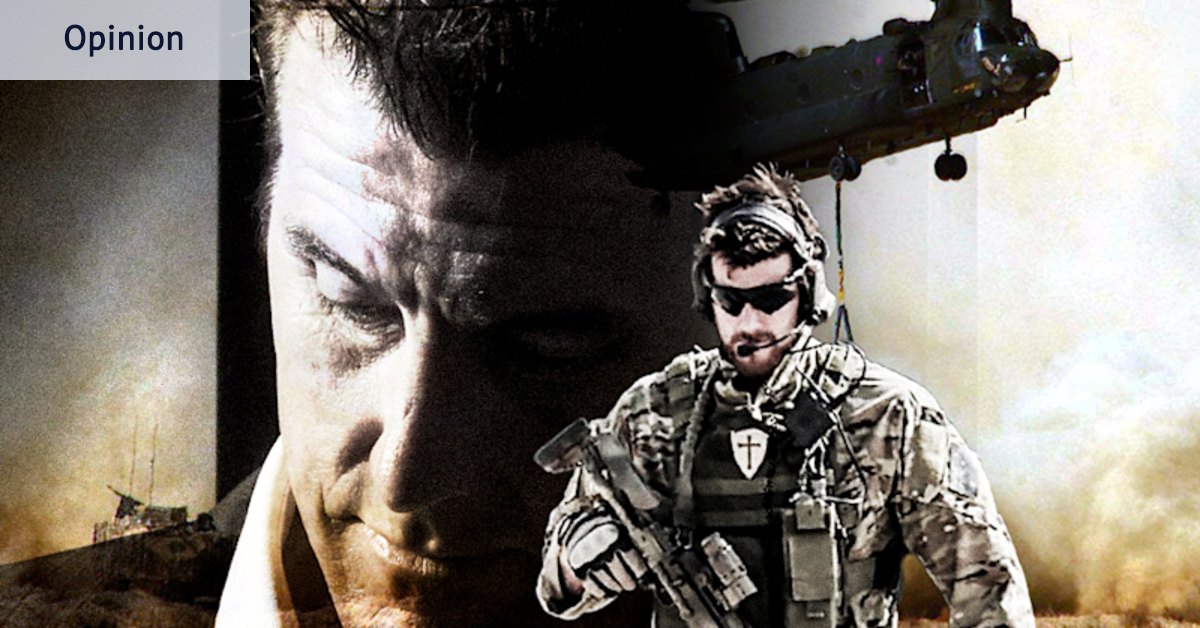
The Ben Roberts-Smith saga is a test for Australia. Which side do we choose?
As one of the reporters to expose the war hero as a war criminal, you know where I stand.
I have never seen reason to doubt that pushing a defenceless Afghan to his knees and shooting him dead is not only morally wrong, but unlawful. It was also militarily and strategically counterproductive, turning a wary population further against Australian soldiers. And the psychological impact on junior soldiers bullied into pulling the trigger by a looming Victoria Cross recipient proved devastating.
These offences – proved to a civil rather than criminal standard, after lengthy court hearings and prolific media coverage – have not swayed masses of Roberts-Smith supporters, including high-profile advocates such as One Nation’s Pauline Hanson and former prime minister Tony Abbott.
I agree Roberts-Smith deserves a fair trial and adjudication has a way to go, but I struggle to understand the unswerving nature of BRS allegiance in the face of compelling evidence. If supporters are unable to contest the facts, what are they saying? That the murder of defenceless victims is not a war crime if it was committed by an Australian?
The Ben Roberts-Smith case exposes many fault lines in the national discourse. Another to ponder is that of the greater sin – committing a war crime or ratting on a mate? Much of the support for Roberts-Smith within the defence diaspora champions the notion of sacred loyalty: the Anzac tenet that what is special and different about the Australian soldier is a sacrificial determination to have each other’s back.
So, are the “mateship trumps all” proponents contending that loyalty enables misconduct, that a mate should never call out behaviour that contravenes hard-earned values, even conduct which garners national shame?
On one score, I agree with my detractors. They are right to ask why junior soldiers – a trooper and a corporal – are in the dock while their officers are nowhere to be seen. It burns bright and may well go unresolved. While there is legal argument under a “should have known” statute that the command structure is open to criminal prosecution, charges seem unlikely to proceed without clear evidence.
When Special Air Service Regiment patrols closed with the enemy, the convention was for the officer to keep one tactical bound to the rear so they would not get in the way, which meant they were conveniently out of the way. All inquiries by our reporting team and the Brereton Inspector-General of the Australian Defence Force investigators found no evidence of direct knowledge by officers of misconduct.
But failure of accountability, yes. Some SAS commanders appeared to develop a talent for suspending curiosity. And those who cheered on the kill squads, actively promoting direct action over kinetic restraint should have a case to answer.
And here a disconnect emerges.
In a bid to confront failures of accountability, medals awarded for exemplary leadership have, in some cases, been withdrawn when the standard was not met. This has led to widespread protests.
The “what about the officers?” critics appear to have formed an alliance with the “how dare you take away our medals” mob.
It is a test, calling for patience and reason among us all. Liberal MP and former SAS captain Andrew Hastie, a commander unafraid of the truth, said it well when he outlined in evidence the moral and cultural challenges the war crimes debate inflicts upon the nation.
As to this new chapter of process before the criminal court, we should be confident of respect for the facts.
Within the media, I am not so sure. A parallel battle within the court of public opinion has proved exhausting from the beginning. Both the Murdoch press and Kerry Stokes’ West Australian have advocated for Ben Roberts-Smith; in doing so, turning on its head the precept that journalism speak truth to power.
And in social media, the misinformation, disinformation and madness persist. So many keyboard warriors who have never been near action and have not the courage to read past the headline, feverishly embracing the opportunity to claim their rightful place in step with a war hero.
I remain admiring of the SAS operators who put thinking above action. Who believed in courageous restraint. Who understood the importance of the shot not fired. I wish that presence of mind upon the national conversation.
Chris Masters is a Gold Walkley award-winning journalist and author. He is the author of Flawed Hero, Truths, Lies and War Crimes, about Ben Roberts-Smith.
The Opinion newsletter is a weekly wrap of views that will challenge, champion and inform. Sign up here.
 Chris Masters is a Gold Walkley award-winning journalist and author. He was the first Australian journalist to be embedded with special forces in Afghanistan.
From our partners
Read the full article here