



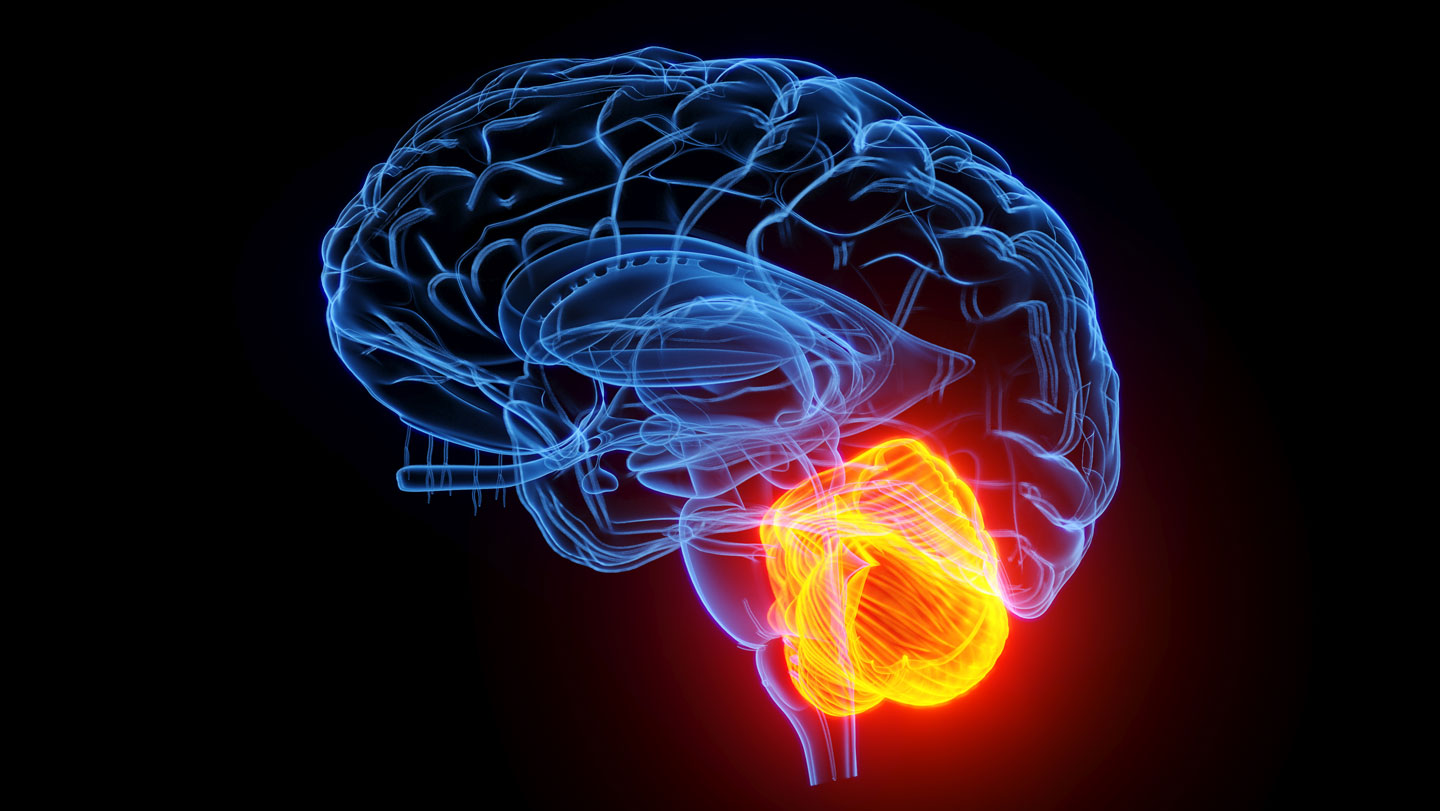
The cerebellum, the wizened “little brain” nestled in the base of the skull, may help keep us sharp as we age.
Regions at the back of the cerebellum that resisted shrinkage with age were tied to better mental functioning, or cognition, even in people in the early stages of Alzheimer’s disease, researchers report June 10 in Nature Neuroscience.
Though traditionally thought of as a movement control center, scientists now know the cerebellum is a key player in cognition. Researchers also know that parts of the cerebellum don’t age in unison, but the aging cerebellum is a relatively new area of research.
In the new study, the team first analyzed brain scans and cognitive test scores from more than 700 U.S. adults whose data was collected as part of the Human Connectome Project, a brain mapping initiative. The test measured abilities including short-term memory, attention, language and visualizing 3-D objects.
A clear trend emerged: The cerebellum tended to be smaller with increasing age, but the bigger the cerebellum, particularly in regions in the rear of the little brain, the higher the score on cognitive tests. The trend held even after adjusting for the different levels of education among participants, Princeton University neuroscientist Frederick d’Oleire Uquillas and colleagues report.
The researchers found the same link in more than 35,000 adults in the U.K. Biobank, a biomedical database. The findings point to a larger cerebellum preserving cognition with greater age, says d’Oleire Uquillas. The researchers confirmed that scans of the larger cerebellums showed more brain tissue and connections between nerve cells, a possible explanation for the protective effect.
To see if the pattern persisted in brain disease, the team turned to data from around 1,350 U.S. and Canadian adults in the Alzheimer’s Disease Neuroimaging Initiative. Of those, 644 had already accumulated a high level of the amyloid plaques that are a hallmark of the disease.
At the early stages of Alzheimer’s, before a big amyloid plaque pileup, a larger cerebellum correlated with a higher cognitive score. So the cerebellum might be compensating for some of the damage of Alzheimer’s — up to a point, d’Oleire Uquillas says.
This is one of the largest and most comprehensive studies to look at cerebellar aging, says neuropsychologist Vonetta Dotson of Brigham and Women’s Hospital in Boston, who was not involved with the work. Dotson is the founder of a company that provides assessments, counseling and interventions to promote aging brain health.
“The more we understand [the cerebellum’s] role in both normal aging and disease, the more we can understand whether or not it should be a target for treatment in medical conditions,” Dotson says.
For now, though, the research team can’t say whether the higher cerebellar size caused better cognition in older age. The findings also may not apply generally; the majority of the study data came from white people with high levels of education.
But the suggestion of the cerebellum as a cognitive reserve leaves d’Oleire Uquillas optimistic for prospects of aging and brain health. “It’s not all doom and gloom,” he says. “There’s hope there.”
Read the full article here