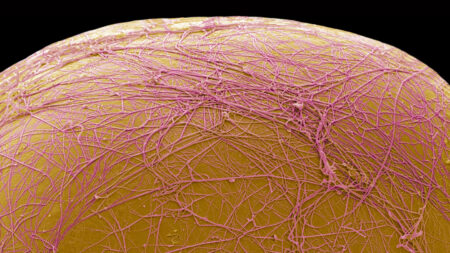




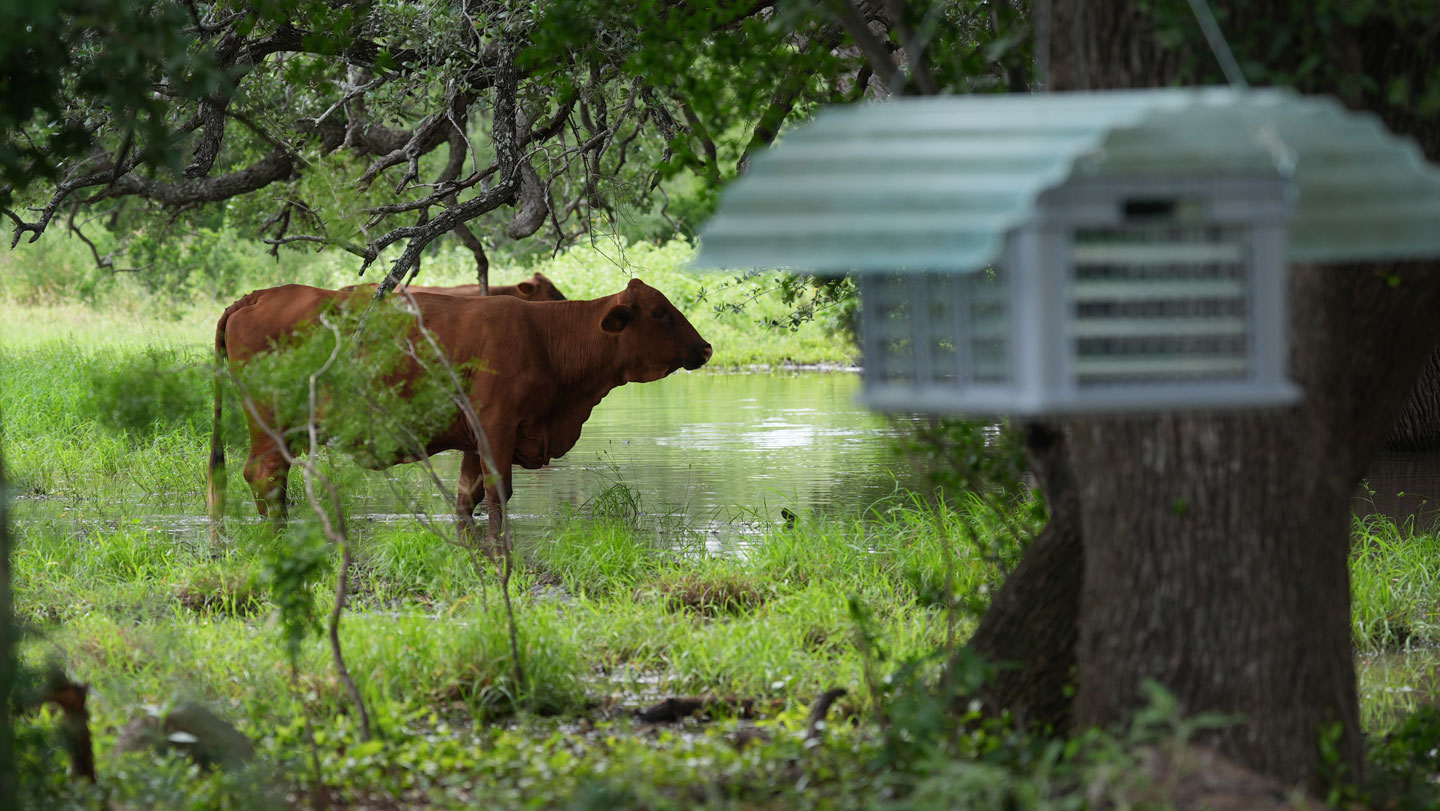
Flesh-eating, hooked-mouth maggots have wriggled their way back into the United States. As of June 21, 15 cases of New World screwworm have been confirmed in Texas and New Mexico in cows, goats, sheep and even a dog.
The screwworm (Cochliomyia hominivorax) threatens the health of animals and humans as well as the beef industry. Females of this subtropical blowfly, which is native to South America, deposit their eggs into the open wounds of mammals. The larvae burrow into and feed on the living flesh as they grow. The burrowing process can be painful for the host and, if left untreated, can cause secondary infections and even death. The flies like mammals, and they aren’t selective. They parasitize wildlife, pets, livestock — like cattle, sheep and goats — and occasionally humans.
After eradicating the screwworm in the United States in 1982, the pest has been gradually creeping north again. The first new U.S. case was detected June 3 in a three-week-old calf in Zavala County, Texas, according to the United States Department of Agriculture.
Science News talked to experts about how worried we should be about this new invasion and what is being done to fight it.
What are the risks of the reemergence of the New World screwworm?
In humans, the risk is low, experts say. There are currently no reported human cases of locally acquired screwworm in the United States, though in 2025, an infection was reported in person returning to the country after visiting El Salvador. However, since Panama and Costa Rica first identified an outbreak in 2023, there have been 2,100 reported human cases in Mexico and Central America.
Still, human cases are exceedingly rare, says Edwin Burgess, a veterinary entomologist at the University of Florida in Gainesville.
“You can look online and find horror stories about the number of human cases, but you have to think about the total population over that time period,” Burgess says, “and that number is itty-bitty in terms of a risk.”
Even so, a screwworm infestation in a wound is incredibly painful and foul-smelling, meaning that it is difficult for a human case to go undetected. In the rare case of a human infection, larvae removal treatment of the infected wound is straightforward.
To prevent infection in an infested region, experts recommend wearing loose-fitting clothing that limits exposed skin, using insect repellent and keeping any open wounds clean and covered.
People living near an outbreak site in Texas and New Mexico should pay particular attention to their animals and wildlife. Though the number of cases in the United States remains relatively low, even a single screwworm case is concerning because it is such a damaging pest, says Phillip Kaufman, a veterinary entomologist at Texas A&M University in College Station. A 2024 USDA economic report estimated that, based on the losses the Texas economy faced during a 1976 outbreak, the costs of a similar outbreak of screwworm would exceed $1.8 billion annually in Texas alone.
Despite these concerns, experts stress that the food supply is safe. Screwworms do not infest meat, fruits, vegetables or other food products, and when animals are found and their wounds are treated and dressed, they can make a full recovery.
“You are not going to have screwworms in your meat,” Kaufman says.
How did we eradicate the screwworm before?
During the 1950s–60s outbreak that spread throughout Texas and the southeastern United States, federal agencies employed what is known as the sterile insect technique, or SIT.
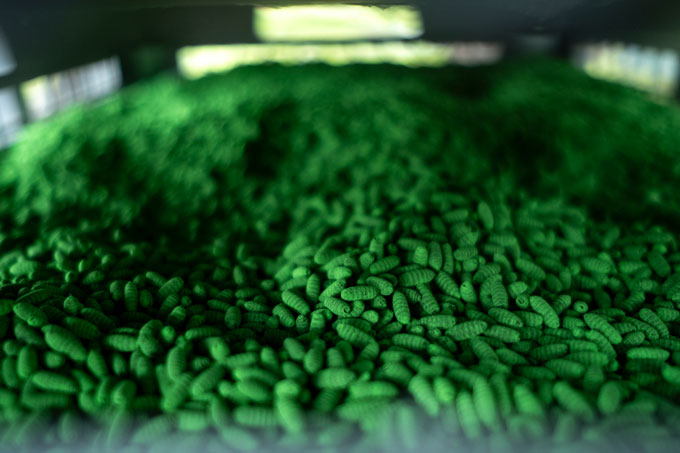
Female screwworms mate only once. The technique involves breeding males using radiation to sterilize them, then deploying them with trucks and aircraft into infested regions. If the sterile males outcompete the fertile ones and mate with females, the females produce unviable eggs and decline in population over time.
The sterile insect technique has been widely successful for decades, and it has been continuously used to suppress breakthrough outbreaks across the American South and Central America.
Why are New World screwworms spreading north again?
There is currently no consensus on what led to the northward spread of the screwworms. Some studies suggest that global warming could be a key factor in the reemergence and movement of the fly, as they favor warmer climates. One study estimated that climate warming in the next two decades could widen the reach of screwworms in North America and intensify the severity of outbreaks.
Shutdowns of SIT breeding facilities might have also played a role. Following the successful mitigation of screwworm outbreaks in the 1960s and 1970s, many facilities closed due to the costs and complexities of keeping them open.
Until recently, the only facility producing the sterile flies was the Panama–United States Commission for the Eradication and Prevention of Screwworm Infestation in Livestock (COPEG) facility in Panama. Since the detection of screwworms past the Guatemala–Mexico border in 2024, COPEG has gone from typically producing 20 million to 40 million flies per week to about 115 million flies per week. Even with COPEG’s ramp-up in breeding efforts, the facility is producing only about 20 percent of what may be necessary to eradicate the flies from North and Central America, Kaufman says. The last eradication effort in the United States alone required 500 million flies to be exported per week.
Additionally, Kaufman suggests that the movement of cattle across Central America without proper inspection and treatment may have hindered the ability to suppress the northward movement of the screwworm. Illegal cattle crossings across the Guatemala–Mexico border may also be driving the screwworms’ spread, according to the Wildlife Conservation Society.
What is being done to fight the New World screwworm this time?
Federal agencies are deploying new tools to mitigate the screwworm outbreak. The USDA is now using epidemiological tracking and meteorological data to predict where the flies are and where they’re likely to go, then using that data to determine where to release sterile males.
Several fly production facilities are being built or renovated, like an existing facility in Metapa, Mexico, and a new dispersal facility at the Moore Air Base in Edinburgh, Texas. For now, though, efforts are most likely to slow the spread rather than eradicate the pest, Kaufmann says.
“We have help on the way,” he says. “It’s just going to take us time before we have a sufficient number [of sterile flies] that we can push this back south.”
The USDA recently unveiled novel sterile fly breeding technology, the Novo Fly strain, aimed at doubling the number of male flies produced by eliminating female flies from each brood. Using this strain, any female larvae will die early on, allowing a given brood to be 100 percent male.
“We can essentially put twice as many eggs into a rearing container, knowing that half will die, and the other half will be male,” Kaufman says. “So instead of producing 50 million males and 50 million females a week, we’re now producing 100 million males.” The USDA is seeking approval from the U.S. Environmental Protection Agency for the use of the Novo Fly, which experts hope will greatly increase sterile fly production across the United States, Mexico and Panama.
The U.S. Food and Drug Administration also has issued several emergency use authorizations for the treatment and prevention of screwworm infections in a wide range of animals, from cattle, sheep, and goats, to cats, dogs, birds and even wild mammals. Many of these drugs have been used for decades to treat various types of parasitic infections in animals and show promise for their efficacy in treating screwworms infestations.
“We need chemistries that have unique modes of action [in how] they affect the fly’s physiology,” Burgess says. “The goal [is to] balance available options for therapeutics while also maintaining safety for the animals and for the food supply.”
Injectable insecticides like Dectomax, which received an emergency use authorization on May 19, are systemic. They work by diffusing through the tissues of the animal, targeting the nervous system of larvae that ingest the flesh.
The road ahead in the fight against the New World screwworm is still quite long and will be expensive. It will take another year for the Edinburgh facility in Texas to go live, and the screwworms may spread farther in the meantime. The USDA spent $21 million for the Mexico facility, and will spend another $8.5 million on the Texas facility. On June 16, the USDA also announced that they would grant $105 million to fund innovative efforts to fight the parasite, including new ways to sterilize the flies and novel traps to help bolster early warning systems. Kaufman and other experts agree that the cost is well worth it.
“It is worth every dollar we’re spending to eliminate this fly, and we’re gonna keep at it, and we’re gonna be successful,” he says.
Read the full article here