




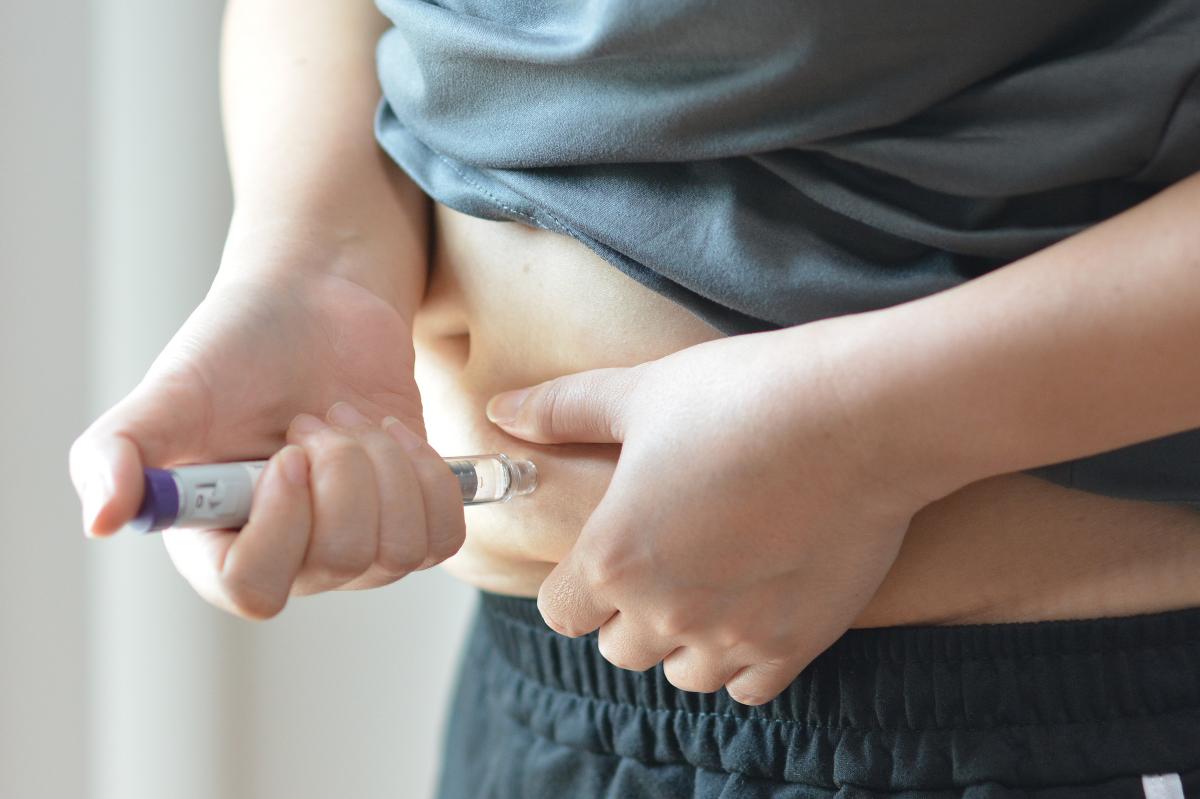
Get on a GLP-1 and take a bite out of crime.
Violence across the US has seen a historic decline in the last two years, and criminologists are still trying to figure out why exactly.
But one study from earlier this year has offered a new theory: The new class of weight-loss drugs like Ozempic and Wegovy could be partially responsible.
A study by Rutgers University sociology professor Daniel Semenza explored the potential relationship between GLP-1 medications, impulsivity and violent behavior — and found there’s a certain logic to the theory.
“One possible explanation comes from research suggesting that GLP-1 medications affect parts of the brain involved in reward processing and self-regulation,” Semenza told The Post.
The benefits of GLP-1s famously fade after users stop taking them.
Semenza’s research compared current GLP-1 users and found that common risk factors for violence — namely impulsivity and alcohol use — were notably lower in people currently on the drugs.
“In simple terms, they may reduce how strongly people respond to certain rewards or urges. Our findings suggest that someone may still have impulsive tendencies, but those tendencies may be less likely to translate into violent behavior,” he explained.
Semenza pointed to growing research suggesting GLP-1 medication may reduce both alcohol consumption and craving through its effects on the brain’s reward system.
“What we found was that alcohol use was associated with more violent behavior, but that relationship was weaker among current GLP-1 users compared to former users,” he said.
And with 15% of the adult population reported that they have taken a GLP-1 — tens of millions of Americans could find themselves newly restrained.
Semenza stresses that his research doesn’t show a direct correlation between GLP-1s and lowered violent crime nationwide, or even with directly improving impulse control.
“But the potential connection is that impulsivity and alcohol use are well-established risk factors for violence,” he said.
“We found that these risk factors were less strongly associated with violence among current GLP-1 users,” Semenza added. “So, if future research establishes that GLP-1 medications actually cause that difference, it could have implications for understanding violence prevention more broadly.”
Research on the drugs’ long-term effects is still in its infancy, and therefore, it is too soon to say whether they could reduce crime over time, Semenza explained.
“Those are important questions for future research. We need studies that follow people over time and examine what happens before, during, and after GLP-1 treatment,” he said.
For that reason, the secondary effects of GLP-1s could be part of a more complicated picture of why crime has fallen.
The US is currently seeing one of the steepest and most widespread crime declines in modern history, with the murder rate falling to its lowest rate since records began, tying with 1955 and 1956.
At the same time, the US violent crime rate plunged 9.7% in 2025, the biggest annual decline since the start of national estimates 90 years ago. And it has continued to fall in 2026, according to data.
Criminologists point to a normalization from COVID-era shifts, which saw a spike in violent crime during the pandemic.
Alcohol consumption, illicit drug use and firearm purchases all went up during 2020 and 2021, but have since receded, according to a report from Axios.
COVID lockdowns also disrupted many of the community guardrails and displaced particularly young men and teens.
Demographers also point to the shrinking number of young people in America — historically the group most likely to be involved in violent crime.
Police departments nationwide are increasingly using more AI tools, predictive analytics, and platforms such as Palantir’s Gotham to identify crime hotspots and deploy resources.
Read the full article here